What does Acts 7:30 mean?
"And when forty years were expired, there appeared to him in the wilderness of mount Sina an angel of the Lord in a flame of fire in a bush." - Acts 7:30
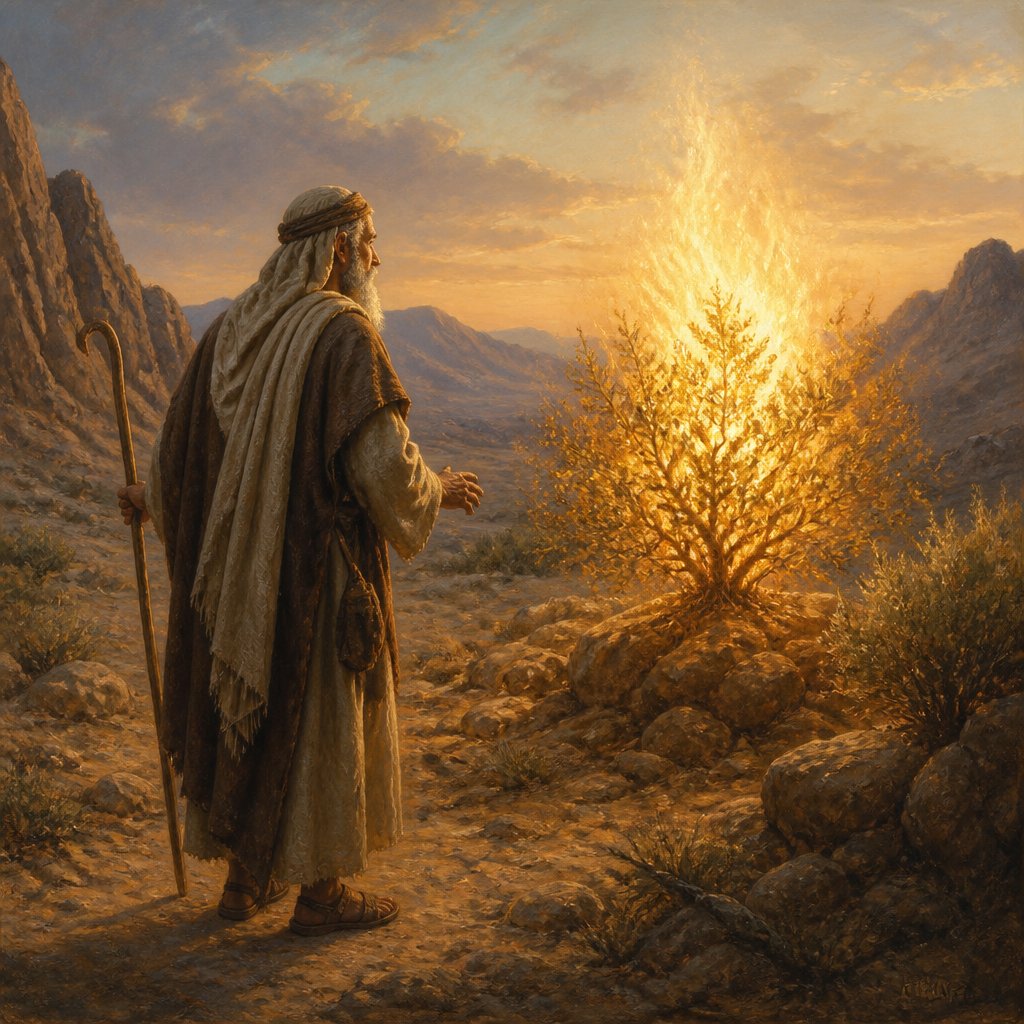
Acts 7:30 from the King James Version (KJV) of the Bible states, "And when forty years were expired, there appeared to him in the wilderness of mount Sinai an angel of the Lord in a flame of fire in a bush."
This verse comes from the Book of Acts, which is the fifth book of the New Testament and provides a historical account of the early church. The verse is part of a larger passage where Stephen, one of the first Christian martyrs, is delivering a speech to the Jewish council, defending himself against accusations of blasphemy. In this particular verse, Stephen is recounting the story of the burning bush to illustrate his point about how God works through unexpected means.
The story of the burning bush is found in the Old Testament in the Book of Exodus, specifically in Exodus 3. In this story, the Israelites are in bondage in Egypt, and Moses, who was raised in the household of the Pharaoh, has fled to the wilderness after killing an Egyptian. While tending his father-in-law's flock, Moses encounters a burning bush and hears the voice of God speaking to him from the flames. God commissions Moses to lead the Israelites out of Egypt and into the Promised Land.
The burning bush is a powerful symbol of the presence of God and His call to obedience. The image of a bush engulfed in flames but not consumed signifies the holiness and power of God. It serves as a reminder that God is present in the midst of adversity and that His plans often involve using the weak and unexpected to accomplish His purposes.
In Acts 7:30, Stephen is using the story of the burning bush to make a point about the nature of God's work in the world. In the wilderness of Mount Sinai, an angel of the Lord appeared to Moses in a flame of fire in a bush after forty years had passed. This serves as a reminder that God's timing is often different from our own and that His plans unfold over extended periods, often in ways that we cannot anticipate or control.
Additionally, the use of the burning bush as a symbol of God's presence and call to obedience is a recurring theme throughout the Bible. In the Old Testament, the prophets frequently reference the imagery of fire and the appearance of angels as a means of communicating God's will and presence. In the New Testament, the Holy Spirit is often associated with fire, representing the transformative power of God's presence in the lives of believers.
Furthermore, the wilderness itself holds significant symbolism in the Bible. It is a place of testing, purification, and preparation for God's people. The Israelites wandered in the wilderness for forty years before entering the Promised Land, and Jesus himself spent forty days in the wilderness, being tempted by the devil before beginning His ministry. The wilderness represents a place of isolation, struggle, and growth, where God often speaks most clearly to His people.
In conclusion, Acts 7:30 and the story of the burning bush carry rich themes of God's presence, timing, and call to obedience. As we reflect on this verse, we are reminded of the ways in which God works through unexpected means and in unexpected places. The burning bush serves as a powerful symbol of God's holiness and power, and the wilderness represents a place of testing and preparation for God's purposes. Ultimately, this verse challenges us to trust in God's timing and to be attentive to His call, even when it comes from unexpected sources.
Have questions about Acts 7:30?
Dive deeper into this scripture with Bible Chat — an AI-powered tool for exploring God's Word through conversation. Ask questions, get context, and grow in your understanding of the Bible.
Get Our Apps


Acts 7:30 Artwork

Acts 7:30 - "And when forty years were expired, there appeared to him in the wilderness of mount Sina an angel of the Lord in a flame of fire in a bush."
"And when forty years were expired, there appeared to him in the wilderness of mount Sina an angel of the Lord in a flame of fire in a bush." - Acts 7:30

Acts 4:30

Acts 4:30

Acts 4:30

Acts 4:30

Acts 13:30 - "But God raised him from the dead:"

ACTS 8:30 Philip and the Ethiopian

Acts 11:30 - "Which also they did, and sent it to the elders by the hands of Barnabas and Saul."

Acts 19:30 - "And when Paul would have entered in unto the people, the disciples suffered him not."

Acts 16:30 - "And brought them out, and said, Sirs, what must I do to be saved?"

Acts 17:30 - "And the times of this ignorance God winked at; but now commandeth all men every where to repent:"

Acts 5:30 - "The God of our fathers raised up Jesus, whom ye slew and hanged on a tree."

Acts 9:30 - "Which when the brethren knew, they brought him down to Caesarea, and sent him forth to Tarsus."

Acts 3:6-7

Acts 3:6-7

"But God raised him from the dead:" - Acts 13:30

Acts 3:6-7

Acts 3:6-7

Acts 3:6-7

Acts 26:30 - "And when he had thus spoken, the king rose up, and the governor, and Bernice, and they that sat with them:"

Acts 15:30 - "So when they were dismissed, they came to Antioch: and when they had gathered the multitude together, they delivered the epistle:"

Acts 4:30 - "By stretching forth thine hand to heal; and that signs and wonders may be done by the name of thy holy child Jesus."

Acts 28:30 - "And Paul dwelt two whole years in his own hired house, and received all that came in unto him,"

Acts 14:7 - "And there they preached the gospel."

Acts 20:30 - "Also of your own selves shall men arise, speaking perverse things, to draw away disciples after them."

Acts 8:30 - "And Philip ran thither to him, and heard him read the prophet Esaias, and said, Understandest thou what thou readest?"

Acts 21:30 - "And all the city was moved, and the people ran together: and they took Paul, and drew him out of the temple: and forthwith the doors were shut."

acts 20:7-12

Nehemiah 7:30 - "The men of Ramah and Geba, six hundred twenty and one."