What does Acts 7:14 mean?
"Then sent Joseph, and called his father Jacob to him, and all his kindred, threescore and fifteen souls." - Acts 7:14
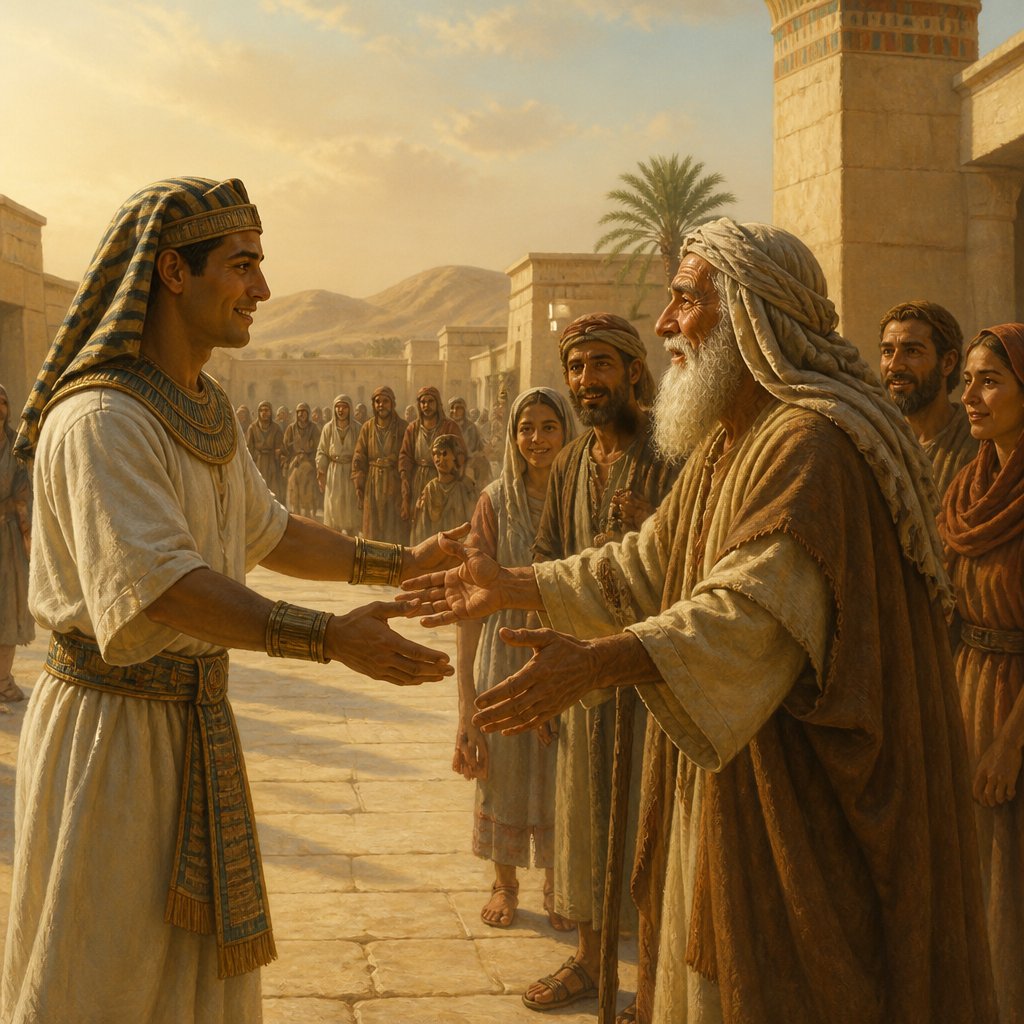
Acts 7:14 (KJV) says, "Then sent Joseph, and called his father Jacob to him, and all his kindred, threescore and fifteen souls."
This verse is part of a larger passage in the Book of Acts that retells the history of the Israelites and their journey from the land of Canaan to Egypt. In this particular verse, Joseph, the son of Jacob, is sending for his father and all of his family to join him in Egypt.
The Book of Acts is a continuation of the Gospel of Luke and is attributed to the authorship of Luke, a companion of the apostle Paul. The Book of Acts chronicles the early history of the Christian church and the spread of the gospel after Jesus' ascension. This particular verse is part of a speech given by Stephen, one of the seven deacons chosen to serve in the early Christian church. Stephen was arrested and brought before the Sanhedrin, the Jewish high council, where he delivered a powerful defense of his beliefs and was ultimately stoned to death for blasphemy.
In this verse, Joseph's actions and the journey of Jacob and his family to Egypt have several important themes and implications. One of the key themes is the faithfulness of God in fulfilling His promises. The events described in this verse are a fulfillment of the promise God made to Abraham in Genesis 15:13-14, where He foretold the suffering and future deliverance of the Israelites. The fact that Joseph was able to send for his father and all his kindred in Egypt demonstrates God's faithfulness in preserving and providing for His people, even in the midst of difficult circumstances.
Another significant theme in this verse is the importance of family and community. Joseph's actions in sending for his father and extended family highlight the strong bond and responsibility he felt towards his relatives. This underscores the biblical value of family unity and the idea that God works through the relationships and connections within families to accomplish His purposes.
The symbolism in this verse is also noteworthy. The number "seventy-five" mentioned in the verse has symbolic significance in Biblical numerology. According to some interpretations, the number seventy-five represents the union of the sacred number seven and the earthly number five, signifying the connection between the divine and the human. This interpretation suggests that the inclusion of the number seventy-five underscores the divine purpose and intervention in the journey of Jacob and his family to Egypt.
In a broader context, this verse also serves as a reminder of the broader biblical narrative of God's redemptive plan for His people. The journey of Jacob and his family to Egypt ultimately sets the stage for the eventual deliverance of the Israelites from bondage in Egypt and their establishment as a nation. This theme of deliverance and redemption is a central theme throughout the Bible and serves to foreshadow the ultimate deliverance and redemption that comes through Jesus Christ.
In conclusion, Acts 7:14 (KJV) holds significant meaning within the larger biblical narrative. It emphasizes themes of God's faithfulness in fulfilling His promises, the importance of family and community, and the broader context of God's redemptive plan for His people. The symbolism within the verse also serves to underscore the divine purpose and intervention in the events described. As with all biblical passages, it is important to study these verses in context and seek to understand the deeper spiritual truths they convey.
Have questions about Acts 7:14?
Dive deeper into this scripture with Bible Chat — an AI-powered tool for exploring God's Word through conversation. Ask questions, get context, and grow in your understanding of the Bible.
Get Our Apps


Acts 7:14 Artwork

Acts 7:14 - "Then sent Joseph, and called his father Jacob to him, and all his kindred, threescore and fifteen souls."
"Then sent Joseph, and called his father Jacob to him, and all his kindred, threescore and fifteen souls." - Acts 7:14

Acts 14:7 - "And there they preached the gospel."

"And there they preached the gospel." - Acts 14:7

Acts 14:17

Acts 3:6-7

Acts 3:6-7

Acts 3:6-7

Acts 3:6-7

Acts 3:6-7

Acts 14:28 - "And there they abode long time with the disciples."

Acts 14:14 - "Which when the apostles, Barnabas and Paul, heard of, they rent their clothes, and ran in among the people, crying out,"

acts 20:7-12

Acts 7:47 - "But Solomon built him an house."

Acts 14:24 - "And after they had passed throughout Pisidia, they came to Pamphylia."

Acts 7:1 - "Then said the high priest, Are these things so?"

Acts 19:7 - "And all the men were about twelve."

Depict the events of Acts 19:14-17

Acts 27:14 - "But not long after there arose against it a tempestuous wind, called Euroclydon."

Acts 14:25 - "And when they had preached the word in Perga, they went down into Attalia:"

Acts 14:4 - "But the multitude of the city was divided: and part held with the Jews, and part with the apostles."

Acts 7:50 - "Hath not my hand made all these things?"

Acts 14:16 - "Who in times past suffered all nations to walk in their own ways."

Acts 14:18 - "And with these sayings scarce restrained they the people, that they had not done sacrifice unto them."

Acts 5:14 - "And believers were the more added to the Lord, multitudes both of men and women.)"

Acts 7:7 - "And the nation to whom they shall be in bondage will I judge, said God: and after that shall they come forth, and serve me in this place."

2 Kings 14:18 - "And the rest of the acts of Amaziah, are they not written in the book of the chronicles of the kings of Judah?"

Acts 14:12 - "And they called Barnabas, Jupiter; and Paul, Mercurius, because he was the chief speaker."

Acts 21:14 - "And when he would not be persuaded, we ceased, saying, The will of the Lord be done."

Acts 7:18 - "Till another king arose, which knew not Joseph."