What does Acts 7:1 mean?
"Then said the high priest, Are these things so?" - Acts 7:1
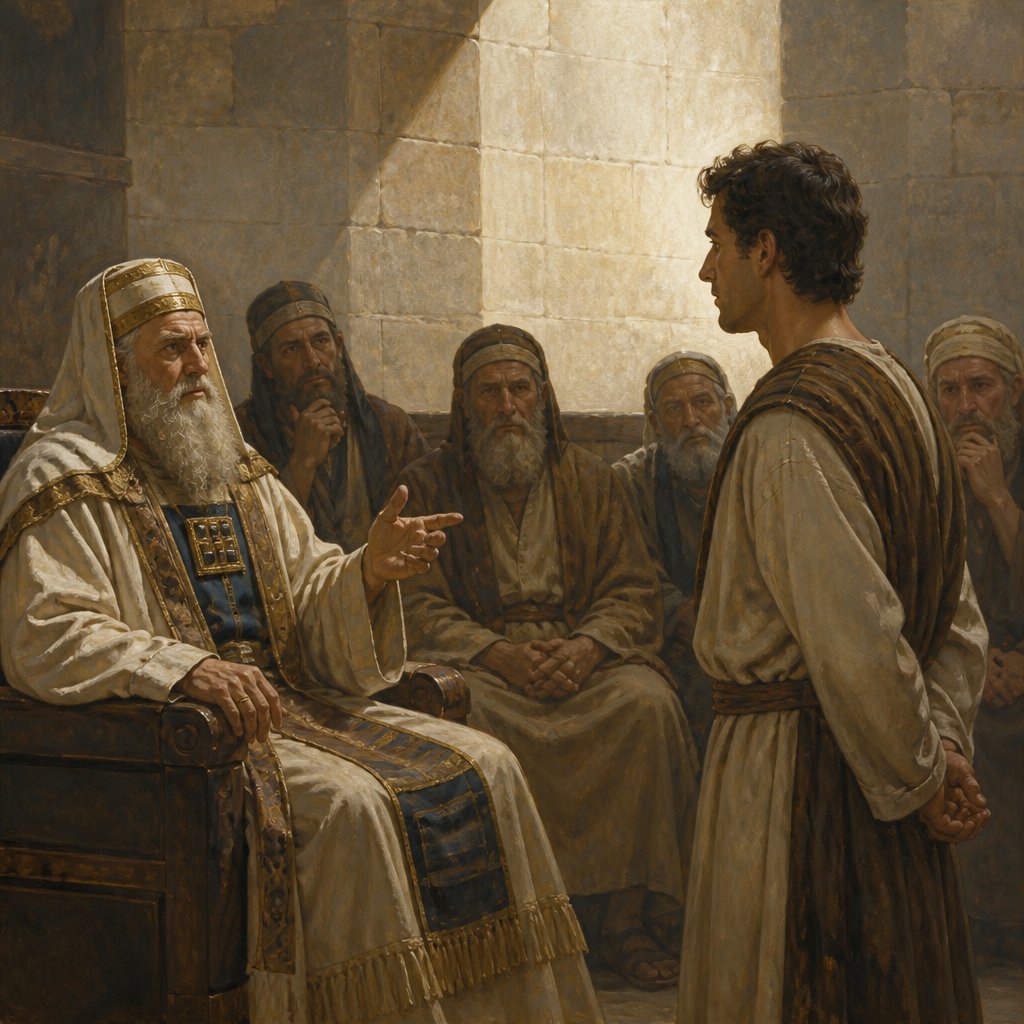
The Bible verse Acts 7:1 from the King James Version (KJV) states, "Then said the high priest, Are these things so?" This verse is part of a larger passage which recounts the defense of Stephen before the Sanhedrin, the Jewish council.
In this verse, we see that the high priest questions Stephen, asking if the accusations against him are true. This questioning sets the stage for Stephen's impassioned defense and ultimately, his martyrdom.
To fully understand the meaning and commentary of Acts 7:1, it is important to consider the larger context in which it is situated. The Book of Acts, written by Luke, details the early history of the Christian church, including the spread of the gospel and the persecution faced by the early believers. Acts 7 specifically focuses on Stephen's defense and subsequent martyrdom, which is a key event in the early church's history.
In Acts 7:1, the high priest's question reflects the tension and conflict that existed between the Jewish religious leaders and the early Christians. Stephen, a devout follower of Jesus, had been accused of speaking blasphemy against Moses and God. The high priest, as a representative of the religious establishment, is questioning Stephen about these accusations, and by extension, about his allegiance to the teachings of Jesus.
The themes present in Acts 7:1 are numerous and significant. One of the key themes is that of persecution for faith. Stephen's defense and subsequent death illustrate the opposition and persecution faced by the early Christians as they sought to spread the message of the gospel. The high priest's questioning represents the hostility and resistance encountered by those who proclaimed the teachings of Jesus, a theme that is prevalent throughout the New Testament.
Another important theme in Acts 7:1 is that of standing up for one's beliefs. When faced with the high priest's question, Stephen does not waver in his faith or compromise his convictions. Instead, he seizes the opportunity to deliver a powerful and eloquent speech, in which he defends the Christian faith and boldly accuses the religious leaders of rejecting God's messengers throughout history. His unwavering commitment to his beliefs, even in the face of persecution and death, serves as an example of faith and steadfastness for all believers.
Symbolism also plays a significant role in Acts 7:1. The high priest, as a representative of the religious establishment, symbolizes the opposition and hostility that the early Christians faced from the Jewish leaders. Stephen, on the other hand, symbolizes faith and courage in the face of persecution. His martyrdom serves as a symbol of the ultimate sacrifice made for the sake of the gospel, and it inspires and emboldens the believers who come after him.
In conclusion, Acts 7:1 is a verse that carries deep meaning and significance within the larger context of the Book of Acts. It highlights the themes of persecution, steadfastness in faith, and the ultimate sacrifice for one's beliefs. The verse sets the stage for the powerful defense and martyrdom of Stephen, which serves as a testament to the unwavering commitment of the early Christians to their faith. As such, Acts 7:1 continues to serve as a source of inspiration and encouragement for believers facing persecution and opposition for their faith.
Have questions about Acts 7:1?
Dive deeper into this scripture with Bible Chat — an AI-powered tool for exploring God's Word through conversation. Ask questions, get context, and grow in your understanding of the Bible.
Get Our Apps


Acts 7:1 Artwork

Acts 7:1 - "Then said the high priest, Are these things so?"
"Then said the high priest, Are these things so?" - Acts 7:1

Acts 1:7 - "And he said unto them, It is not for you to know the times or the seasons, which the Father hath put in his own power."

1 Kings 15:7 - "Now the rest of the acts of Abijam, and all that he did, are they not written in the book of the chronicles of the kings of Judah? And there was war between Abijam and Jeroboam."

Acts 3:6-7

Acts 3:6-7

Acts 3:6-7

Acts 3:6-7

Acts 3:6-7

1 Samuel 12:7 - "Now therefore stand still, that I may reason with you before the LORD of all the righteous acts of the LORD, which he did to you and to your fathers."

Acts 14:7 - "And there they preached the gospel."

acts 20:7-12

Acts 7:47 - "But Solomon built him an house."

Acts 19:7 - "And all the men were about twelve."

"And there they preached the gospel." - Acts 14:7

Acts 7:50 - "Hath not my hand made all these things?"

Acts 7:7 - "And the nation to whom they shall be in bondage will I judge, said God: and after that shall they come forth, and serve me in this place."

Acts 7:18 - "Till another king arose, which knew not Joseph."

Acts 7:53 - "Who have received the law by the disposition of angels, and have not kept it."

Acts 7:9 - "And the patriarchs, moved with envy, sold Joseph into Egypt: but God was with him,"

Acts 7:22 - "And Moses was learned in all the wisdom of the Egyptians, and was mighty in words and in deeds."

Acts 7:28 - "Wilt thou kill me, as thou diddest the Egyptian yesterday?"

Acts 7:54 - "¶ When they heard these things, they were cut to the heart, and they gnashed on him with their teeth."

Acts 7:48 - "Howbeit the most High dwelleth not in temples made with hands; as saith the prophet,"

Acts 7:15 - "So Jacob went down into Egypt, and died, he, and our fathers,"

"But Solomon built him an house." - Acts 7:47

Acts 7:55-56 – "Stephen, full of the Holy Spirit, looked up to heaven and saw the glory of God."

Acts 16:7 - "After they were come to Mysia, they assayed to go into Bithynia: but the Spirit suffered them not."

Acts 7:55-56 – "Stephen, full of the Holy Spirit, looked up to heaven and saw the glory of God."

Acts 9:7 - "And the men which journeyed with him stood speechless, hearing a voice, but seeing no man."