What does Acts 6:12 mean?
"And they stirred up the people, and the elders, and the scribes, and came upon him, and caught him, and brought him to the council," - Acts 6:12
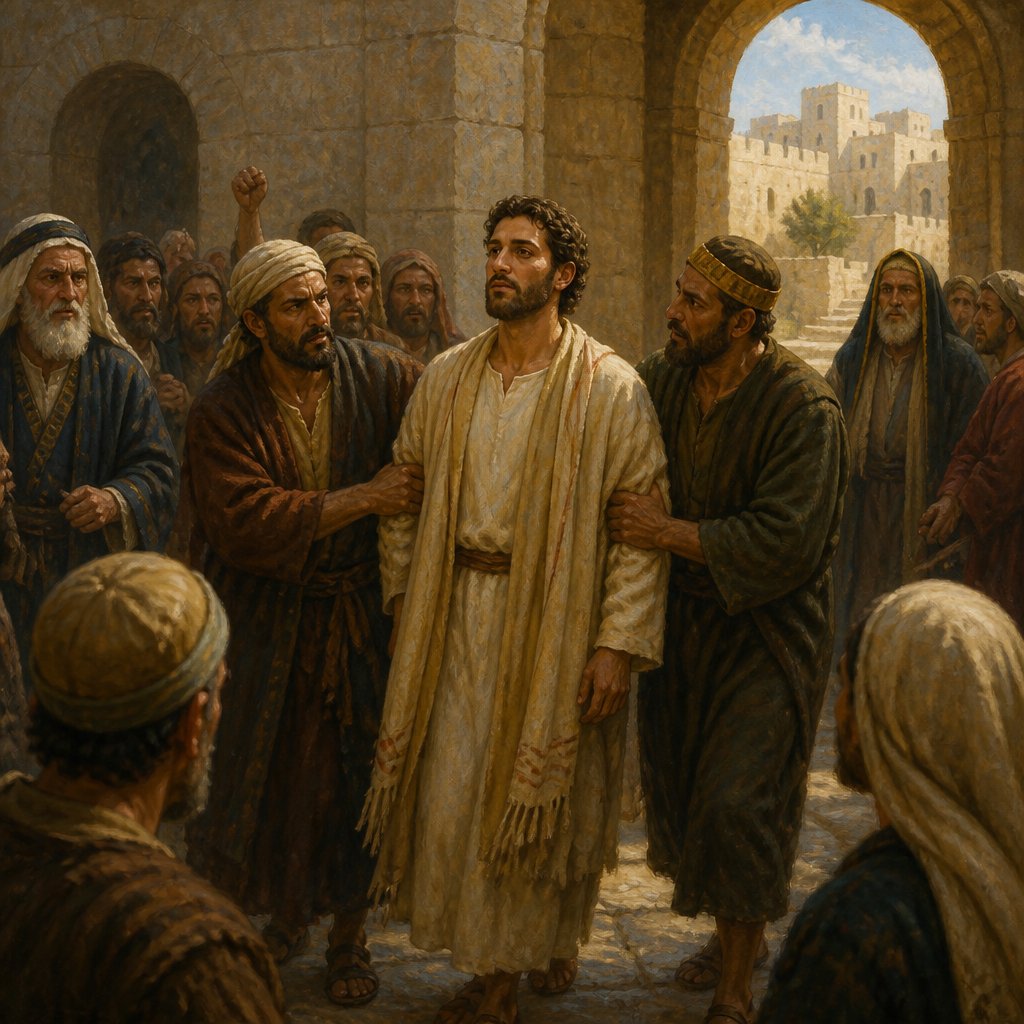
Acts 6:12 (KJV) states, "And they stirred up the people, and the elders, and the scribes, and came upon him, and caught him, and brought him to the council." This verse refers to the events leading up to the arrest of Stephen, one of the seven deacons appointed by the early Christian church to assist with distribution to the widows. The verse reveals the escalating tensions between the early Christians and the Jewish religious leaders in Jerusalem, and the persecution faced by the early church.
The book of Acts is a historical account of the early Christian church and the spread of Christianity after the death and resurrection of Jesus Christ. The events described in Acts 6:12 take place in Jerusalem, where the apostles and early believers were actively preaching and performing miracles. However, as more people converted to Christianity, conflicts arose between the believers and the Jewish religious authorities.
In Acts 6, the chapter preceding verse 12, the early church faced internal challenges related to the distribution of food to Greek-speaking widows. To address this issue, seven men, including Stephen, were chosen to serve as deacons to oversee the distribution. Stephen, in particular, was described as "a man full of faith and of the Holy Ghost" and was known for performing great wonders and signs among the people (Acts 6:5, KJV).
The verse from Acts 6:12 reflects the growing hostility towards the early Christians from the Jewish religious leaders. The passage mentions that "they stirred up the people, and the elders, and the scribes," indicating that there was a coordinated effort to incite the population against Stephen and the early church. This opposition from the established religious leadership was likely driven by a fear of losing influence and authority, as well as a rejection of the central Christian message that Jesus was the long-awaited Messiah.
The mention of "the council" in Acts 6:12 refers to the Sanhedrin, the ruling body of the Jewish community in Jerusalem. This council held significant power and was responsible for religious and civil matters. The fact that Stephen was brought before the council indicates the seriousness of the accusations against him and the potential for legal consequences. This sets the stage for the subsequent trial of Stephen in Acts 7, where he delivers a powerful defense of the Christian faith and ultimately becomes the first Christian martyr.
This verse highlights several important themes that are prevalent throughout the book of Acts and the broader biblical narrative. One such theme is the conflict between the gospel message and religious opposition. Throughout the New Testament, we see a pattern of persecution and opposition faced by those who proclaim the truth of the gospel. The early Christians, including Stephen, faced hostility and persecution from the religious authorities, but they remained steadfast in their faith and commitment to spreading the message of Jesus Christ.
Additionally, Acts 6:12 underscores the idea of standing firm in the face of adversity and remaining faithful to God's calling. Despite the mounting opposition, Stephen continued to boldly proclaim his faith and was willing to suffer for the sake of the gospel. His example serves as an inspiration for believers to remain steadfast in their faith, even in the midst of opposition and persecution.
From a historical and contextual standpoint, Acts 6:12 provides insight into the challenging dynamics of the early Christian church and the opposition it faced from the existing religious establishment. This verse also sets the stage for the dramatic events that follow in the subsequent chapters of Acts, including Stephen's trial, martyrdom, and the persecution of the early church.
In terms of symbolism, Acts 6:12 can be seen as a representation of the ongoing spiritual battle between light and darkness, truth and falsehood. The concerted efforts to "stir up the people" and bring charges against Stephen reflect the broader spiritual warfare at play, as the forces of darkness sought to suppress the spread of the gospel. This serves as a reminder to believers that our struggle is not against flesh and blood, but against the spiritual forces of evil (Ephesians 6:12, KJV), and that we must stand firm in our faith and trust in God's sovereignty, even in the face of opposition and persecution.
In conclusion, Acts 6:12 captures a critical moment in the early Christian church's history, reflecting the escalating tensions and persecution faced by the believers in Jerusalem. The verse serves as a reminder of the ongoing spiritual battle, the need for unwavering faith, and the ultimate triumph of the gospel message despite opposition. It also provides valuable lessons for believers about the importance of standing firm in the face of adversity and remaining faithful to God's calling.
Have questions about Acts 6:12?
Dive deeper into this scripture with Bible Chat — an AI-powered tool for exploring God's Word through conversation. Ask questions, get context, and grow in your understanding of the Bible.
Get Our Apps


Acts 6:12 Artwork

Acts 6:12 - "And they stirred up the people, and the elders, and the scribes, and came upon him, and caught him, and brought him to the council,"
"And they stirred up the people, and the elders, and the scribes, and came upon him, and caught him, and brought him to the council," - Acts 6:12

Acts 12:6 - "And when Herod would have brought him forth, the same night Peter was sleeping between two soldiers, bound with two chains: and the keepers before the door kept the prison."

Acts 28:12

Acts 18:12

Acts 18:12

Acts 3:6-7

Acts 3:6-7

Micah 6:12 - "For the rich men thereof are full of violence, and the inhabitants thereof have spoken lies, and their tongue is deceitful in their mouth."

Acts 3:6-7

Acts 3:6-7

Acts 3:6-7

Acts 4:8-12

acts 20:7-12

Acts 12:24 - "¶ But the word of God grew and multiplied."

Acts 6:6 - "Whom they set before the apostles: and when they had prayed, they laid their hands on them."

Acts 21:5-6

Acts 12:2 - "And he killed James the brother of John with the sword."

Acts 28:12 - "And landing at Syracuse, we tarried there three days."

Acts 12:22 - "And the people gave a shout, saying, It is the voice of a god, and not of a man."

Acts 20:12 - "And they brought the young man alive, and were not a little comforted."

Acts 15:6 - "¶ And the apostles and elders came together for to consider of this matter."

Acts 6:4 - "But we will give ourselves continually to prayer, and to the ministry of the word."

Acts 12:13 - "And as Peter knocked at the door of the gate, a damsel came to hearken, named Rhoda."

Acts 14:12 - "And they called Barnabas, Jupiter; and Paul, Mercurius, because he was the chief speaker."

Acts 26:12 - "Whereupon as I went to Damascus with authority and commission from the chief priests,"

Acts 6:10 - "And they were not able to resist the wisdom and the spirit by which he spake."

"¶ But the word of God grew and multiplied." - Acts 12:24

Acts 12:12 - "And when he had considered the thing, he came to the house of Mary the mother of John, whose surname was Mark; where many were gathered together praying."

Acts 2:12 - "And they were all amazed, and were in doubt, saying one to another, What meaneth this?"