What does Acts 5:4 mean?
"Whiles it remained, was it not thine own? and after it was sold, was it not in thine own power? why hast thou conceived this thing in thine heart? thou hast not lied unto men, but unto God." - Acts 5:4

The Bible verse Acts 5:4 from the King James Version (KJV) states, "Whiles it remained, was it not thine own? and after it was sold, was it not in thine own power? why hast thou conceived this thing in thine heart? thou hast not lied unto men, but unto God." This verse comes from the New Testament and is part of a larger passage that recounts the story of Ananias and Sapphira, a couple who sold a piece of property and then lied about the amount of money they earned from the sale. This passage addresses the themes of honesty, integrity, and the consequences of deceit.
The story of Ananias and Sapphira takes place in the early Christian church, shortly after the day of Pentecost when the Holy Spirit descended upon the disciples. In the previous chapter of Acts, it is recorded that many believers were selling their possessions and sharing the proceeds with one another, creating a sense of unity and communal living among the early Christians. Ananias and Sapphira also sold a piece of property, but they conspired to secretly keep back some of the proceeds for themselves while pretending to give the entire amount to the church.
The verse is part of a rebuke delivered by the Apostle Peter, who confronts Ananias with the revelation that he had lied not only to the community of believers but also to God Himself. This confrontation leads to the sudden and dramatic death of Ananias, who falls down and breathes his last after hearing Peter's words. The story continues with the account of Sapphira's similar fate, emphasizing the severity of their dishonesty and the swift consequences of their deception.
One of the central themes of Acts 5:4 is the concept of personal responsibility and accountability. Ananias and Sapphira are held responsible for their actions, as they are called out for their deceit and face the immediate consequences of their dishonesty. The verse highlights the idea that our actions are ultimately within our own power, and we are accountable for the choices we make. This serves as a warning to believers about the serious nature of lying and deception, especially within the context of the early Christian community.
The passage also addresses the importance of honesty and integrity within the Christian community. The early church was built on principles of mutual care, sharing, and honesty, and the story of Ananias and Sapphira serves as a cautionary tale about the destructive effects of deceit within the body of believers. Their actions not only betrayed the trust of their fellow Christians but also showed a lack of reverence and fear for God, as they attempted to deceive both the community and the divine presence.
Additionally, Acts 5:4 carries a powerful message about the nature of sin and its consequences. Ananias and Sapphira's story is a vivid example of the swift and severe judgment of God upon those who seek to defraud, deceive, and dishonor Him. Their sudden deaths serve as a sobering reminder of the gravity of sin and the importance of genuine repentance and righteousness in the eyes of God.
Symbolically, the story of Ananias and Sapphira represents the contrast between true and false discipleship. While many believers in the early church were wholeheartedly devoted to living out the teachings of Jesus and serving one another in love, Ananias and Sapphira's actions reveal a spirit of selfishness, hypocrisy, and greed. Their deceit stands in stark contrast to the spirit of honesty, transparency, and sacrificial giving that characterized the early Christian community. This serves as a cautionary example for believers to examine their own hearts and motivations, ensuring that their actions align with the values and principles of the Christian faith.
In conclusion, Acts 5:4 from the King James Version delivers a powerful and timeless message about the significance of honesty, accountability, and the consequences of sin. The story of Ananias and Sapphira serves as a sobering reminder of the importance of sincerity and integrity within the Christian community, as well as the realization that our actions ultimately come with their own repercussions. It challenges believers to live with honesty, humility, and genuine devotion in their relationships with one another and with God, lest they fall into the same trap of deceit and face the severe judgment of the Almighty.
Have questions about Acts 5:4?
Dive deeper into this scripture with Bible Chat — an AI-powered tool for exploring God's Word through conversation. Ask questions, get context, and grow in your understanding of the Bible.
Get Our Apps


Acts 5:4 Artwork

Acts 5:4 - "Whiles it remained, was it not thine own? and after it was sold, was it not in thine own power? why hast thou conceived this thing in thine heart? thou hast not lied unto men, but unto God."

"Whiles it remained, was it not thine own? and after it was sold, was it not in thine own power? why hast thou conceived this thing in thine heart? thou hast not lied unto men, but unto God." - Acts 5:4

Acts 1:4-5

Acts 4:5 - "¶ And it came to pass on the morrow, that their rulers, and elders, and scribes,"

"¶ And it came to pass on the morrow, that their rulers, and elders, and scribes," - Acts 4:5

Acts 4:30

Acts 4:30

Acts 4:30

Acts 2:4

Acts 4:30

Acts 2:4

Acts 2:4

Acts 21:5-6

Acts 20:5 - "These going before tarried for us at Troas."

Acts 4:8-12

Acts 4:4 - "Howbeit many of them which heard the word believed; and the number of the men was about five thousand."

Acts 5:5 - "And Ananias hearing these words fell down, and gave up the ghost: and great fear came on all them that heard these things."
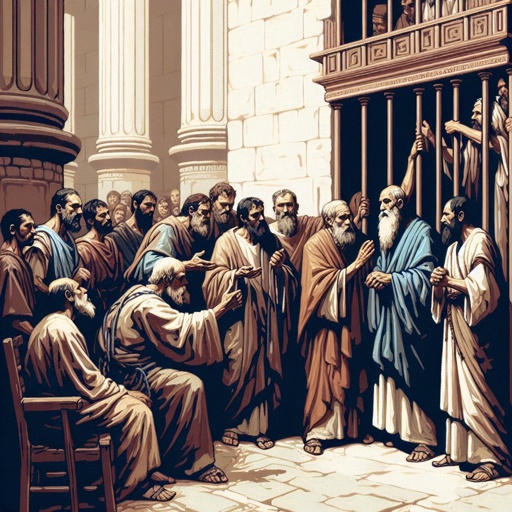
Acts 5:18 - "And laid their hands on the apostles, and put them in the common prison."

Acts 28:5 - "And he shook off the beast into the fire, and felt no harm."

Acts 19:5 - "When they heard this, they were baptized in the name of the Lord Jesus."

Acts 4 Peter before the Sanhedrin

Acts 16:5 - "And so were the churches established in the faith, and increased in number daily."

Acts 5:20 - "Go, stand and speak in the temple to the people all the words of this life."

Acts 5:22 - "But when the officers came, and found them not in the prison, they returned, and told,"

His shadow healed the sick (Acts 5)

Acts 6:4 - "But we will give ourselves continually to prayer, and to the ministry of the word."

1 Timothy 5:4 - "But if any widow have children or nephews, let them learn first to shew piety at home, and to requite their parents: for that is good and acceptable before God."

Acts 23:4 - "And they that stood by said, Revilest thou God's high priest?"

Acts 8:5 - "Then Philip went down to the city of Samaria, and preached Christ unto them."

Acts 5:13 - "And of the rest durst no man join himself to them: but the people magnified them."