What does Acts 5:37 mean?
"After this man rose up Judas of Galilee in the days of the taxing, and drew away much people after him: he also perished; and all, even as many as obeyed him, were dispersed." - Acts 5:37

The verse Acts 5:37 in the King James Version of the Bible reads as follows:
"After this man rose up Judas of Galilee in the days of the taxing, and drew away much people after him: he also perished; and all, even as many as obeyed him, were dispersed."
This verse is part of a larger passage in the book of Acts that recounts the story of the early Christian church and its interactions with the ruling authorities in Jerusalem. In this particular verse, the author, Luke, is referring to a historical figure named Judas of Galilee who led a revolt during the time of the Roman census, or taxing, under the rule of the Roman governor Quirinius.
In order to fully understand the meaning and commentary of this specific verse, it is important to consider the broader context of the book of Acts and the historical and cultural background of the time. The book of Acts, often referred to as the Acts of the Apostles, is a continuation of the Gospel of Luke and provides a historical account of the early Christian church, from the ascension of Jesus to the activities of the apostles in spreading the gospel to the Gentiles.
The verse in question is part of a speech delivered by Gamaliel, a prominent Pharisee and teacher of the law, to the Sanhedrin, the Jewish high court in Jerusalem. Gamaliel is cautioning the Sanhedrin against taking extreme measures against the apostles, who have been preaching the message of Jesus despite opposition from the religious and political authorities. In his speech, Gamaliel references the failed revolt led by Judas of Galilee and draws a parallel between that event and the current activities of the apostles.
The mention of Judas of Galilee serves as a historical reminder of the consequences of rebellion against the Roman authorities. Judas of Galilee, like many other zealots of his time, sought to resist Roman rule and incite a revolt against the oppressive taxation and foreign occupation. However, Judas and his followers were ultimately unsuccessful in their efforts and were dispersed, facing the same fate as their leader.
Through this reference, Gamaliel is advising the Sanhedrin to take a measured approach in their dealings with the apostles. He suggests that if the apostles' message is not from God, it will fade away on its own, just as the movements led by Judas of Galilee and others did. However, if the apostles are indeed preaching the truth, then the Sanhedrin would find themselves fighting against God, a losing battle.
The themes present in this verse include the tension between religious and political authority, the consequences of rebellion, and the providence of God. The context of Roman occupation and the heavy taxation imposed on the Jewish people bring to the forefront the struggle for freedom and autonomy, as well as the desire for a messianic figure to deliver them from their oppressors.
The symbolism of Judas of Galilee and his failed revolt serves as a cautionary tale for those who seek to challenge the established order through violent means. It also underscores the idea that ultimate victory and deliverance come from God, not from human efforts alone.
In conclusion, Acts 5:37 provides a historical and cautionary reference to the failed revolt of Judas of Galilee, urging the Sanhedrin to exercise caution in their response to the activities of the apostles. The verse reminds us of the complex political and religious dynamics of the time and the ongoing struggle for freedom and justice. Furthermore, it conveys the overarching theme of divine providence and the futility of resisting the will of God.
Have questions about Acts 5:37?
Dive deeper into this scripture with Bible Chat — an AI-powered tool for exploring God's Word through conversation. Ask questions, get context, and grow in your understanding of the Bible.
Get Our Apps


Acts 5:37 Artwork

Acts 5:37 - "After this man rose up Judas of Galilee in the days of the taxing, and drew away much people after him: he also perished; and all, even as many as obeyed him, were dispersed."
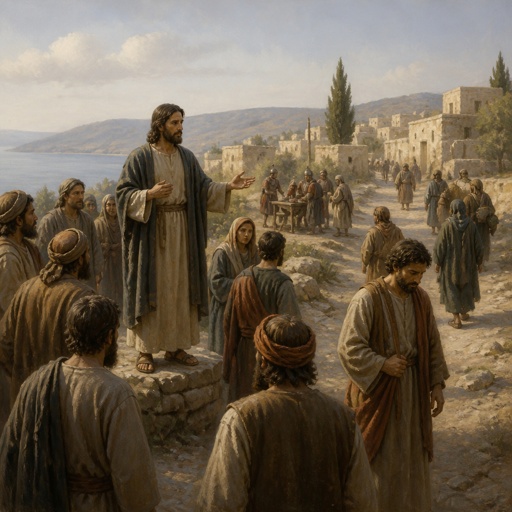
"After this man rose up Judas of Galilee in the days of the taxing, and drew away much people after him: he also perished; and all, even as many as obeyed him, were dispersed." - Acts 5:37

Acts 13:37 - "But he, whom God raised again, saw no corruption."

Acts 15:37 - "And Barnabas determined to take with them John, whose surname was Mark."

Acts 20:37 - "And they all wept sore, and fell on Paul's neck, and kissed him,"

Acts 4:37 - "Having land, sold it, and brought the money, and laid it at the apostles' feet."

Acts 27:37 - "And we were in all in the ship two hundred threescore and sixteen souls."

Acts 19:37 - "For ye have brought hither these men, which are neither robbers of churches, nor yet blasphemers of your goddess."

Isaiah 37:5 - "So the servants of king Hezekiah came to Isaiah."

Acts 9:37 - "And it came to pass in those days, that she was sick, and died: whom when they had washed, they laid her in an upper chamber."

"But he, whom God raised again, saw no corruption." - Acts 13:37

Acts 2:37 - "¶ Now when they heard this, they were pricked in their heart, and said unto Peter and to the rest of the apostles, Men and brethren, what shall we do?"

Exodus 37:5 - "And he put the staves into the rings by the sides of the ark, to bear the ark."

Acts 1:4-5

Acts 8:37 - "And Philip said, If thou believest with all thine heart, thou mayest. And he answered and said, I believe that Jesus Christ is the Son of God."

Acts 10:37 - "That word, I say, ye know, which was published throughout all Judaea, and began from Galilee, after the baptism which John preached;"

"And they all wept sore, and fell on Paul's neck, and kissed him," - Acts 20:37

"Having land, sold it, and brought the money, and laid it at the apostles' feet." - Acts 4:37

"And Barnabas determined to take with them John, whose surname was Mark." - Acts 15:37

Acts 21:37 - "And as Paul was to be led into the castle, he said unto the chief captain, May I speak unto thee? Who said, Canst thou speak Greek?"

Genesis 37:5 - "¶ And Joseph dreamed a dream, and he told it his brethren: and they hated him yet the more."

Mark 5:37 - "And he suffered no man to follow him, save Peter, and James, and John the brother of James."

"And we were in all in the ship two hundred threescore and sixteen souls." - Acts 27:37

Matthew 5:37 - "But let your communication be, Yea, yea; Nay, nay: for whatsoever is more than these cometh of evil."

Psalms 37:5 - "Commit thy way unto the LORD; trust also in him; and he shall bring it to pass."

Acts 21:5-6

Job 37:5 - "God thundereth marvellously with his voice; great things doeth he, which we cannot comprehend."

"So the servants of king Hezekiah came to Isaiah." - Isaiah 37:5

Acts 20:5 - "These going before tarried for us at Troas."

Acts 7:37 - "¶ This is that Moses, which said unto the children of Israel, A prophet shall the Lord your God raise up unto you of your brethren, like unto me; him shall ye hear."