What does Acts 4:5 mean?
"¶ And it came to pass on the morrow, that their rulers, and elders, and scribes," - Acts 4:5

The verse Acts 4:5 in the King James Version of the Bible reads, "And it came to pass on the morrow, that their rulers, and elders, and scribes." This verse is part of a larger passage that describes the reaction of the religious and political authorities to the preaching and miracles performed by the apostles in the early days of the Christian church.
The book of Acts, written by Luke, provides a historical account of the early church and the spread of Christianity after the death and resurrection of Jesus Christ. In this particular verse, we see the response of the Jewish religious leaders to the apostles' preaching. They had arrested Peter and John, who had been preaching the message of Jesus Christ and performing miracles, and brought them before the Sanhedrin, the ruling body of the Jewish people. The rulers, elders, and scribes mentioned in this verse were the members of this council.
The context of this verse is important for understanding its significance. The early church faced significant opposition from the religious and political authorities of the time. The Jewish leaders saw the apostles as a threat to their authority and to the traditional Jewish religious practices. They were particularly troubled by the apostles' claim that Jesus had risen from the dead and was the long-awaited Messiah. This challenge to their religious beliefs and power structure led them to persecute and oppose the early Christians.
The themes present in this verse and the surrounding passage include the conflict between the religious establishment and the message of the Gospel, the courage and boldness of the apostles in the face of opposition, and the sovereignty of God over human authorities. The conflict between the religious leaders and the apostles highlights the broader theme of persecution and suffering for the sake of the Gospel, which was a reality for many early Christians.
The verse also contains symbolism that reflects the spiritual battle taking place in the early church. The rulers, elders, and scribes represent the human authorities that stood in opposition to the message of Jesus Christ. Their collective opposition symbolizes the broader spiritual forces that resist the spread of the Gospel and seek to suppress the truth. The apostles, on the other hand, represent the boldness and empowerment of the Holy Spirit, as they fearlessly proclaimed the truth in the face of opposition.
In addition to its historical context, this verse also holds relevance for contemporary Christians. It serves as a reminder of the ongoing conflict between the values of the Kingdom of God and the values of the world. The apostles' response to persecution and opposition serves as an example of courage and steadfastness in the face of adversity. This passage challenges believers to stand firm in their faith and to boldly proclaim the truth of the Gospel, even when faced with opposition or persecution.
In conclusion, Acts 4:5 in the King James Version of the Bible captures a pivotal moment in the early church's history, highlighting the conflict between the religious leaders and the apostles, and the themes of persecution, courage, and the sovereignty of God. The passage's symbolism and relevance for contemporary Christians make it a powerful reminder of the ongoing spiritual battle and the call to stand firm in the faith.
Have questions about Acts 4:5?
Dive deeper into this scripture with Bible Chat — an AI-powered tool for exploring God's Word through conversation. Ask questions, get context, and grow in your understanding of the Bible.
Get Our Apps


Acts 4:5 Artwork

Acts 4:5 - "¶ And it came to pass on the morrow, that their rulers, and elders, and scribes,"

"¶ And it came to pass on the morrow, that their rulers, and elders, and scribes," - Acts 4:5

Acts 1:4-5

Acts 5:4 - "Whiles it remained, was it not thine own? and after it was sold, was it not in thine own power? why hast thou conceived this thing in thine heart? thou hast not lied unto men, but unto God."

Acts 4:30

Acts 4:30

Acts 4:30

Acts 2:4

Acts 4:30

Acts 2:4

Acts 2:4

Acts 21:5-6

Acts 20:5 - "These going before tarried for us at Troas."

Acts 4:8-12

Acts 4:4 - "Howbeit many of them which heard the word believed; and the number of the men was about five thousand."

Acts 5:5 - "And Ananias hearing these words fell down, and gave up the ghost: and great fear came on all them that heard these things."
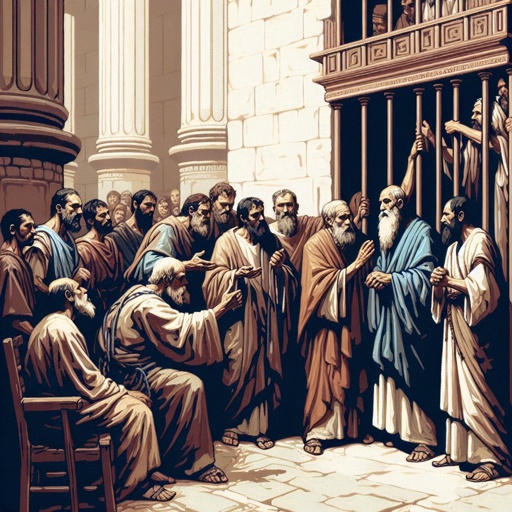
Acts 5:18 - "And laid their hands on the apostles, and put them in the common prison."

Acts 28:5 - "And he shook off the beast into the fire, and felt no harm."

Acts 19:5 - "When they heard this, they were baptized in the name of the Lord Jesus."

Acts 4 Peter before the Sanhedrin

Acts 16:5 - "And so were the churches established in the faith, and increased in number daily."

Acts 5:20 - "Go, stand and speak in the temple to the people all the words of this life."

Acts 5:22 - "But when the officers came, and found them not in the prison, they returned, and told,"

His shadow healed the sick (Acts 5)

Acts 6:4 - "But we will give ourselves continually to prayer, and to the ministry of the word."

1 Timothy 5:4 - "But if any widow have children or nephews, let them learn first to shew piety at home, and to requite their parents: for that is good and acceptable before God."

Acts 23:4 - "And they that stood by said, Revilest thou God's high priest?"

Acts 8:5 - "Then Philip went down to the city of Samaria, and preached Christ unto them."

Acts 5:13 - "And of the rest durst no man join himself to them: but the people magnified them."

Acts 5:1 - "But a certain man named Ananias, with Sapphira his wife, sold a possession,"