What does Acts 4:19 mean?
"But Peter and John answered and said unto them, Whether it be right in the sight of God to hearken unto you more than unto God, judge ye." - Acts 4:19
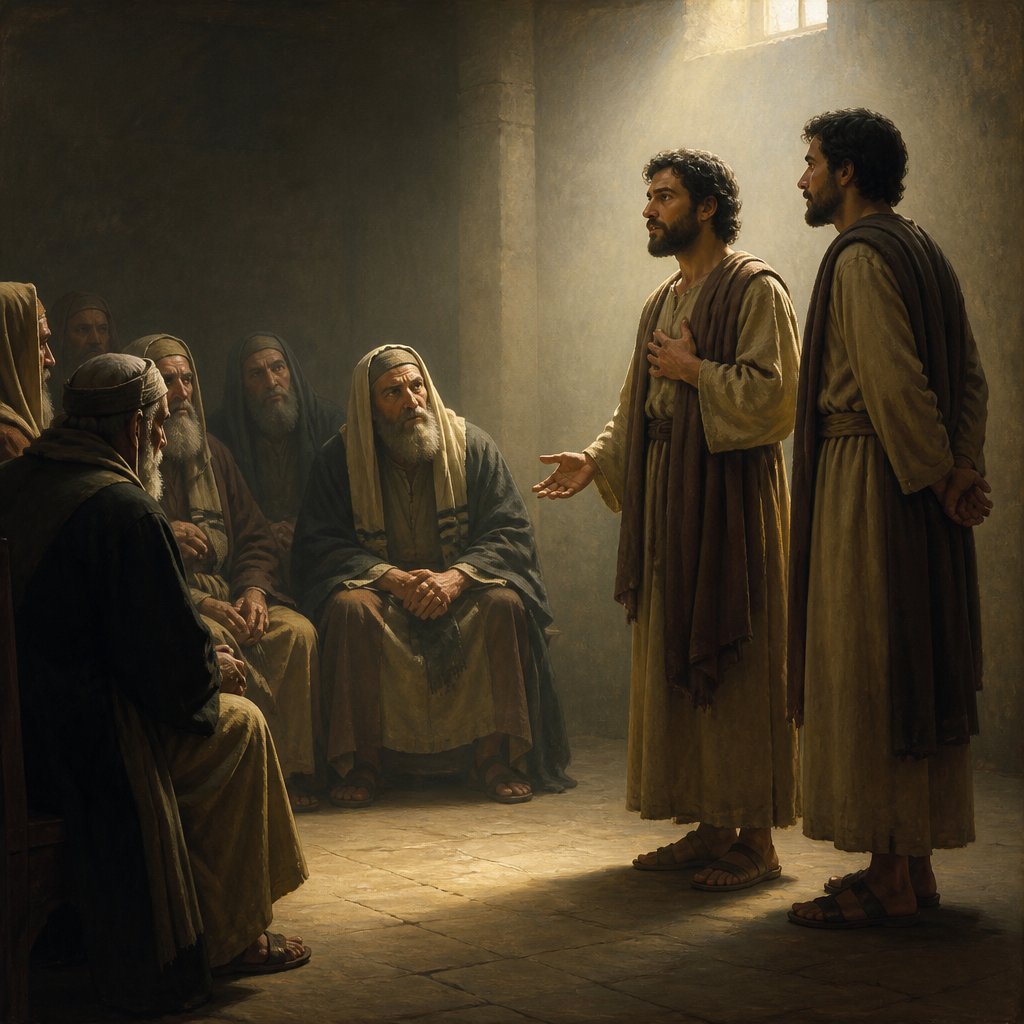
The verse Acts 4:19 in the King James Version of the Bible states, "But Peter and John answered and said unto them, Whether it be right in the sight of God to hearken unto you more than unto God, judge ye."
This verse occurs in the book of Acts, which is the fifth book of the New Testament and is a continuation of the Gospel of Luke. The book of Acts recounts the early history of the Christian church, from the ascension of Jesus to the missionary journeys of the apostles, and the spread of the gospel to the Gentiles. Acts 4:19 specifically takes place after the healing of a lame man by Peter and John, which led to their arrest and subsequent interrogation by the religious leaders.
The verse is part of Peter and John's response to the religious authorities who had commanded them to cease preaching in the name of Jesus. The religious leaders were trying to suppress the spread of Christianity, but Peter and John boldly refused to comply with their orders. Instead, they asserted that they must obey God rather than men, placing their allegiance to God above the demands of human authority.
The theme of obedience to God over human authority is central to this verse and is a recurring theme throughout the Bible. The concept of obeying God rather than men is deeply rooted in the Old Testament, where the prophets often faced opposition from earthly rulers but remained steadfast in their devotion to God. In the New Testament, Jesus himself was also subjected to the authority of the religious leaders and the Roman government, yet he consistently prioritized the will of God above all else.
Acts 4:19 emphasizes the conflict between the divine and the earthly, highlighting the tension that can arise when the two are in opposition. This verse challenges believers to consider where their ultimate allegiance lies and to prioritize obedience to God even in the face of opposition or persecution. It serves as a reminder that faithfulness to God may require standing against human authority when it conflicts with God's will.
The message of Acts 4:19 also extends beyond the historical context in which it was written and remains pertinent for contemporary believers. In a world where conflicting values and ideologies often compete for our allegiance, this verse calls us to examine our priorities and to remain steadfast in our commitment to God's will. It challenges us to consider whether we are willing to stand firm in our faith, even when it means facing opposition or persecution.
Symbolically, Acts 4:19 represents the eternal struggle between good and evil, righteousness and unrighteousness, and the divine and the earthly. It serves as a reminder of the unwavering faithfulness that God requires of his followers and the importance of standing firm in the face of adversity. The verse also demonstrates the courage and conviction of Peter and John, who boldly proclaimed their allegiance to God despite the potential consequences.
In conclusion, Acts 4:19 is a powerful and timeless reminder of the importance of obeying God rather than men, even in the face of opposition. This verse challenges believers to prioritize their commitment to God above all else and serves as a symbol of unwavering faithfulness and courage in the face of adversity. Its message resonates across time and culture, calling us to examine our own allegiance and to remain steadfast in our devotion to God's will.
Have questions about Acts 4:19?
Dive deeper into this scripture with Bible Chat — an AI-powered tool for exploring God's Word through conversation. Ask questions, get context, and grow in your understanding of the Bible.
Get Our Apps


Acts 4:19 Artwork

Acts 4:19 - "But Peter and John answered and said unto them, Whether it be right in the sight of God to hearken unto you more than unto God, judge ye."
"But Peter and John answered and said unto them, Whether it be right in the sight of God to hearken unto you more than unto God, judge ye." - Acts 4:19

Acts 19:4 - "Then said Paul, John verily baptized with the baptism of repentance, saying unto the people, that they should believe on him which should come after him, that is, on Christ Jesus."

Acts 19: 11

Acts 19:11

Acts 19:7 - "And all the men were about twelve."

Acts 4:30

Acts 4:30

Acts 4:30

Acts 2:4

Acts 4:30

Acts 19:11 - "And God wrought special miracles by the hands of Paul:"

Acts 19:20 - "So mightily grew the word of God and prevailed."

Acts 19:18 - "And many that believed came, and confessed, and shewed their deeds."

Acts 1:4-5

Acts 19:23 - "And the same time there arose no small stir about that way."

Acts 19:5 - "When they heard this, they were baptized in the name of the Lord Jesus."

Depict the events of Acts 19:14-17

Acts 2:4

Acts 2:4

Acts 19:41 - "And when he had thus spoken, he dismissed the assembly."

Acts 26:19 - "Whereupon, O king Agrippa, I was not disobedient unto the heavenly vision:"

Acts 27:19 - "And the third day we cast out with our own hands the tackling of the ship."

Acts 4:8-12

Acts 19:30 - "And when Paul would have entered in unto the people, the disciples suffered him not."

Acts 5:19 - "But the angel of the Lord by night opened the prison doors, and brought them forth, and said,"

Acts 19:36 - "Seeing then that these things cannot be spoken against, ye ought to be quiet, and to do nothing rashly."

Acts 19:19 - "Many of them also which used curious arts brought their books together, and burned them before all men: and they counted the price of them, and found it fifty thousand pieces of silver."

Acts 4:4 - "Howbeit many of them which heard the word believed; and the number of the men was about five thousand."

Acts 19:14 - "And there were seven sons of one Sceva, a Jew, and chief of the priests, which did so."