What does Acts 4:1 mean?
"And as they spake unto the people, the priests, and the captain of the temple, and the Sadducees, came upon them," - Acts 4:1
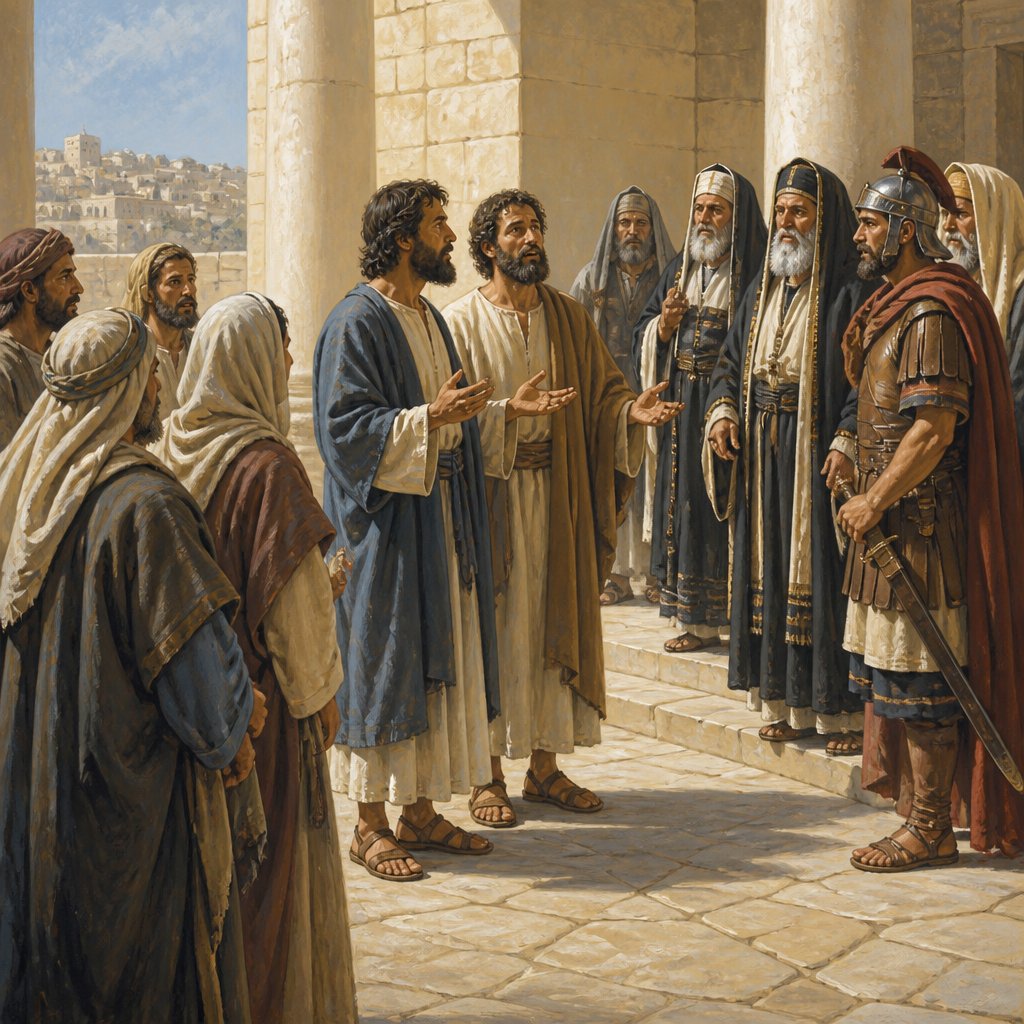
The Bible verse Acts 4:1 from the King James Version (KJV) reads:
“And as they spake unto the people, the priests, and the captain of the temple, and the Sadducees, came upon them,”
This verse takes place in the early days of the Christian church, shortly after the resurrection and ascension of Jesus Christ. The apostles Peter and John had just healed a crippled man at the temple gate, which had drawn a crowd of people who were amazed by the miraculous event. In response to this, the religious authorities of the time, including the priests, captain of the temple, and the Sadducees, approached Peter and John as they were speaking to the people.
The context of this verse is crucial to understanding its deeper meaning. The early Christian community was in the midst of a spiritual and ideological battle with the religious leaders and authorities of Judaism. The early Christians were proclaiming the message of Jesus Christ as the risen Savior and were performing miracles in His name. This was viewed as a threat to the established religious order and the leaders who held power within it. As a result, the religious authorities sought to suppress and silence this new movement by persecuting its leaders.
In Acts 4:1, the confrontation between the apostles and the religious authorities marks a pivotal moment in the early church's history. It symbolizes the clash between the old religious order and the new message of salvation through faith in Jesus Christ. The interaction between the apostles and the religious leaders serves as a testament to the courage and conviction of the apostles, who were willing to face persecution for the sake of spreading the Gospel.
This verse also highlights the theme of opposition and persecution that runs throughout the book of Acts. The early Christians faced intense opposition from both religious and political authorities, and Acts 4:1 sets the stage for the hardships and trials that the disciples would endure in their mission to spread the message of Christ.
Furthermore, the presence of the priests, captain of the temple, and the Sadducees in this verse holds significant symbolism. These were the key figures of religious and political authority in Jerusalem at the time, representing the traditional religious establishment. Their opposition to the apostles reflects the broader conflict between the message of Jesus Christ and the religious traditions and power structures of the time.
In a broader sense, this verse serves as a reminder of the ongoing struggle between the Kingdom of God and the forces of darkness and opposition in the world. The apostles' confrontation with the religious authorities demonstrates the inevitable conflict that arises when the truth of the Gospel challenges the values and beliefs of the world.
In conclusion, Acts 4:1 captures a crucial moment in the early days of the Christian church, as the apostles faced opposition and persecution from the religious authorities. This verse symbolizes the ongoing spiritual conflict between the message of Christ and the established religious order, and it illustrates the courage and conviction of the apostles in the face of opposition. Ultimately, Acts 4:1 reminds believers of the inevitable opposition and persecution that may arise when spreading the message of the Gospel, and it encourages them to stand firm in their faith despite the challenges they may face.
Have questions about Acts 4:1?
Dive deeper into this scripture with Bible Chat — an AI-powered tool for exploring God's Word through conversation. Ask questions, get context, and grow in your understanding of the Bible.
Get Our Apps


Acts 4:1 Artwork

Acts 4:1 - "And as they spake unto the people, the priests, and the captain of the temple, and the Sadducees, came upon them,"
"And as they spake unto the people, the priests, and the captain of the temple, and the Sadducees, came upon them," - Acts 4:1

Acts 1:4-5

Acts 4 Peter before the Sanhedrin

Acts 4:30

Acts 4:30

Acts 4:30

Acts 2:4

Acts 4:30

Acts 1:4 - "And, being assembled together with them, commanded them that they should not depart from Jerusalem, but wait for the promise of the Father, which, saith he, ye have heard of me."

Acts 2:4

Acts 2:4

Acts 4:8-12

Acts 4:4 - "Howbeit many of them which heard the word believed; and the number of the men was about five thousand."

Acts 4:5 - "¶ And it came to pass on the morrow, that their rulers, and elders, and scribes,"

Acts 6:4 - "But we will give ourselves continually to prayer, and to the ministry of the word."

Acts 23:4 - "And they that stood by said, Revilest thou God's high priest?"

Judges 4:1 - "And the children of Israel again did evil in the sight of the LORD, when Ehud was dead."

Acts 14:4 - "But the multitude of the city was divided: and part held with the Jews, and part with the apostles."

Acts 18:4 - "And he reasoned in the synagogue every sabbath, and persuaded the Jews and the Greeks."

Acts 4:37 - "Having land, sold it, and brought the money, and laid it at the apostles' feet."

Acts 8:4 - "Therefore they that were scattered abroad went every where preaching the word."

Acts 4:22 - "For the man was above forty years old, on whom this miracle of healing was shewed."

Acts 4:20 - "For we cannot but speak the things which we have seen and heard."

Acts 4:28 - "For to do whatsoever thy hand and thy counsel determined before to be done."

Acts 1:1-11

Acts 1:1-11

Acts 3:4 - "And Peter, fastening his eyes upon him with John, said, Look on us."

Acts 4:2 - "Being grieved that they taught the people, and preached through Jesus the resurrection from the dead."

Acts 4:18 - "And they called them, and commanded them not to speak at all nor teach in the name of Jesus."