What does Acts 2:29 mean?
"Men and brethren, let me freely speak unto you of the patriarch David, that he is both dead and buried, and his sepulchre is with us unto this day." - Acts 2:29
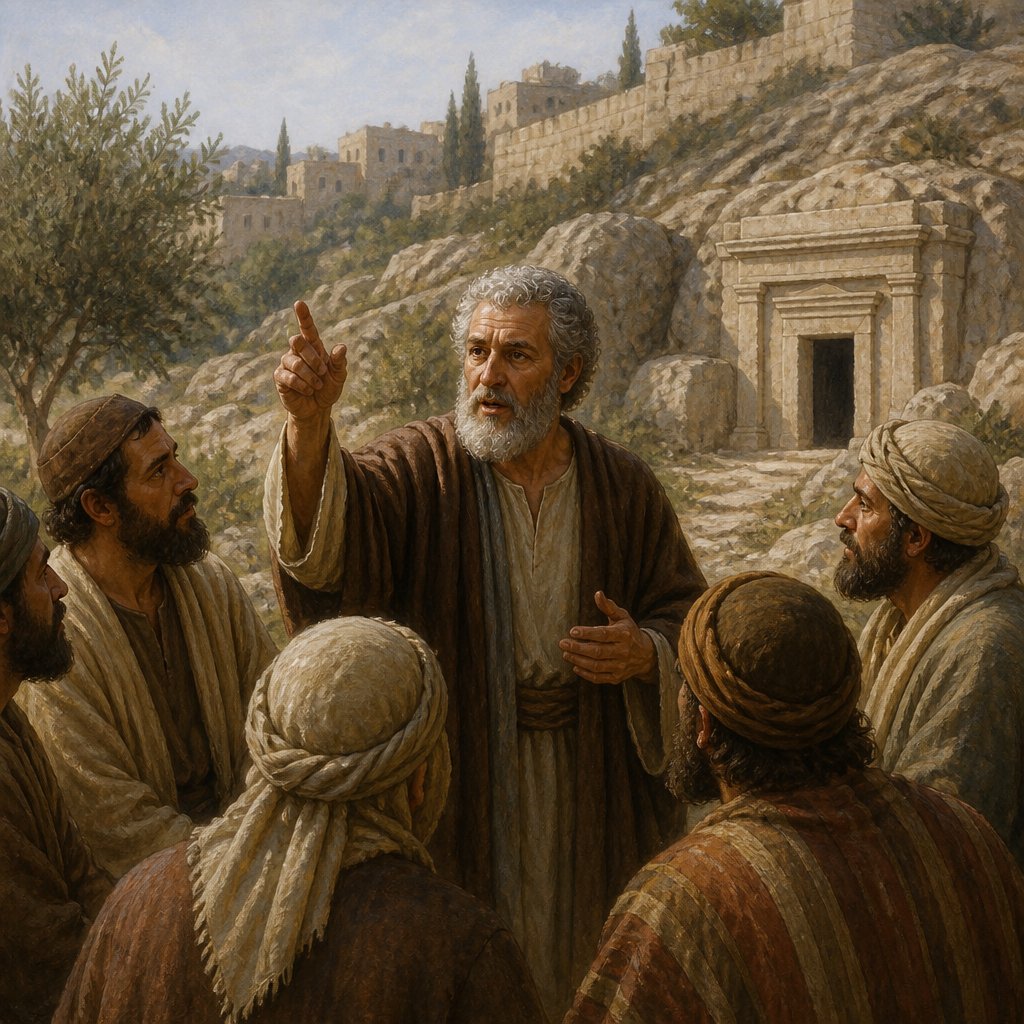
Acts 2:29 (KJV) - "Men and brethren, let me freely speak unto you of the patriarch David, that he is both dead and buried, and his sepulchre is with us unto this day."
In this verse from the book of Acts, the apostle Peter is addressing a crowd in Jerusalem on the day of Pentecost. He begins by referring to the patriarch David, whose tomb is still present in their midst. This verse is significant in its portrayal of the passing of time and the mortality of earthly leaders, while also hinting at the promise of eternal life and the enduring legacy of faith.
The context of this verse is crucial in understanding its deeper meaning. The apostle Peter is speaking to a crowd of Jews and proselytes who have gathered in Jerusalem for the Jewish feast of Pentecost. It is on this day that the Holy Spirit descends upon the apostles, enabling them to speak in tongues and proclaim the message of Jesus Christ to the assembled crowd. As part of his speech, Peter refers to the patriarch David, a revered figure in Jewish history and the author of many of the Psalms. By mentioning David's death and burial, Peter is drawing attention to the transient nature of human life and the mortality of even the most exalted figures.
The theme of mortality and the passage of time is central to this verse. By emphasizing the fact that David is "both dead and buried," Peter is reminding his audience of the temporal nature of human existence. This serves as a powerful reminder of the brevity of life and the inevitability of death. However, this acknowledgment of the transient nature of earthly life also serves to highlight the promise of eternal life and the enduring legacy of faith. In the Christian tradition, death is not the final end, but rather a transition to a new and everlasting existence in the presence of God.
The symbolism in this verse is rich and multi-layered. The mention of David's tomb serves as a potent symbol of mortality and the fleeting nature of earthly power and glory. It is a stark reminder that even the most illustrious figures in history are subject to the same fate as all humanity. However, the presence of David's sepulchre also symbolizes the enduring legacy of faith and the promise of resurrection. Just as David's tomb remains with the people of Jerusalem, so too does his memory and the legacy of his faith endure through the generations.
Furthermore, this verse underscores the continuity of the Christian faith with its Jewish roots. By referencing the patriarch David, Peter establishes a connection between the ancient promises of God and their fulfillment in Jesus Christ. This continuity serves to affirm the divine plan of salvation and the unbroken thread of God's redemptive work throughout history.
In conclusion, Acts 2:29 is a verse rich in meaning and significance. It encapsulates profound themes of mortality, eternity, and the enduring legacy of faith. Through its context, themes, and symbolism, this verse offers a powerful reminder of the transient nature of earthly life, while also pointing to the promise of eternal life and the continuity of God's redemptive plan. It is a verse that invites reflection on the brevity of human existence and the enduring hope found in the promises of God.
Have questions about Acts 2:29?
Dive deeper into this scripture with Bible Chat — an AI-powered tool for exploring God's Word through conversation. Ask questions, get context, and grow in your understanding of the Bible.
Get Our Apps


Acts 2:29 Artwork
Acts 2:29 - "Men and brethren, let me freely speak unto you of the patriarch David, that he is both dead and buried, and his sepulchre is with us unto this day."
"Men and brethren, let me freely speak unto you of the patriarch David, that he is both dead and buried, and his sepulchre is with us unto this day." - Acts 2:29
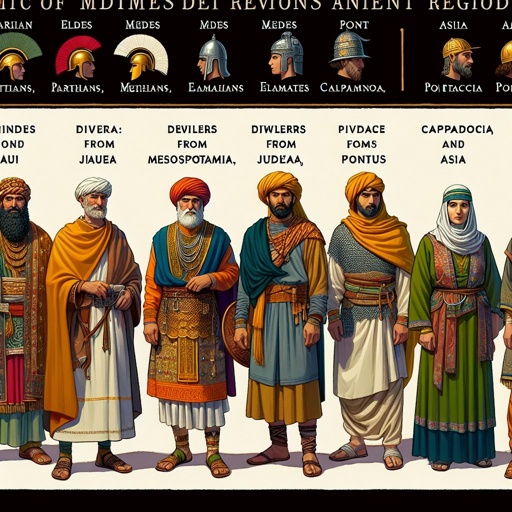
Acts 2:9 - "Parthians, and Medes, and Elamites, and the dwellers in Mesopotamia, and in Judaea, and Cappadocia, in Pontus, and Asia,"

2 Chronicles 9:29 - "¶ Now the rest of the acts of Solomon, first and last, are they not written in the book of Nathan the prophet, and in the prophecy of Ahijah the Shilonite, and in the visions of Iddo the seer against Jeroboam the son of Nebat?"

put on a scroll acts 15:29

1 Chronicles 29:29 - "Now the acts of David the king, first and last, behold, they are written in the book of Samuel the seer, and in the book of Nathan the prophet, and in the book of Gad the seer,"
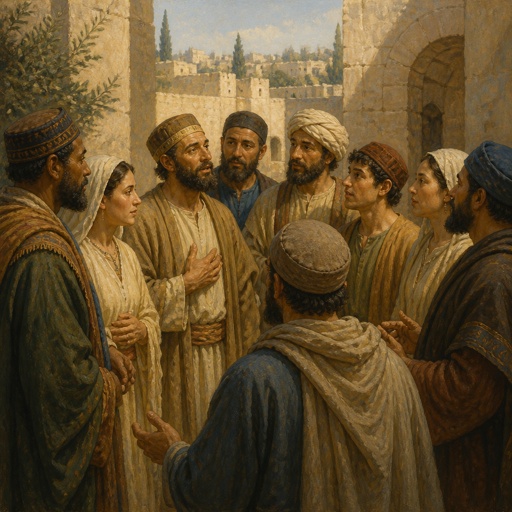
"Parthians, and Medes, and Elamites, and the dwellers in Mesopotamia, and in Judaea, and Cappadocia, in Pontus, and Asia," - Acts 2:9

Acts 8:29 - "Then the Spirit said unto Philip, Go near, and join thyself to this chariot."

Acts 16:29 - "Then he called for a light, and sprang in, and came trembling, and fell down before Paul and Silas,"

Acts 7:29 - "Then fled Moses at this saying, and was a stranger in the land of Madian, where he begat two sons."

Acts 5:29 - "¶ Then Peter and the other apostles answered and said, We ought to obey God rather than men."

Acts 28:29 - "And when he had said these words, the Jews departed, and had great reasoning among themselves."

1 Kings 14:29 - "¶ Now the rest of the acts of Rehoboam, and all that he did, are they not written in the book of the chronicles of the kings of Judah?"

Acts 20:29 - "For I know this, that after my departing shall grievous wolves enter in among you, not sparing the flock."

Acts 9:29 - "And he spake boldly in the name of the Lord Jesus, and disputed against the Grecians: but they went about to slay him."

Acts 21:29 - "(For they had seen before with him in the city Trophimus an Ephesian, whom they supposed that Paul had brought into the temple.)"

Acts 23:29 - "Whom I perceived to be accused of questions of their law, but to have nothing laid to his charge worthy of death or of bonds."

Acts 4:29 - "And now, Lord, behold their threatenings: and grant unto thy servants, that with all boldness they may speak thy word,"

Acts 13:29 - "And when they had fulfilled all that was written of him, they took him down from the tree, and laid him in a sepulchre."

Acts 11:29 - "Then the disciples, every man according to his ability, determined to send relief unto the brethren which dwelt in Judaea:"

Acts 27:29 - "Then fearing lest we should have fallen upon rocks, they cast four anchors out of the stern, and wished for the day."

Acts 2:2

Acts 2:2

Acts 17:29 - "Forasmuch then as we are the offspring of God, we ought not to think that the Godhead is like unto gold, or silver, or stone, graven by art and man's device."

Acts 19:29 - "And the whole city was filled with confusion: and having caught Gaius and Aristarchus, men of Macedonia, Paul's companions in travel, they rushed with one accord into the theatre."

Acts 10:29 - "Therefore came I unto you without gainsaying, as soon as I was sent for: I ask therefore for what intent ye have sent for me?"
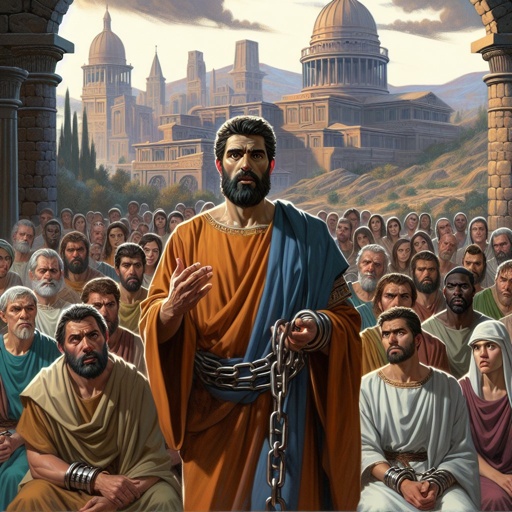
Acts 26:29 - "And Paul said, I would to God, that not only thou, but also all that hear me this day, were both almost, and altogether such as I am, except these bonds."
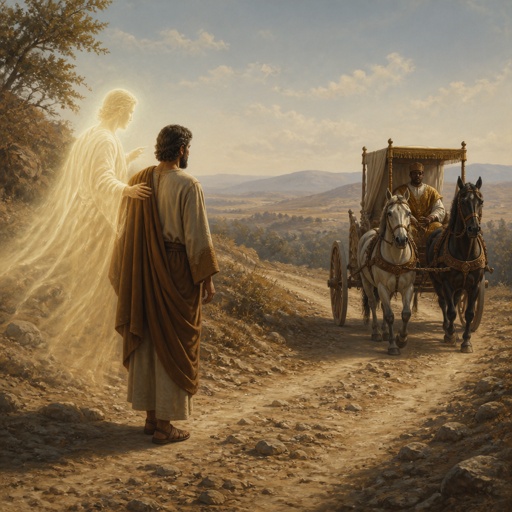
"Then the Spirit said unto Philip, Go near, and join thyself to this chariot." - Acts 8:29

Genesis 29-2

Philippians 2:29