What does Acts 2:1-4 mean?
"When the day of Pentecost arrived, they were all together in one place. And suddenly there came from heaven a sound like a mighty rushing wind, and it filled the entire house where they were sitting. And divided tongues as of fire appeared to them and rested on each one of them. And they were all filled with the Holy Spirit and began to speak in other tongues as the Spirit gave them utterance." - Acts 2:1-4
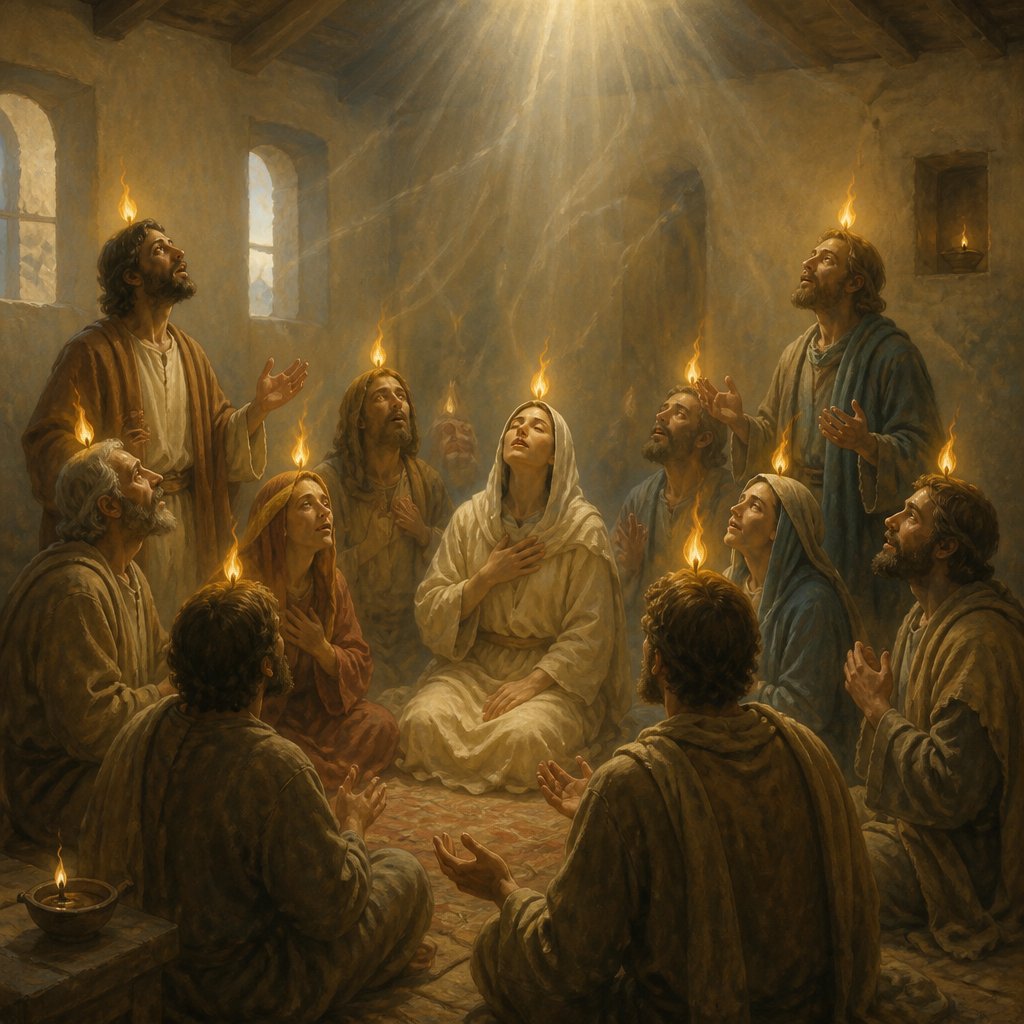
Acts 2:1-4 in the King James Version of the Bible reads:
1 And when the day of Pentecost was fully come, they were all with one accord in one place.
2 And suddenly there came a sound from heaven as of a rushing mighty wind, and it filled all the house where they were sitting.
3 And there appeared unto them cloven tongues like as of fire, and it sat upon each of them.
4 And they were all filled with the Holy Ghost, and began to speak with other tongues, as the Spirit gave them utterance.
This passage from Acts is a pivotal moment in Christian history, as it marks the outpouring of the Holy Spirit on the apostles and the beginning of the Christian church. The events of Pentecost described in these verses have significant symbolic and theological implications, and they have been interpreted and analyzed in various ways throughout Christian history.
The setting of this passage is the day of Pentecost, which was a Jewish festival that occurred fifty days after Passover. It was a time when Jews from all over the Roman Empire would come to Jerusalem to celebrate the harvest. The fact that the outpouring of the Holy Spirit happened on this day holds great significance. It signifies a new era and a new harvest, not of crops, but of souls for the kingdom of God.
The first verse states that the disciples were all together in one place, in one accord. This unity and harmony among the believers is crucial to the events that were about to unfold. The coming of the Holy Spirit is often associated with unity among believers, and this passage demonstrates the importance of being in agreement and in fellowship with one another.
Verse 2 describes the sudden arrival of the Holy Spirit with the sound of a rushing wind. This wind is often interpreted as a symbol of the Spirit's power and presence. In the Old Testament, the wind is associated with the breath of God, and in the New Testament, it is often linked to the Holy Spirit. The wind filling the entire house suggests that the presence of the Holy Spirit is all-encompassing and cannot be contained.
The appearance of "cloven tongues like as of fire" in verse 3 is another powerful symbol. Fire is often associated with purification, passion, and the presence of God. In this context, the fire resting upon the disciples signifies the empowerment and purification of the Holy Spirit. It also links back to Old Testament imagery, where God's presence was often symbolized by fire, such as in the burning bush when God appeared to Moses.
Verse 4 tells us that the disciples were filled with the Holy Ghost and began to speak in other tongues. This miraculous event is often referred to as the gift of speaking in tongues or glossolalia. It is a sign of the presence and power of the Holy Spirit, and it plays a significant role in the early church. This ability to speak in different languages enabled the disciples to communicate the gospel to people from various nations who were gathered in Jerusalem for the feast of Pentecost.
The themes and theological implications of this passage are abundant. It speaks of the empowerment of the Holy Spirit, the unity of believers, the proclamation of the gospel to all nations, and the birth of the Christian church. The coming of the Holy Spirit empowered the disciples to be bold witnesses for Christ, and it marked the beginning of a new era in God's redemptive plan for humanity. This event is often seen as the fulfillment of Jesus' promise to send the Holy Spirit, as recorded in the Gospels.
In conclusion, Acts 2:1-4 is a rich and profound passage that holds great theological significance for the Christian faith. It speaks of the supernatural empowerment of the Holy Spirit, the unity of believers, and the mission to spread the gospel to all nations. It marks the birth of the Christian church and the beginning of a new era in God's redemptive plan. The symbols and themes in this passage have been cherished and studied by Christians for centuries, and they continue to inspire and guide believers in their faith and mission.
Have questions about Acts 2:1-4?
Dive deeper into this scripture with Bible Chat — an AI-powered tool for exploring God's Word through conversation. Ask questions, get context, and grow in your understanding of the Bible.
Get Our Apps


Acts 2:1-4 Artwork

Acts 2:1-4 - "When the day of Pentecost came, they were all together in one place. Suddenly a sound like the blowing of a violent wind came from heaven and filled the whole house where they were sitting. They saw what seemed to be tongues of fire that separated and came to rest on each of them. All of them were filled with the Holy Spirit and began to speak in other tongues as the Spirit enabled them."
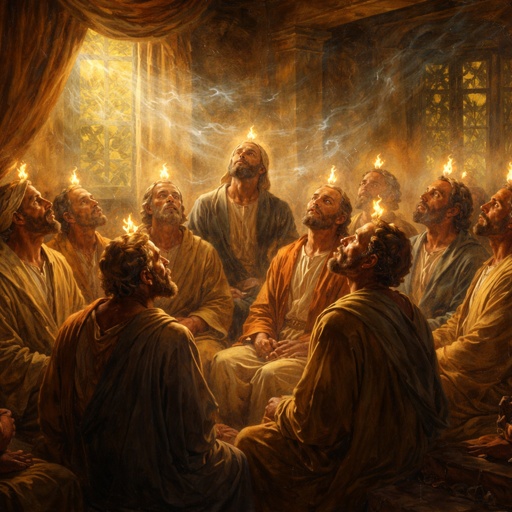
Acts 2:1-4, Pentecost, In the style of Thomas Kinkade, group of twelve adult Middle Eastern men in simple first‑century robes, gathered closely together in an upper room in Jerusalem, seated and standing, eyes lifted or closed, expressions full of awe, soft golden light filling the room, small tongues of fire resting above each person’s head, subtle swirling wind and light around them symbolizing the Holy Spirit, cinematic lighting, high detail, reverent
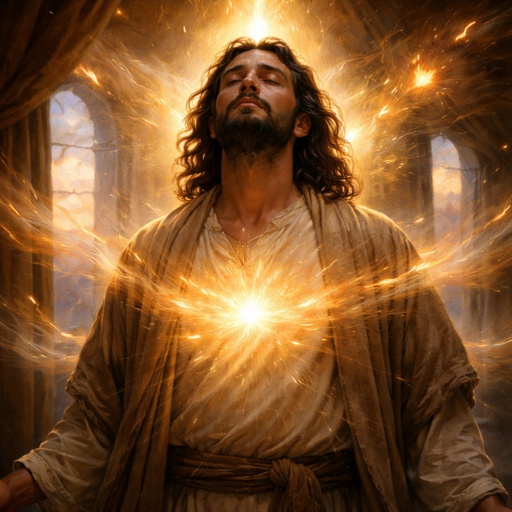
Acts 2:1-4, Pentecost – single man filled with the Spirit, hyper‑realistic photo, adult Middle Eastern man in simple first‑century robes, standing indoors in an upper room in Jerusalem at dawn, eyes closed, face peaceful, head slightly tilted up, soft golden light and gentle flames of fire hovering above and around him, fire blending into glowing wind and light entering his chest, symbolizing being filled with the Holy Spirit, cinematic lighting, high detail, reverent.’
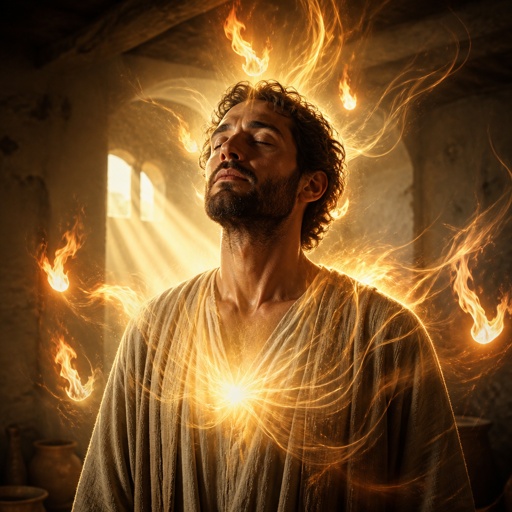
Acts 2:1-4, Pentecost – single man filled with the Spirit, hyper‑realistic photo, adult Middle Eastern man in simple first‑century robes, standing indoors in an upper room in Jerusalem at dawn, eyes closed, face peaceful, head slightly tilted up, soft golden light and gentle flames of fire hovering above and around him, fire blending into glowing wind and light entering his chest, symbolizing being filled with the Holy Spirit, cinematic lighting, high detail, reverent.’
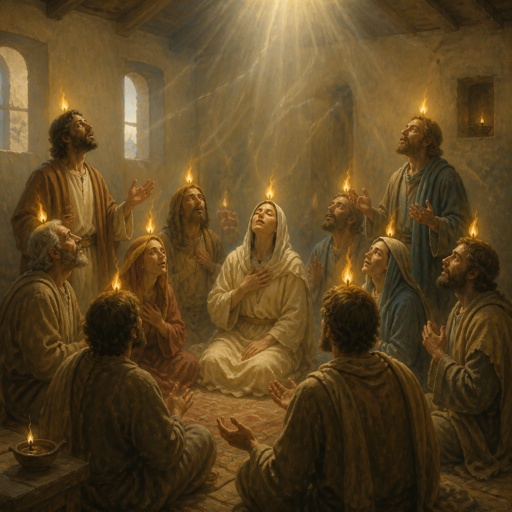
"When the day of Pentecost came, they were all together in one place. Suddenly a sound like the blowing of a violent wind came from heaven and filled the whole house where they were sitting. They saw what seemed to be tongues of fire that separated and came to rest on each of them. All of them were filled with the Holy Spirit and began to speak in other tongues as the Spirit enabled them." - Acts 2:1-4

Acts 2:4

Acts 2:4

Acts 2:4

Acts 1:4-5

Acts 2:1 - "And when the day of Pentecost was fully come, they were all with one accord in one place."

Acts 4 Peter before the Sanhedrin

Acts 2:41

Acts 4:2 - "Being grieved that they taught the people, and preached through Jesus the resurrection from the dead."

Acts 2:38-41

Acts 4:1 - "And as they spake unto the people, the priests, and the captain of the temple, and the Sadducees, came upon them,"

Acts 2:4 - "And they were all filled with the Holy Ghost, and began to speak with other tongues, as the Spirit gave them utterance."

"And when the day of Pentecost was fully come, they were all with one accord in one place." - Acts 2:1

create an image to show Acts 2:17

James 2:2-4

James 1:2-4

James 1: 2-4

Acts 4:30

Acts 4:30

Acts 4:30

Acts 4:30

Romans 2:4

1 Corinthians 4:1-2

Mark 2:4

2 Kings 1:18 - "Now the rest of the acts of Ahaziah which he did, are they not written in the book of the chronicles of the kings of Israel?"

Acts 1:4 - "And, being assembled together with them, commanded them that they should not depart from Jerusalem, but wait for the promise of the Father, which, saith he, ye have heard of me."