What does Acts 24:7 mean?
"But the chief captain Lysias came upon us, and with great violence took him away out of our hands," - Acts 24:7
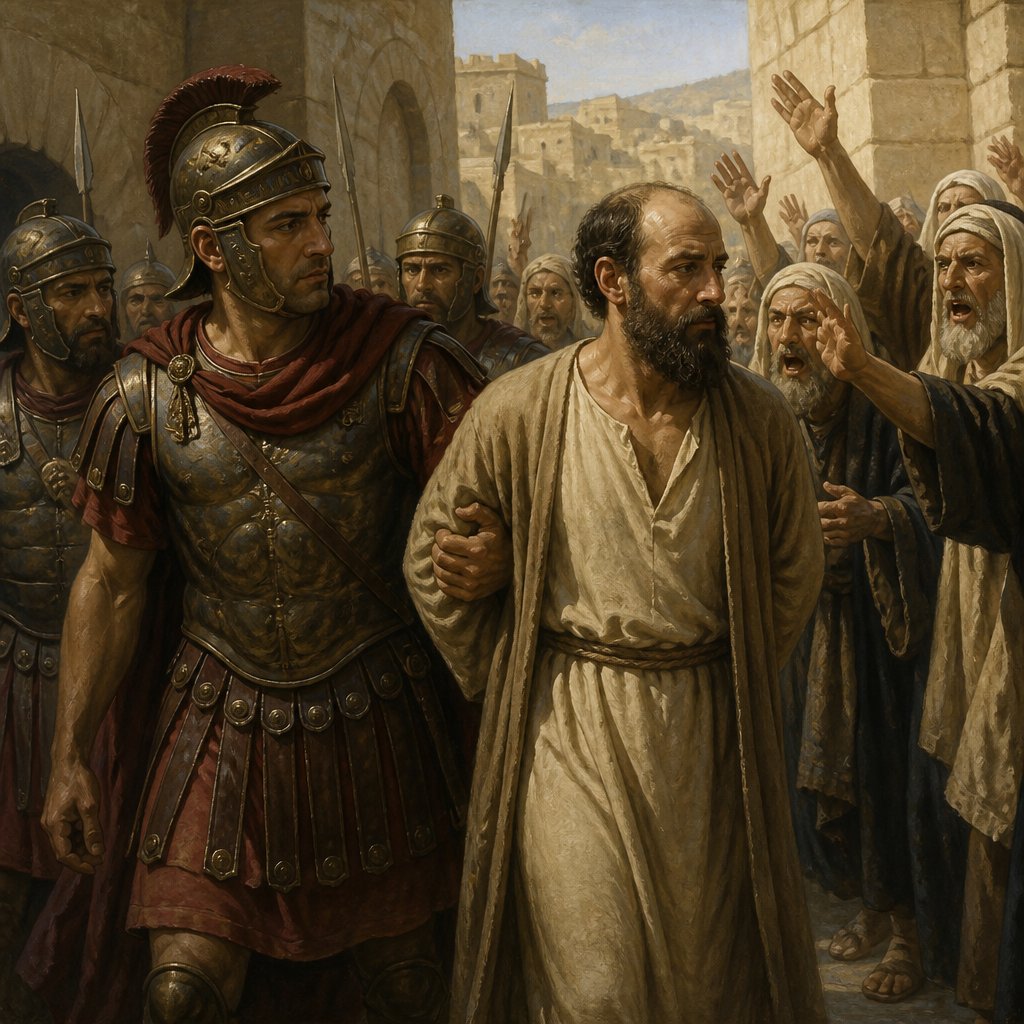
In Acts 24:7, the King James Version (KJV) of the Bible states, "But the chief captain Lysias came upon us, and with great violence took him away out of our hands." This verse comes from the book of Acts in the New Testament and is part of a larger passage that describes the accusations brought against the apostle Paul by the Jewish leaders in Jerusalem.
To understand the deeper meaning and commentary of Acts 24:7, it is important to consider the broader context in which this verse appears. In the preceding verses, the Jewish leaders accuse Paul of being a troublemaker and a ringleader of the sect of the Nazarenes. They also claim that he had tried to profane the temple, which was a serious charge in Jewish society at the time.
In this specific verse, the chief captain Lysias is mentioned as having intervened and taken Paul away from the hands of the Jewish leaders. This action is described as being carried out with "great violence," indicating that there was a contentious and tumultuous situation surrounding Paul's arrest and custody.
From a historical perspective, this passage sheds light on the religious and political tensions that existed in the ancient world, particularly between the Jewish authorities and the Roman empire. The chief captain Lysias, as a representative of Roman authority, plays a crucial role in maintaining order and preventing potential unrest or uprising among the Jewish population.
On a symbolic level, this verse can be interpreted as a demonstration of the conflict between earthly powers and divine purpose. The Jewish leaders, driven by their religious fervor and desire for control, seek to silence and persecute Paul, who is a proponent of the Christian faith. In contrast, the intervention of the chief captain Lysias represents the influence of secular authority and the need for maintaining social order.
In terms of themes, Acts 24:7 touches upon the concepts of justice, persecution, and the clash between religious and secular authority. It highlights the challenges and opposition faced by early Christian believers as they sought to spread their message in a world dominated by various religious and political forces.
Furthermore, this passage serves as a reminder of the inherent tension and conflict that can arise when faith and ideology clash with the powers that be. It prompts readers to consider the role of authority and the ways in which it can either aid or hinder the advancement of religious beliefs and values.
In a broader theological sense, Acts 24:7 can also be seen as illustrating the concept of divine providence and the notion that God's will ultimately prevails, even in the face of opposition and persecution. The intervention of the chief captain Lysias, while carried out with "great violence," ultimately serves to protect Paul and allow for the continuation of his mission.
In conclusion, Acts 24:7, within the broader context of the book of Acts, provides valuable insights into the historical, symbolic, and theological dimensions of the early Christian movement. It sheds light on the complexities of religious and political dynamics in the ancient world and prompts readers to reflect on the enduring themes of faith, persecution, and the triumph of divine purpose.
Have questions about Acts 24:7?
Dive deeper into this scripture with Bible Chat — an AI-powered tool for exploring God's Word through conversation. Ask questions, get context, and grow in your understanding of the Bible.
Get Our Apps


Acts 24:7 Artwork

Acts 24:7 - "But the chief captain Lysias came upon us, and with great violence took him away out of our hands,"
"But the chief captain Lysias came upon us, and with great violence took him away out of our hands," - Acts 24:7

Acts 7:24 - "And seeing one of them suffer wrong, he defended him, and avenged him that was oppressed, and smote the Egyptian:"
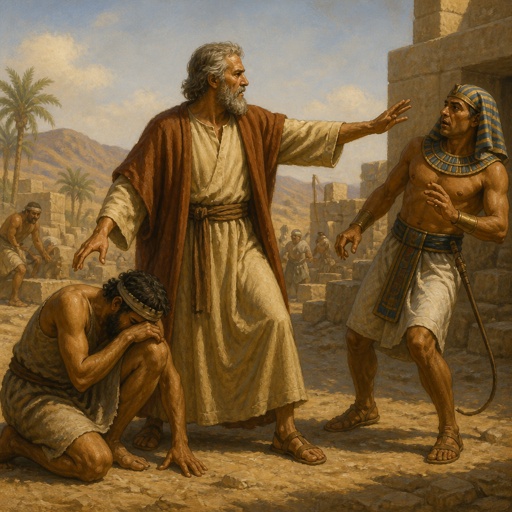
"And seeing one of them suffer wrong, he defended him, and avenged him that was oppressed, and smote the Egyptian:" - Acts 7:24

Acts 12:24 - "¶ But the word of God grew and multiplied."

Acts 24:9 - "And the Jews also assented, saying that these things were so."

Acts 3:6-7

Acts 3:6-7

Acts 14:24 - "And after they had passed throughout Pisidia, they came to Pamphylia."

Acts 3:6-7

Acts 3:6-7

Acts 3:6-7

Acts 24:13 - "Neither can they prove the things whereof they now accuse me."

Acts 28:24 - "And some believed the things which were spoken, and some believed not."

Acts 24:24 - "And after certain days, when Felix came with his wife Drusilla, which was a Jewess, he sent for Paul, and heard him concerning the faith in Christ."

Acts 14:7 - "And there they preached the gospel."

"¶ But the word of God grew and multiplied." - Acts 12:24

Acts 9:24 - "But their laying await was known of Saul. And they watched the gates day and night to kill him."

Acts 24:3 - "We accept it always, and in all places, most noble Felix, with all thankfulness."

Genesis 24-7

Acts 24:17 - "Now after many years I came to bring alms to my nation, and offerings."

acts 20:7-12

Acts 7:47 - "But Solomon built him an house."

Acts 23:24 - "And provide them beasts, that they may set Paul on, and bring him safe unto Felix the governor."

Acts 16:24 - "Who, having received such a charge, thrust them into the inner prison, and made their feet fast in the stocks."

Acts 11:24 - "For he was a good man, and full of the Holy Ghost and of faith: and much people was added unto the Lord."

Acts 24:19 - "Who ought to have been here before thee, and object, if they had ought against me."

Acts 18:24 - "¶ And a certain Jew named Apollos, born at Alexandria, an eloquent man, and mighty in the scriptures, came to Ephesus."

2 Kings 24:5 - "¶ Now the rest of the acts of Jehoiakim, and all that he did, are they not written in the book of the chronicles of the kings of Judah?"

Acts 7:1 - "Then said the high priest, Are these things so?"