What does Acts 24:13 mean?
"Neither can they prove the things whereof they now accuse me." - Acts 24:13

The verse Acts 24:13 in the King James Version of the Bible states, "Neither can they prove the things whereof they now accuse me." This verse is part of a larger passage in which the apostle Paul, a devout follower of Jesus Christ, is defending himself against false accusations made by the Jewish high priest and other religious leaders. Paul had been arrested and brought before a Roman governor named Felix, who was known for his corruption and injustice.
In this particular verse, Paul is challenging the accusations brought against him by asserting that the religious leaders cannot prove the things they are accusing him of. This statement is not only a defense of Paul's innocence, but it also reflects a larger theme of justice and truth within the Christian faith.
One of the central themes of the Bible is the pursuit of justice and righteousness. Throughout the Old and New Testaments, there are numerous examples of individuals standing up for what is right and opposing false accusations and unjust treatment. The story of Joseph being falsely accused by Potiphar's wife in the book of Genesis and the trials of Job in the book of Job are just a few examples of this theme.
In the case of Paul, his assertion that his accusers cannot prove their accusations speaks to the importance of evidence and truth in the pursuit of justice. In the Christian faith, honesty and integrity are highly valued, and the notion of false accusations goes against the teachings of Jesus Christ, who stressed the importance of love, forgiveness, and truth.
Furthermore, the context of this verse is important to consider. At the time of Paul's defense, he was living in a society marked by corruption and abuse of power. Roman governors often ruled with impunity, and the Jewish religious leaders had a reputation for using their influence to oppress and manipulate others. In this context, Paul's assertion that his accusers cannot prove their accusations carries even more weight, as it challenges the unjust practices of those in authority.
Symbolism can also be found in this verse. The concept of "proof" is significant in the Christian faith, as it reflects the idea of evidence and validation. In this verse, Paul is calling for his accusers to provide concrete evidence to support their claims, and this notion of proof can be seen as a metaphor for the broader theme of faith in Christianity. Just as Paul is seeking proof of the accusations against him, Christians are called to seek proof and validation of their beliefs, and to stand up for truth even in the face of adversity.
In conclusion, Acts 24:13 in the King James Version of the Bible is a powerful and thought-provoking verse that speaks to the themes of justice, truth, and integrity within the Christian faith. Through his defense against false accusations, Paul exemplifies the importance of honesty and the pursuit of righteousness, while also challenging the unjust practices of those in authority. This verse serves as a reminder to Christians to stand up for what is right and to seek evidence and validation in their beliefs.
Have questions about Acts 24:13?
Dive deeper into this scripture with Bible Chat — an AI-powered tool for exploring God's Word through conversation. Ask questions, get context, and grow in your understanding of the Bible.
Get Our Apps


Acts 24:13 Artwork

Acts 24:13 - "Neither can they prove the things whereof they now accuse me."

"Neither can they prove the things whereof they now accuse me." - Acts 24:13

Acts 13:24 - "When John had first preached before his coming the baptism of repentance to all the people of Israel."

"When John had first preached before his coming the baptism of repentance to all the people of Israel." - Acts 13:24

Acts 12:24 - "¶ But the word of God grew and multiplied."

Acts 13:43

Acts 24:9 - "And the Jews also assented, saying that these things were so."

Acts 14:24 - "And after they had passed throughout Pisidia, they came to Pamphylia."

Acts 28:24 - "And some believed the things which were spoken, and some believed not."

Luke 13:24
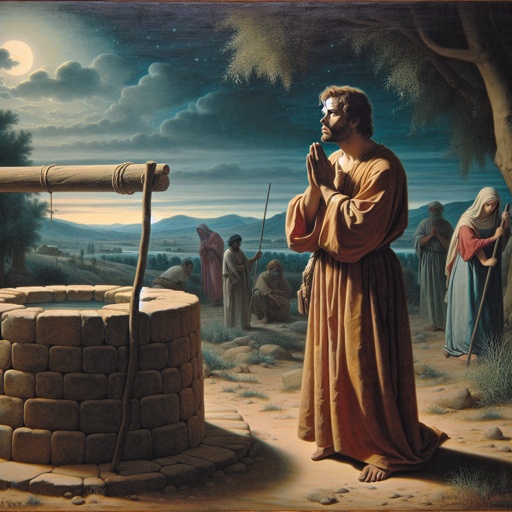
Genesis 24-13

Acts 24:24 - "And after certain days, when Felix came with his wife Drusilla, which was a Jewess, he sent for Paul, and heard him concerning the faith in Christ."

"¶ But the word of God grew and multiplied." - Acts 12:24

Acts 9:24 - "But their laying await was known of Saul. And they watched the gates day and night to kill him."

Acts 24:3 - "We accept it always, and in all places, most noble Felix, with all thankfulness."

Acts 13:30 - "But God raised him from the dead:"

Luke 24:13-35

Acts 24:17 - "Now after many years I came to bring alms to my nation, and offerings."

Acts 13:49 - "And the word of the Lord was published throughout all the region."

Acts 13:52 - "And the disciples were filled with joy, and with the Holy Ghost."

Acts 23:24 - "And provide them beasts, that they may set Paul on, and bring him safe unto Felix the governor."

Acts 16:24 - "Who, having received such a charge, thrust them into the inner prison, and made their feet fast in the stocks."

Acts 11:24 - "For he was a good man, and full of the Holy Ghost and of faith: and much people was added unto the Lord."

Acts 24:19 - "Who ought to have been here before thee, and object, if they had ought against me."

Acts 18:24 - "¶ And a certain Jew named Apollos, born at Alexandria, an eloquent man, and mighty in the scriptures, came to Ephesus."

Acts 13:37 - "But he, whom God raised again, saw no corruption."

1 Chronicles 24:13 - "The thirteenth to Huppah, the fourteenth to Jeshebeab,"

Leviticus 24:13 - "And the LORD spake unto Moses, saying,"

Acts 2:13 - "Others mocking said, These men are full of new wine."

2 Kings 24:5 - "¶ Now the rest of the acts of Jehoiakim, and all that he did, are they not written in the book of the chronicles of the kings of Judah?"