What does Acts 23:22 mean?
"So the chief captain then let the young man depart, and charged him, See thou tell no man that thou hast shewed these things to me." - Acts 23:22
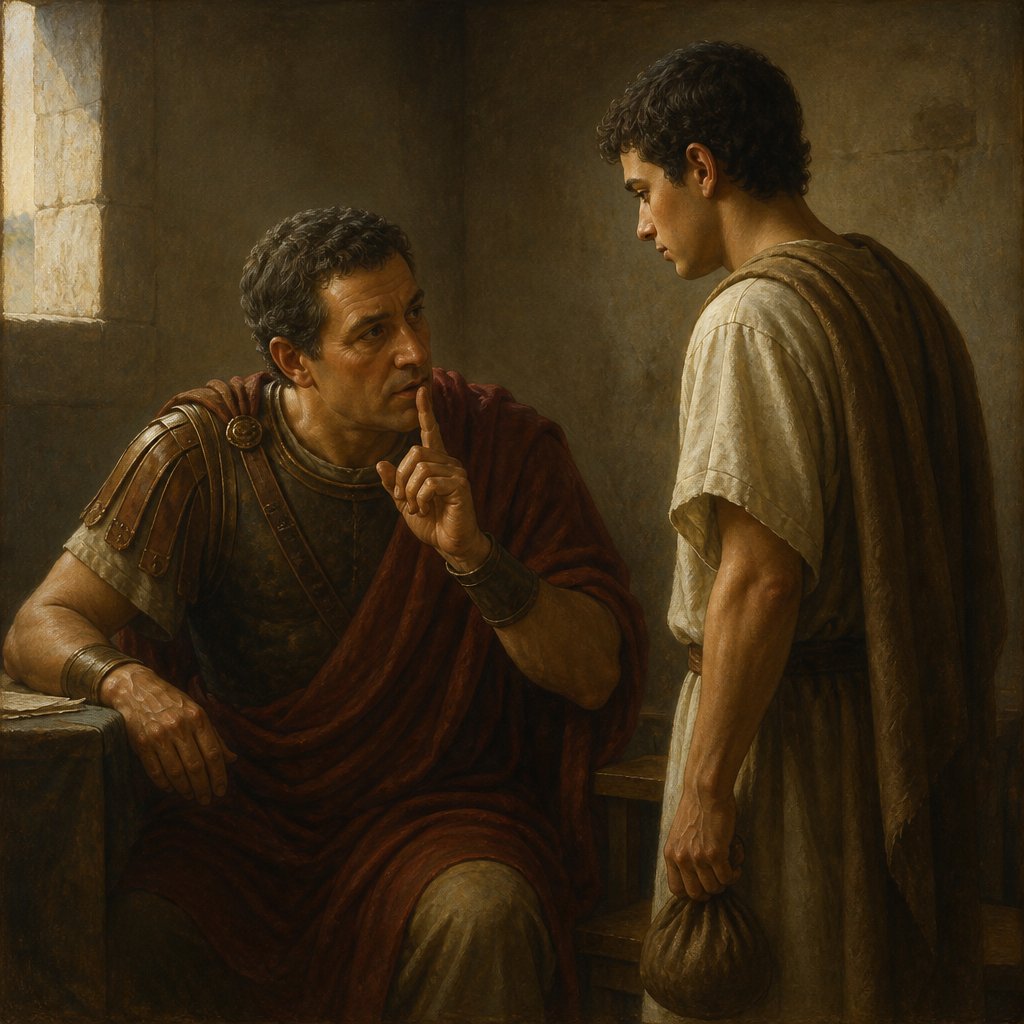
In Acts 23:22, the King James Version of the Bible records the following exchange: "So the chief captain then let the young man depart, and charged him, See thou tell no man that thou hast shewed these things to me."
This verse is part of the larger narrative in which the Apostle Paul finds himself in hot water with the Jewish high priest and the Roman authorities. The chief captain, who is likely a Roman official, is caught in the middle of what has become a charged and tumultuous situation. In this particular verse, the chief captain is sending a young man on his way with a warning not to disclose what he has witnessed.
In order to understand the full meaning and significance of this verse, it is important to delve into its themes, context, and symbolism.
Themes:
One prominent theme in this verse is the concept of secrecy and confidentiality. The chief captain's instructions for the young man not to disclose their conversation highlights the delicate and potentially dangerous nature of the situation. There are higher-level political and religious tensions at play, and the chief captain is seeking to avoid further complications by keeping the information under wraps. This theme raises questions about the ethics of secrecy and the trade-offs between transparency and the preservation of peace and order.
Another theme in this verse is the exercise of authority and power. The chief captain's order to the young man is a demonstration of his position of authority and his ability to dictate the behavior of others. This dynamic sheds light on the power structures at play in the Roman-occupied Judea and the ways in which individuals like the young man are subject to the whims of those in positions of authority.
Context:
The broader context of Acts 23 provides important insights into the implications of this specific verse. In the preceding passages, we see how the Apostle Paul's presence in Jerusalem has incited the anger of the Jewish high priest and his followers. Paul's adherence to his Christian beliefs has brought him into conflict with the religious establishment, leading to his arrest and interrogation by the Roman authorities.
The chief captain's intervention is a testament to the complex political and religious landscape of the time. He is tasked with maintaining order and preventing unrest, all while navigating the competing interests of the Jewish leaders, the Roman authorities, and the growing Christian community. This backdrop helps to elucidate the significance of his decision to keep the young man's information confidential, as it speaks to the fragile balance of power and the need for strategic maneuvering in a volatile environment.
Symbolism:
The act of sending the young man away with a directive to keep silent can be seen as a symbolic representation of the broader dynamics at play in Acts 23. The secrecy surrounding the interaction between the chief captain and the young man mirrors the larger themes of hidden motives, unspoken alliances, and the complexities of political maneuvering. It serves as a metaphor for the ways in which information is selectively shared and withheld in the pursuit of various agendas.
Furthermore, the young man himself may symbolize the marginalized and voiceless individuals caught up in the machinations of the powerful. His obedience to the chief captain's instructions underscores the asymmetrical power dynamics at play, where those in positions of authority wield control over the actions and fates of those without such power.
In conclusion, Acts 23:22 captures the essence of a pivotal moment in the narrative of the early Christian church, offering rich insights into themes of secrecy, authority, and the intricate web of political and religious forces at play. By examining the verse in its broader context and considering its symbolic dimensions, we gain a deeper understanding of the complexities and nuances of this historical and spiritual account.
Have questions about Acts 23:22?
Dive deeper into this scripture with Bible Chat — an AI-powered tool for exploring God's Word through conversation. Ask questions, get context, and grow in your understanding of the Bible.
Get Our Apps


Acts 23:22 Artwork

Acts 23:22 - "So the chief captain then let the young man depart, and charged him, See thou tell no man that thou hast shewed these things to me."
"So the chief captain then let the young man depart, and charged him, See thou tell no man that thou hast shewed these things to me." - Acts 23:22

Acts 22:23 - "And as they cried out, and cast off their clothes, and threw dust into the air,"

Acts 2:2-3

Acts 2:2-3

"And as they cried out, and cast off their clothes, and threw dust into the air," - Acts 22:23

Acts 1:21-23

Acts 1:21-22

Galatians5:22-23

Acts 1:21-22

Acts 23:25 - "And he wrote a letter after this manner:"

Galatians5:22-23

Genesis 22-23

Leviticus 23:15-22

Leviticus 23:17-22

Galatians 5:22-23

Galatians 5:22-23

Galatians 5:22-23

Acts 19:23 - "And the same time there arose no small stir about that way."

Acts 23:4 - "And they that stood by said, Revilest thou God's high priest?"

Acts 23:32 - "On the morrow they left the horsemen to go with him, and returned to the castle:"

Galatians 5:22-23

Galatians 5:22-23

Acts 8:23 - "For I perceive that thou art in the gall of bitterness, and in the bond of iniquity."

Acts 23:13 - "And they were more than forty which had made this conspiracy."

"That their hearts might be comforted, being knit together in love, and unto all riches of the full assurance of understanding, to the acknowledgement of the mystery of God, and of the Father, and of Christ; In whom are hid all the treasures of wisdom and knowledge." - Colossians 2:2-3

Acts 22:22 - "And they gave him audience unto this word, and then lifted up their voices, and said, Away with such a fellow from the earth: for it is not fit that he should live."

Acts 12:22 - "And the people gave a shout, saying, It is the voice of a god, and not of a man."

Acts 23:26 - "Claudius Lysias unto the most excellent governor Felix sendeth greeting."

Acts 23:31 - "Then the soldiers, as it was commanded them, took Paul, and brought him by night to Antipatris."