What does Acts 21:37 mean?
"And as Paul was to be led into the castle, he said unto the chief captain, May I speak unto thee? Who said, Canst thou speak Greek?" - Acts 21:37
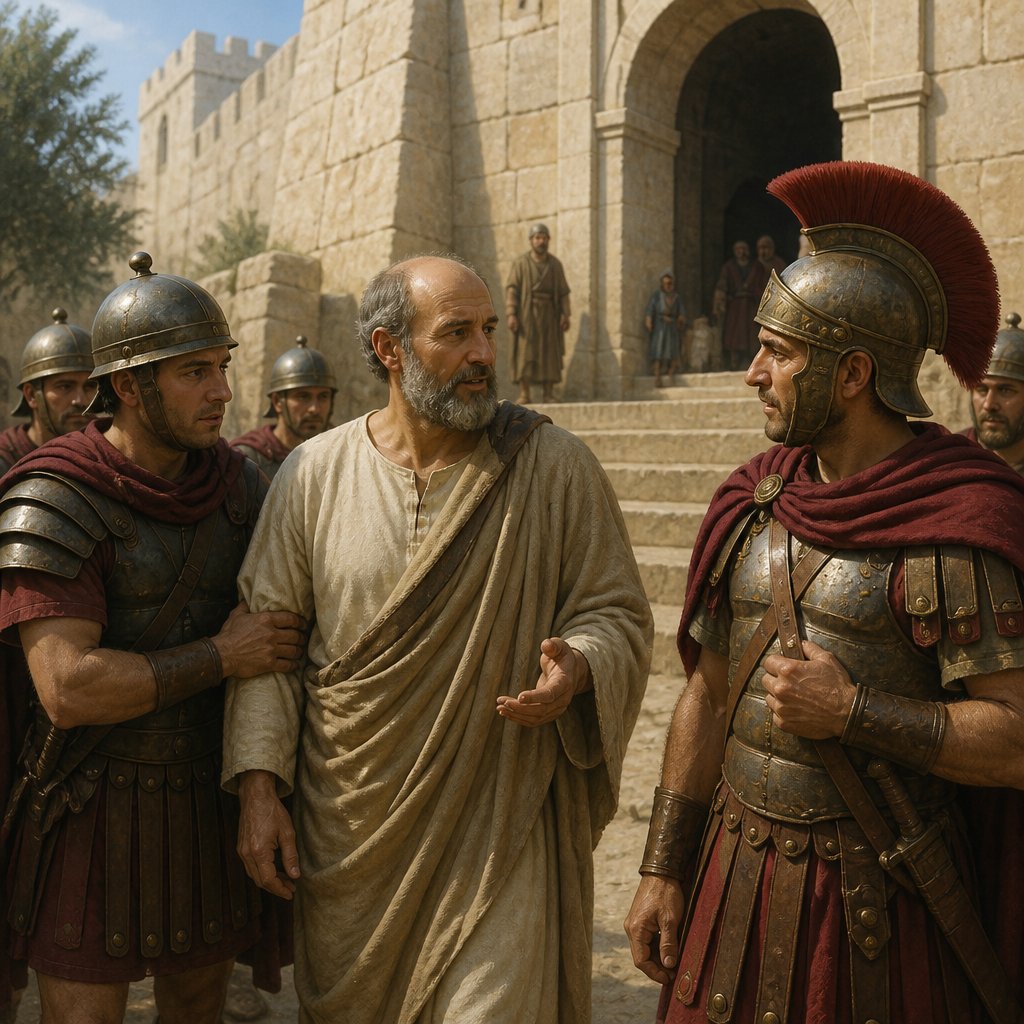
The Bible verse Acts 21:37 in the King James Version (KJV) recounts a moment in the life of the apostle Paul as he is about to be taken into custody by the Roman authorities. The verse reads, "And as Paul was to be led into the castle, he said unto the chief captain, May I speak unto thee? Who said, Canst thou speak Greek?"
This verse is part of a larger narrative in the book of Acts that follows the travels and experiences of the apostle Paul as he spreads the message of Christianity throughout the Roman Empire. In Acts 21, Paul has arrived in Jerusalem, and his presence has caused a stir among the Jewish community who are suspicious of his teachings. There is a riot, and Paul is seized by an angry mob and beaten before being rescued by Roman soldiers.
As he is being led into the castle by the chief captain, Paul speaks to him in Greek, the language of the educated elite in the Roman Empire. This unexpected display of linguistic skill surprises the chief captain, who asks Paul if he can speak Greek. This interaction is significant for several reasons and carries multiple layers of meaning.
One theme present in this verse is the idea of cultural and linguistic diversity. In the ancient world, being able to speak Greek was a mark of education and sophistication, as Greek was the primary language of commerce and intellectual thought. Paul’s ability to speak Greek reflects his own cultural and linguistic flexibility and his ability to engage with people from diverse backgrounds. This theme of cultural understanding and adaptability is a recurring motif in the New Testament, as the early Christian community sought to spread the message of Jesus to people of all nations and languages.
Another theme in this verse is the notion of unexpected encounters and divine providence. Paul’s ability to speak Greek in this moment is a surprising turn of events, and it catches the chief captain off guard. This unexpected skill may be seen as a sign of the presence of God in this situation, guiding Paul and influencing the outcome of his interactions with the Roman authorities. Throughout the book of Acts, the narrative is punctuated by moments of divine intervention and unexpected plot twists, demonstrating the hand of God at work in the lives of the apostles and the early Christian community.
The context of this verse is also important to consider. Paul’s presence in Jerusalem has caused tension and conflict within the Jewish community, and his interactions with the Roman authorities will ultimately lead to his imprisonment and eventual journey to Rome. The book of Acts records Paul’s experiences as he navigates the complex political and social landscape of the Roman Empire, facing opposition and persecution as he proclaims the message of Jesus. The encounter with the chief captain in Acts 21:37 is a pivotal moment in this larger narrative, setting the stage for the trials and tribulations that Paul will face in the chapters that follow.
In addition to its thematic significance, the verse Acts 21:37 may also be interpreted symbolically. Paul’s ability to speak Greek can be seen as a symbol of his intellectual prowess and his ability to engage with the cultural and intellectual elite of the Roman world. This symbolic gesture may also be interpreted as a demonstration of Paul’s commitment to reaching people of all backgrounds and social strata with the message of Christianity.
In conclusion, the verse Acts 21:37 in the King James Version of the Bible offers rich thematic, contextual, and symbolic material for interpretation. It invites readers to consider themes of cultural diversity, unexpected encounters, and divine providence, while also providing insight into the broader narrative of Paul’s experiences in spreading the message of Jesus throughout the Roman Empire. This verse serves as a poignant reminder of the challenges and opportunities that arise when engaging with people of diverse backgrounds and languages, and it underscores the importance of remaining open to unexpected encounters and the guiding hand of God in our lives.
Have questions about Acts 21:37?
Dive deeper into this scripture with Bible Chat — an AI-powered tool for exploring God's Word through conversation. Ask questions, get context, and grow in your understanding of the Bible.
Get Our Apps


Acts 21:37 Artwork

Acts 21:37 - "And as Paul was to be led into the castle, he said unto the chief captain, May I speak unto thee? Who said, Canst thou speak Greek?"
"And as Paul was to be led into the castle, he said unto the chief captain, May I speak unto thee? Who said, Canst thou speak Greek?" - Acts 21:37

Acts 13:37 - "But he, whom God raised again, saw no corruption."

Acts 15:37 - "And Barnabas determined to take with them John, whose surname was Mark."

Acts 20:37 - "And they all wept sore, and fell on Paul's neck, and kissed him,"

Acts 4:37 - "Having land, sold it, and brought the money, and laid it at the apostles' feet."

Acts 27:37 - "And we were in all in the ship two hundred threescore and sixteen souls."

Joshua 21:37 - "Kedemoth with her suburbs, and Mephaath with her suburbs; four cities."

Psalms 37:21 - "The wicked borroweth, and payeth not again: but the righteous sheweth mercy, and giveth."

Acts 19:37 - "For ye have brought hither these men, which are neither robbers of churches, nor yet blasphemers of your goddess."

Job 37:21 - "And now men see not the bright light which is in the clouds: but the wind passeth, and cleanseth them."

Acts 9:37 - "And it came to pass in those days, that she was sick, and died: whom when they had washed, they laid her in an upper chamber."

Acts 1:21-23

Acts 1:21-22

Genesis 37:21 - "And Reuben heard it, and he delivered him out of their hands; and said, Let us not kill him."

Matthew 21:37 - "But last of all he sent unto them his son, saying, They will reverence my son."

Acts 21:5-6

Acts 1:21-22

"But he, whom God raised again, saw no corruption." - Acts 13:37

Acts 2:37 - "¶ Now when they heard this, they were pricked in their heart, and said unto Peter and to the rest of the apostles, Men and brethren, what shall we do?"

Luke 21:37 - "And in the day time he was teaching in the temple; and at night he went out, and abode in the mount that is called the mount of Olives."

Acts 8:37 - "And Philip said, If thou believest with all thine heart, thou mayest. And he answered and said, I believe that Jesus Christ is the Son of God."

Acts 10:37 - "That word, I say, ye know, which was published throughout all Judaea, and began from Galilee, after the baptism which John preached;"

"And they all wept sore, and fell on Paul's neck, and kissed him," - Acts 20:37

"Having land, sold it, and brought the money, and laid it at the apostles' feet." - Acts 4:37

"And Barnabas determined to take with them John, whose surname was Mark." - Acts 15:37

Acts 21:36 - "For the multitude of the people followed after, crying, Away with him."

"And we were in all in the ship two hundred threescore and sixteen souls." - Acts 27:37

Acts 21:21 - "And they are informed of thee, that thou teachest all the Jews which are among the Gentiles to forsake Moses, saying that they ought not to circumcise their children, neither to walk after the customs."
"Kedemoth with her suburbs, and Mephaath with her suburbs; four cities." - Joshua 21:37