What does Acts 1:26 mean?
"And they gave forth their lots; and the lot fell upon Matthias; and he was numbered with the eleven apostles." - Acts 1:26
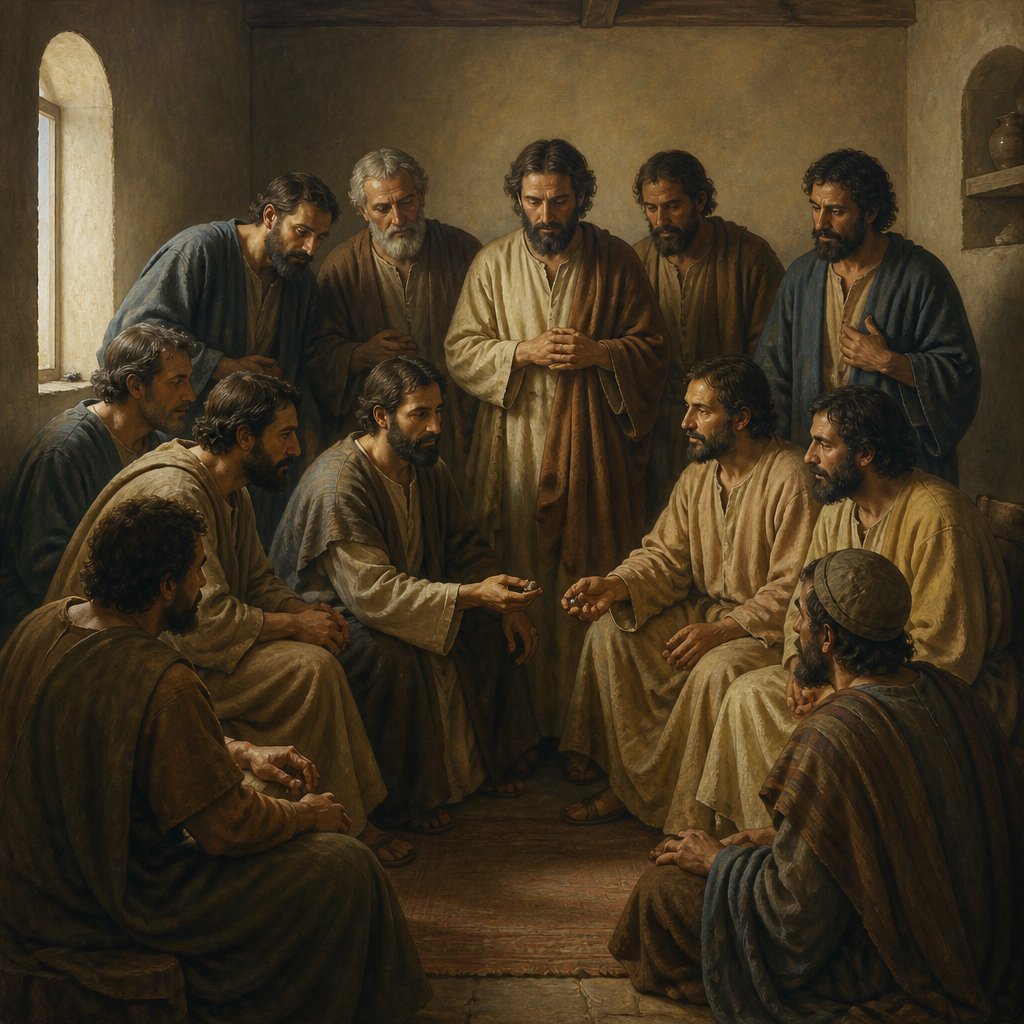
Acts 1:26 (KJV) reads: "And they gave forth their lots; and the lot fell upon Matthias; and he was numbered with the eleven apostles."
This verse comes at the end of the first chapter of the book of Acts, which describes the period between Jesus' resurrection and the day of Pentecost. In this verse, the disciples are seen selecting a replacement for Judas Iscariot, who had betrayed Jesus and then died by suicide. The prior verse, Acts 1:25, sets the stage for the scene by stating: "That he may take part of this ministry and apostleship, from which Judas by transgression fell, that he might go to his own place."
In Acts 1:26, the disciples "gave forth their lots," indicating that they used a method of casting lots to determine who would be the replacement for Judas. The lot ultimately fell upon Matthias, and in this way, he was "numbered with the eleven apostles."
The selection of Matthias serves as an important event for the early Christian community, as it fills the vacancy left by Judas and restores the number of apostles to twelve. This number is significant in biblical symbolism, representing the twelve tribes of Israel and signifying completeness and fullness. Furthermore, the number twelve is often associated with governance and authority in the Bible, as demonstrated by the twelve patriarchs of Israel and the twelve gates of the New Jerusalem in the book of Revelation.
The act of casting lots has historical and cultural significance in the Bible, as it was a common practice used to seek divine guidance or make decisions. Proverbs 16:33 (KJV) affirms this by stating, "The lot is cast into the lap, but the whole disposing thereof is of the Lord." By allowing the lot to fall upon Matthias, the disciples believed that they were aligning their decision with God's will.
This passage also highlights the theme of divine sovereignty and providence. The selection of Matthias was not a hasty or impulsive decision made by the disciples; rather, it was a deliberate and prayerful process in which they sought God's guidance. Through the casting of lots, they acknowledged that ultimately, it was God who directed the outcome.
The inclusion of this narrative in the book of Acts serves to demonstrate the authority and legitimacy of the early church leadership. By carefully choosing a replacement for Judas, the apostles upheld the principles of order and structure within the Christian community. This act also laid the foundation for the apostolic succession, which became a crucial aspect of the early church's organizational structure.
Moreover, the selection of Matthias underscores the idea of individual calling and purpose within the context of the Christian faith. Matthias was chosen to fulfill a specific role in the ministry and apostleship, and his appointment reflects the belief that each believer has a unique calling and role to play in the larger work of God's kingdom.
In a broader theological sense, the appointment of Matthias reinforces the continuity of God's redemptive plan. Despite the betrayal and absence of Judas, God's purpose and mission for the church remained unshaken. Through the selection of Matthias, the disciples affirmed their commitment to fulfilling the Great Commission and advancing the spread of the gospel.
Overall, Acts 1:26 presents a significant moment in the early church's history, marking the appointment of Matthias as an apostle and the restoration of the twelvefold structure of leadership. This verse underscores themes of divine providence, individual calling, and the orderly governance of the Christian community. It also serves as a testament to the faithfulness of God in guiding and sustaining His people as they carry out His purposes.
Have questions about Acts 1:26?
Dive deeper into this scripture with Bible Chat — an AI-powered tool for exploring God's Word through conversation. Ask questions, get context, and grow in your understanding of the Bible.
Get Our Apps


Acts 1:26 Artwork

Acts 1:26 - "And they gave forth their lots; and the lot fell upon Matthias; and he was numbered with the eleven apostles."
"And they gave forth their lots; and the lot fell upon Matthias; and he was numbered with the eleven apostles." - Acts 1:26

Acts 26:1 - "Then Agrippa said unto Paul, Thou art permitted to speak for thyself. Then Paul stretched forth the hand, and answered for himself:"

Acts 27:26 - "Howbeit we must be cast upon a certain island."

Acts 26:26 - "For the king knoweth of these things, before whom also I speak freely: for I am persuaded that none of these things are hidden from him; for this thing was not done in a corner."

Acts 26:19 - "Whereupon, O king Agrippa, I was not disobedient unto the heavenly vision:"

Acts 26:27 - "King Agrippa, believest thou the prophets? I know that thou believest."

Acts 15:26 - "Men that have hazarded their lives for the name of our Lord Jesus Christ."

Acts 23:26 - "Claudius Lysias unto the most excellent governor Felix sendeth greeting."
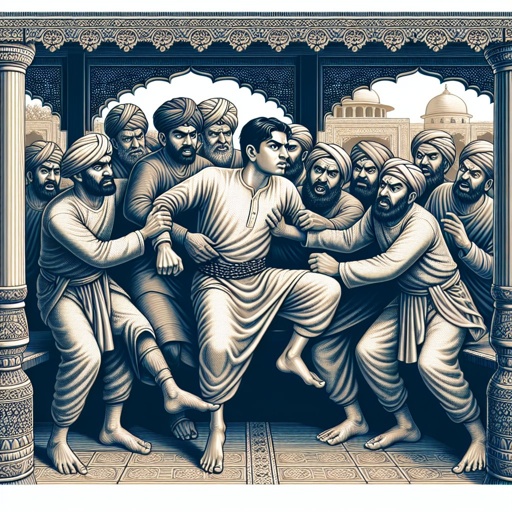
Acts 26:21 - "For these causes the Jews caught me in the temple, and went about to kill me."

Acts 26:28 - "Then Agrippa said unto Paul, Almost thou persuadest me to be a Christian."

Acts 26:12 - "Whereupon as I went to Damascus with authority and commission from the chief priests,"

James 1:26-27 - "James 1:26-27: If anyone considers himself religious and yet does not keep a tight rein on his tongue, he deceives himself and his religion is worthless. Religion that God our Father accepts as pure and faultless is this: to look after orphans and widows in their distress and to keep oneself from being polluted by the world."

Acts 26:8 - "Why should it be thought a thing incredible with you, that God should raise the dead?"

Acts 26:6 - "And now I stand and am judged for the hope of the promise made of God unto our fathers:"

Acts 26:30 - "And when he had thus spoken, the king rose up, and the governor, and Bernice, and they that sat with them:"

Acts 10:26 - "But Peter took him up, saying, Stand up; I myself also am a man."

2 Chronicles 35:26 - "Now the rest of the acts of Josiah, and his goodness, according to that which was written in the law of the LORD,"

Acts 26:17 - "Delivering thee from the people, and from the Gentiles, unto whom now I send thee,"

2 Chronicles 25:26 - "Now the rest of the acts of Amaziah, first and last, behold, are they not written in the book of the kings of Judah and Israel?"

Acts 4:26 - "The kings of the earth stood up, and the rulers were gathered together against the Lord, and against his Christ."

Acts 26:25 - "But he said, I am not mad, most noble Festus; but speak forth the words of truth and soberness."

Acts 26:9 - "I verily thought with myself, that I ought to do many things contrary to the name of Jesus of Nazareth."

Acts 20:26 - "Wherefore I take you to record this day, that I am pure from the blood of all men."

2 Chronicles 26:22 - "¶ Now the rest of the acts of Uzziah, first and last, did Isaiah the prophet, the son of Amoz, write."

Acts 14:26 - "And thence sailed to Antioch, from whence they had been recommended to the grace of God for the work which they fulfilled."

2 Kings 15:26 - "And the rest of the acts of Pekahiah, and all that he did, behold, they are written in the book of the chronicles of the kings of Israel."

2 Chronicles 28:26 (KJVA) 26 Now the rest of his acts and of all his ways, first and last, behold, they are written in the book of the kings of Judah and Israel.
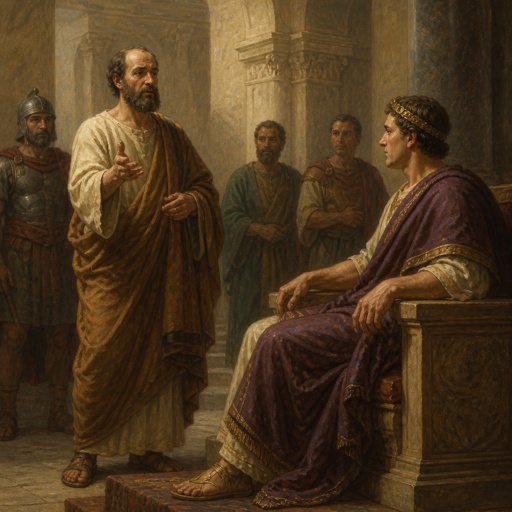
"Then Agrippa said unto Paul, Thou art permitted to speak for thyself. Then Paul stretched forth the hand, and answered for himself:" - Acts 26:1

2 Chronicles 28:26 (KJVA) 26 Now the rest of his acts and of all his ways, first and last, behold, they are written in the book of the kings of Judah and Israel.