What does Acts 19:37 mean?
"For ye have brought hither these men, which are neither robbers of churches, nor yet blasphemers of your goddess." - Acts 19:37
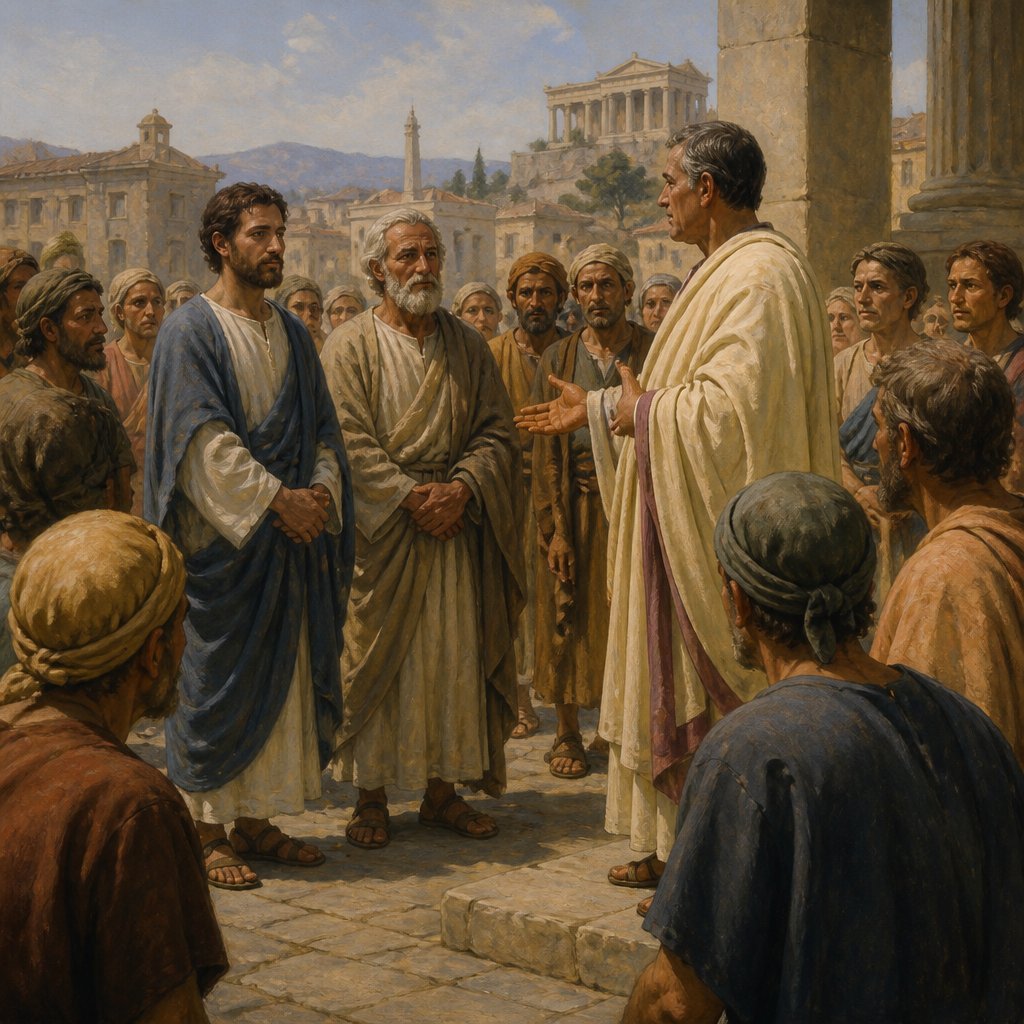
In Acts 19:35-37, the passage provides insight into a riot that occurred in Ephesus due to the spread of Christianity. The verse reads: "For ye have brought hither these men, which are neither robbers of churches, nor yet blasphemers of your goddess. Wherefore if Demetrius, and the craftsmen which are with him, have a matter against any man, the law is open, and there are deputies: let them implead one another."
The context of this verse is important in understanding the significance of the events that unfolded in Ephesus. At that time, the city was known for the Temple of Artemis, one of the Seven Wonders of the Ancient World. Artemis was a revered goddess in Ephesus, and her temple served as a major religious and economic center in the city. Worship of Artemis involved various rituals, pilgrimages, and the production of silver shrines and statues related to her worship.
The riot in Ephesus was instigated by a silversmith named Demetrius, who, along with other craftsmen, made their living by crafting silver shrines of Artemis. As Christianity gained a foothold in the city, Demetrius became concerned about the decline in demand for their products, as more people turned away from idol worship and embraced the Christian faith. This led to a backlash from the craftsmen, resulting in a riot that threatened the lives of the Christians and put the city in turmoil.
In this passage, a town clerk addresses the crowd, defending the Christians against the accusations brought by Demetrius and the craftsmen. He argues that the Christians are not guilty of sacrilege or disrespect towards Artemis, as they have not stolen from the temple or spoken out against the goddess. Instead, he advises the crowd to resolve their grievances through the proper legal channels, rather than resorting to violence and chaos.
The themes present in this passage are relevant and significant. Firstly, it addresses the clash between Christianity and the prevailing pagan beliefs in the ancient world. The spread of Christianity posed a direct challenge to the established religious practices and traditions, leading to conflicts and tensions in various cities like Ephesus.
Secondly, the passage highlights the importance of upholding the rule of law and seeking justice through legal means. The town clerk's words promote a peaceful and orderly resolution to the disputes, emphasizing the need for civil discourse and adherence to established laws and authorities.
Symbolism is also evident in this verse, particularly in the contrasting symbols of Artemis and Christianity. Artemis represents the pagan worship and the materialistic pursuits associated with idolatry, while Christianity symbolizes spiritual enlightenment, moral values, and a transcendent faith in God.
In conclusion, the verse Acts 19:37 from the King James Version offers valuable insights into the historical and cultural context of the early Christian church. It sheds light on the challenges and conflicts faced by the early Christians as they sought to spread their faith in a world dominated by pagan religions and traditions. The passage also underscores the principles of justice, order, and peaceful resolution of disputes, which remain relevant and applicable in contemporary society.
Have questions about Acts 19:37?
Dive deeper into this scripture with Bible Chat — an AI-powered tool for exploring God's Word through conversation. Ask questions, get context, and grow in your understanding of the Bible.
Get Our Apps


Acts 19:37 Artwork

Acts 19:37 - "For ye have brought hither these men, which are neither robbers of churches, nor yet blasphemers of your goddess."
"For ye have brought hither these men, which are neither robbers of churches, nor yet blasphemers of your goddess." - Acts 19:37

Genesis 19-37

Acts 13:37 - "But he, whom God raised again, saw no corruption."

Joshua 19:37 - "And Kedesh, and Edrei, and En-hazor,"

Acts 15:37 - "And Barnabas determined to take with them John, whose surname was Mark."

Acts 20:37 - "And they all wept sore, and fell on Paul's neck, and kissed him,"

Acts 4:37 - "Having land, sold it, and brought the money, and laid it at the apostles' feet."

Acts 27:37 - "And we were in all in the ship two hundred threescore and sixteen souls."

Genesis 37:19 - "And they said one to another, Behold, this dreamer cometh."

Psalms 37:19 - "They shall not be ashamed in the evil time: and in the days of famine they shall be satisfied."

John 19:37 - "And again another scripture saith, They shall look on him whom they pierced."

"And Kedesh, and Edrei, and En-hazor," - Joshua 19:37

Acts 19: 11

Acts 19:11

Acts 9:37 - "And it came to pass in those days, that she was sick, and died: whom when they had washed, they laid her in an upper chamber."

Genesis 19:37 - "And the firstborn bare a son, and called his name Moab: the same is the father of the Moabites unto this day."

"But he, whom God raised again, saw no corruption." - Acts 13:37

Acts 2:37 - "¶ Now when they heard this, they were pricked in their heart, and said unto Peter and to the rest of the apostles, Men and brethren, what shall we do?"

"And they said one to another, Behold, this dreamer cometh." - Genesis 37:19

Acts 8:37 - "And Philip said, If thou believest with all thine heart, thou mayest. And he answered and said, I believe that Jesus Christ is the Son of God."

Acts 10:37 - "That word, I say, ye know, which was published throughout all Judaea, and began from Galilee, after the baptism which John preached;"

"And they all wept sore, and fell on Paul's neck, and kissed him," - Acts 20:37

"Having land, sold it, and brought the money, and laid it at the apostles' feet." - Acts 4:37

"And Barnabas determined to take with them John, whose surname was Mark." - Acts 15:37

Acts 19:7 - "And all the men were about twelve."

Acts 21:37 - "And as Paul was to be led into the castle, he said unto the chief captain, May I speak unto thee? Who said, Canst thou speak Greek?"

Job 37:19 - "Teach us what we shall say unto him; for we cannot order our speech by reason of darkness."

Acts 19:11 - "And God wrought special miracles by the hands of Paul:"

Leviticus 19:37 - "Therefore shall ye observe all my statutes, and all my judgments, and do them: I am the LORD."