What does Acts 18:14 mean?
"And when Paul was now about to open his mouth, Gallio said unto the Jews, If it were a matter of wrong or wicked lewdness, O ye Jews, reason would that I should bear with you:" - Acts 18:14

The Bible verse Acts 18:14 in the King James Version (KJV) reads: "And when Paul was now about to open his mouth, Gallio said unto the Jews, If it were a matter of wrong or wicked lewdness, O ye Jews, reason would that I should bear with you."
This verse is part of the larger story of Paul's journey and ministry in the city of Corinth. Paul, who was a prominent figure in the early Christian church, spent a significant amount of time traveling and preaching the message of Jesus Christ. In this particular instance, Paul found himself in Corinth, where he encountered opposition and persecution from certain groups of people, notably the Jews.
The character mentioned in this verse, Gallio, was the brother of the famous Roman philosopher and writer Seneca the Younger. He served as the proconsul of Achaia from 51 to 52 AD, and is known for his fair and just governance. In the context of the verse, Gallio is presented as a figure of authority who is faced with a decision regarding a dispute between Paul and the Jews.
The theme of justice and righteousness is a central theme in this verse. Gallio's response to the Jews demonstrates his commitment to upholding the law and ensuring that matters of wrong and wickedness are dealt with fairly and reasonably. This emphasizes the importance of justice in both secular and spiritual matters, and reinforces the idea that all people should be held accountable for their actions.
The verse also highlights the contrast between the message of the gospel and the values of the Roman society in which Paul and Gallio lived. The Jews, who were opposed to Paul's teachings, were attempting to use the Roman legal system to their advantage. They sought to incriminate Paul based on accusations of religious misconduct, but Gallio dismisses their case as a trivial matter, indicating that it does not warrant his attention.
The symbolism in this verse lies in the character of Gallio himself. As a representative of Roman authority, he embodies the secular power that Paul and the early Christians often encountered in their mission to spread the gospel. Gallio's refusal to entertain the accusations against Paul reflects the idea that the message of Christ transcends the limitations of human authority and judgment.
Furthermore, this verse serves as a reminder of the challenges and opposition that early Christians faced as they proclaimed their faith. It demonstrates the need for believers to remain steadfast in their convictions, even in the face of persecution and adversity. Paul's perseverance in the midst of opposition exemplifies the courage and determination required to fulfill the call of spreading the word of God.
In conclusion, Acts 18:14 in the King James Version (KJV) presents a significant moment in the narrative of Paul's ministry, emphasizing the themes of justice, opposition, and perseverance. It offers a valuable lesson about the unwavering nature of truth and the timeless relevance of the gospel message, while also highlighting the complexities of navigating faith within the framework of secular society.
Have questions about Acts 18:14?
Dive deeper into this scripture with Bible Chat — an AI-powered tool for exploring God's Word through conversation. Ask questions, get context, and grow in your understanding of the Bible.
Get Our Apps


Acts 18:14 Artwork

Acts 18:14 - "And when Paul was now about to open his mouth, Gallio said unto the Jews, If it were a matter of wrong or wicked lewdness, O ye Jews, reason would that I should bear with you:"
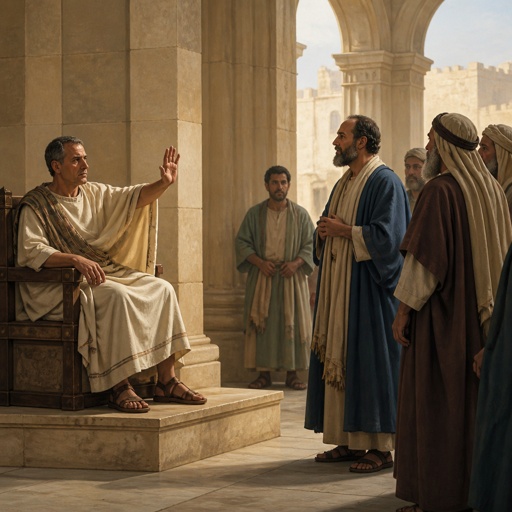
"And when Paul was now about to open his mouth, Gallio said unto the Jews, If it were a matter of wrong or wicked lewdness, O ye Jews, reason would that I should bear with you:" - Acts 18:14

2 Kings 14:18 - "And the rest of the acts of Amaziah, are they not written in the book of the chronicles of the kings of Judah?"

Acts 14:18 - "And with these sayings scarce restrained they the people, that they had not done sacrifice unto them."
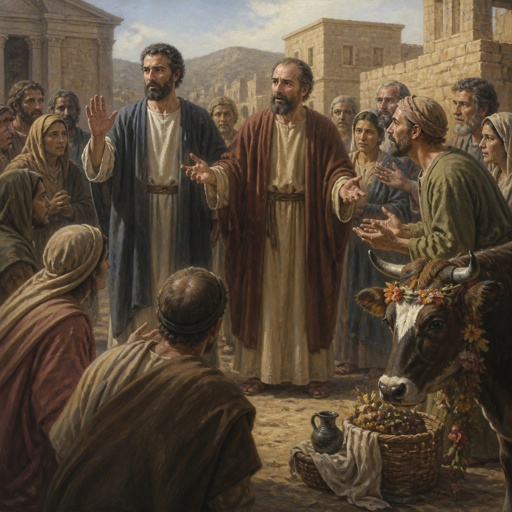
"And with these sayings scarce restrained they the people, that they had not done sacrifice unto them." - Acts 14:18

"And the rest of the acts of Amaziah, are they not written in the book of the chronicles of the kings of Judah?" - 2 Kings 14:18

Acts 18:12

Acts 18:12

Acts 14:17

Acts 14:7 - "And there they preached the gospel."

Acts 14:28 - "And there they abode long time with the disciples."

Acts 18:16 - "And he drave them from the judgment seat."

Acts 19:18 - "And many that believed came, and confessed, and shewed their deeds."

Acts 14:14 - "Which when the apostles, Barnabas and Paul, heard of, they rent their clothes, and ran in among the people, crying out,"

Acts 7:18 - "Till another king arose, which knew not Joseph."
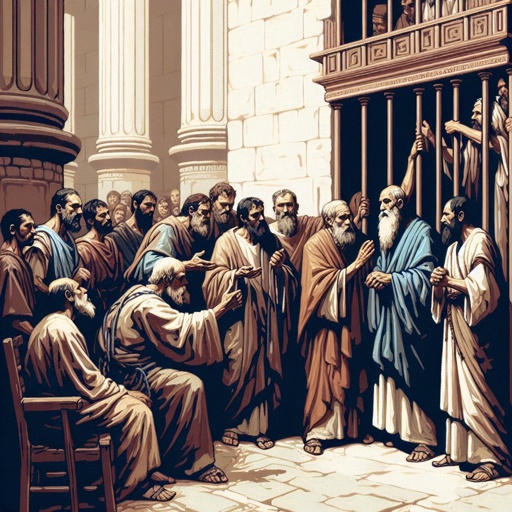
Acts 5:18 - "And laid their hands on the apostles, and put them in the common prison."

"And there they preached the gospel." - Acts 14:7

Acts 18:1 - "After these things Paul departed from Athens, and came to Corinth;"

Acts 18:13 - "Saying, This fellow persuadeth men to worship God contrary to the law."

Genesis 18-14

Acts 18:4 - "And he reasoned in the synagogue every sabbath, and persuaded the Jews and the Greeks."

Acts 13:18 - "And about the time of forty years suffered he their manners in the wilderness."

Acts 15:18 - "Known unto God are all his works from the beginning of the world."

Acts 18:28 - "For he mightily convinced the Jews, and that publickly, shewing by the scriptures that Jesus was Christ."

Acts 10:18 - "And called, and asked whether Simon, which was surnamed Peter, were lodged there."

Acts 14:24 - "And after they had passed throughout Pisidia, they came to Pamphylia."

Acts 27:18 - "And we being exceedingly tossed with a tempest, the next day they lightened the ship;"

Acts 18:20 - "When they desired him to tarry longer time with them, he consented not;"

Depict the events of Acts 19:14-17

Acts 4:18 - "And they called them, and commanded them not to speak at all nor teach in the name of Jesus."