What does Acts 18:12 mean?
"¶ And when Gallio was the deputy of Achaia, the Jews made insurrection with one accord against Paul, and brought him to the judgment seat," - Acts 18:12

In the King James Version of the Bible, Acts 18:12 reads, "And when Gallio was the deputy of Achaia, the Jews made insurrection with one accord against Paul, and brought him to the judgment seat." This passage comes from the New Testament book of Acts, which describes the early years of the Christian church and the spread of the gospel.
The context of Acts 18:12 is important for understanding the significance of this verse. At this point in the book of Acts, the Apostle Paul is traveling and spreading the message of Jesus Christ throughout the Roman Empire. In the previous verses, Paul had been in Corinth, where he had met Priscilla and Aquila and preached in the synagogue. In the midst of this, he had been rejected by the Jews, who opposed his teaching and blasphemed.
In Acts 18:12, we are introduced to Gallio, who was the deputy of Achaia. Achaia was a Roman province that encompassed much of Greece. Gallio's role as deputy would have made him responsible for overseeing legal and administrative affairs in the region. The Jews, likely seeking to use the Roman legal system to their advantage, brought their allegations against Paul before the judgment seat of Gallio.
One of the key themes in this verse is the opposition faced by Paul as he carried out his mission to spread the gospel. Throughout the book of Acts, we see Paul facing various forms of resistance, persecution, and opposition from both Jewish religious leaders and Roman authorities. This verse serves as a reminder that the spread of the gospel was not always met with open arms, but rather with hostility and conflict.
The passage also highlights the political and legal dynamics of the time. The fact that the Jews brought Paul before the judgment seat of Gallio indicates their attempt to leverage Roman authority against him. This aligns with the broader theme in Acts of the tension between the preaching of the gospel and the political and religious structures of the Roman Empire.
In terms of symbolism, this verse can be seen as representative of the larger spiritual battle between the forces of darkness and the advancement of God's kingdom. The insurrection of the Jews against Paul reflects the spiritual opposition that the early Christians faced as they sought to spread the message of Jesus Christ. It also illustrates the clash between the wisdom of the world and the truth of the gospel, as represented by the Roman legal system and Paul's preaching.
Ultimately, this verse serves as a reminder of the challenges and opposition that can arise when one is committed to sharing the truth of the gospel. It also serves as a reminder that God is sovereign over all, and He can use even the most difficult circumstances for His purposes. As the narrative of Acts continues, we see how Paul's ministry continued to flourish despite the opposition he faced, ultimately leading to the growth and expansion of the early Christian church.
In conclusion, Acts 18:12 is a significant verse in the New Testament that highlights the opposition faced by the Apostle Paul as he spread the message of Jesus Christ. It also serves as a reminder of the larger spiritual and political dynamics at play during the early years of the Christian church. The verse ultimately encourages believers to remain steadfast in their faith, even in the face of opposition, and to trust in God's sovereignty and ultimate plan.
Have questions about Acts 18:12?
Dive deeper into this scripture with Bible Chat — an AI-powered tool for exploring God's Word through conversation. Ask questions, get context, and grow in your understanding of the Bible.
Get Our Apps


Acts 18:12 Artwork

Acts 18:12

Acts 18:12

Acts 18:12 - "¶ And when Gallio was the deputy of Achaia, the Jews made insurrection with one accord against Paul, and brought him to the judgment seat,"

"¶ And when Gallio was the deputy of Achaia, the Jews made insurrection with one accord against Paul, and brought him to the judgment seat," - Acts 18:12

Acts 12:18 - "Now as soon as it was day, there was no small stir among the soldiers, what was become of Peter."

"Now as soon as it was day, there was no small stir among the soldiers, what was become of Peter." - Acts 12:18

Acts 28:12

Acts 18:16 - "And he drave them from the judgment seat."

Acts 19:18 - "And many that believed came, and confessed, and shewed their deeds."

Acts 4:8-12

acts 20:7-12

Acts 7:18 - "Till another king arose, which knew not Joseph."
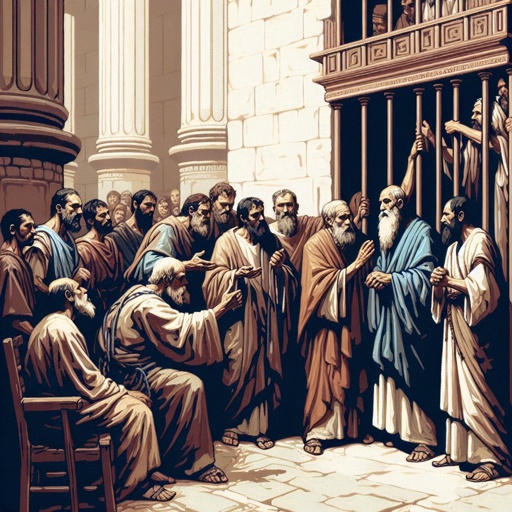
Acts 5:18 - "And laid their hands on the apostles, and put them in the common prison."

Acts 12:24 - "¶ But the word of God grew and multiplied."

Acts 18:1 - "After these things Paul departed from Athens, and came to Corinth;"

Acts 18:13 - "Saying, This fellow persuadeth men to worship God contrary to the law."

Acts 18:4 - "And he reasoned in the synagogue every sabbath, and persuaded the Jews and the Greeks."

Acts 13:18 - "And about the time of forty years suffered he their manners in the wilderness."

2 Kings 14:18 - "And the rest of the acts of Amaziah, are they not written in the book of the chronicles of the kings of Judah?"

Acts 15:18 - "Known unto God are all his works from the beginning of the world."

Acts 18:28 - "For he mightily convinced the Jews, and that publickly, shewing by the scriptures that Jesus was Christ."

Acts 10:18 - "And called, and asked whether Simon, which was surnamed Peter, were lodged there."

Acts 12:2 - "And he killed James the brother of John with the sword."

Acts 28:12 - "And landing at Syracuse, we tarried there three days."

Acts 14:18 - "And with these sayings scarce restrained they the people, that they had not done sacrifice unto them."

Acts 27:18 - "And we being exceedingly tossed with a tempest, the next day they lightened the ship;"

Acts 18:20 - "When they desired him to tarry longer time with them, he consented not;"

Genesis 18-12

Acts 4:18 - "And they called them, and commanded them not to speak at all nor teach in the name of Jesus."

Acts 18:9 - "Then spake the Lord to Paul in the night by a vision, Be not afraid, but speak, and hold not thy peace:"