What does Acts 14:4 mean?
"But the multitude of the city was divided: and part held with the Jews, and part with the apostles." - Acts 14:4
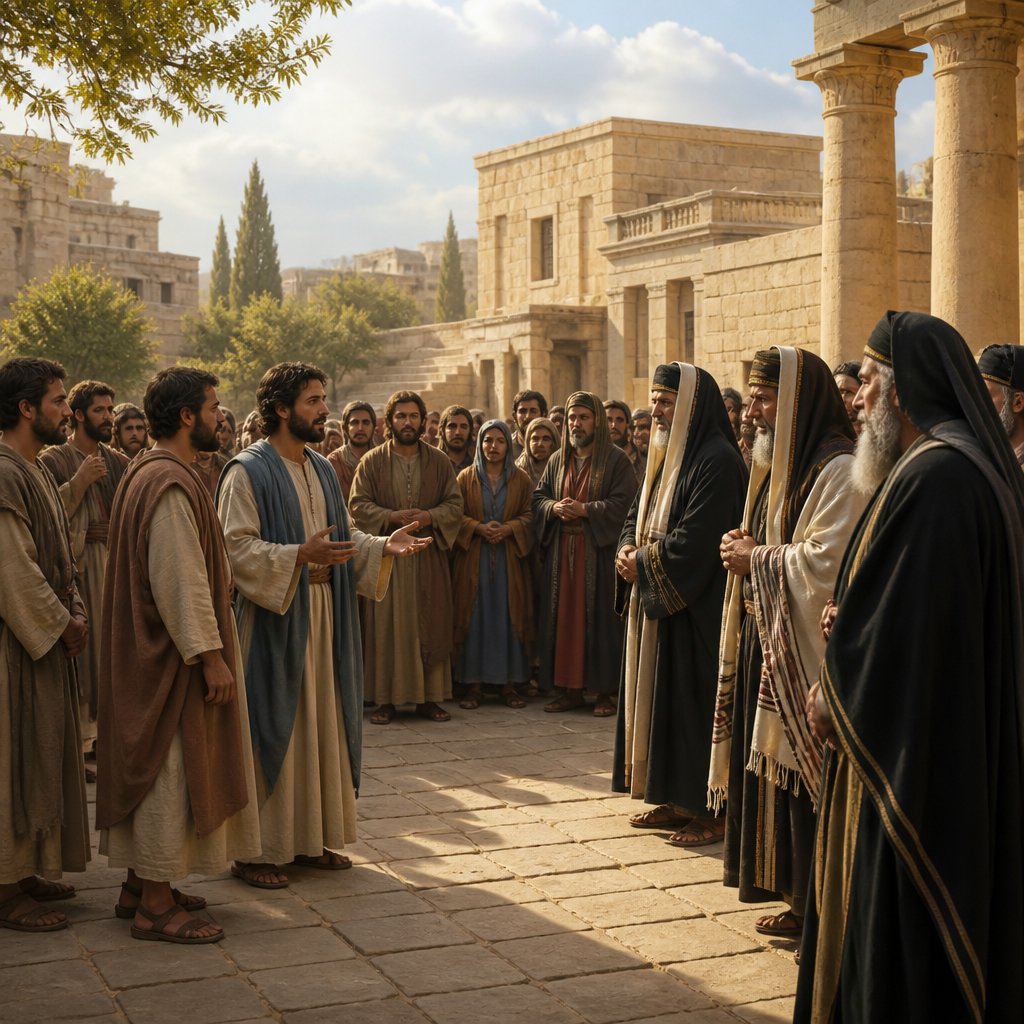
The Bible verse Acts 14:4 in the King James Version states, "But the multitude of the city was divided: and part held with the Jews, and part with the apostles." This verse comes from the book of Acts, which is a historical account of the early church and the spread of Christianity after the death and resurrection of Jesus Christ.
In this particular verse, we see the apostles encountering resistance and division as they preach the gospel in the city. This resistance is emblematic of the larger struggle that the early Christians faced as they sought to spread the message of Jesus Christ to the world. The division within the city reflects the spiritual battle between the forces of darkness and the forces of light, as people are forced to choose between their old way of life and the new life offered through faith in Jesus. This verse underscores the reality that the message of the gospel will often be met with opposition and division, as people wrestle with the truth and confront their own beliefs.
The context of Acts 14:4 is essential for understanding its significance. At this point in the book of Acts, the apostles Paul and Barnabas are on a missionary journey, traveling from city to city to preach the gospel. In the previous chapter, they had just performed a miracle in the name of Jesus, healing a man who had been unable to walk since birth. This miraculous event drew the attention of the people in the city of Lystra, where they were preaching. The verse takes place in this tumultuous atmosphere, as the people grapple with the message and the power of the apostles' words and actions.
The themes present in Acts 14:4 are varied and complex. One prominent theme is the concept of division and opposition. The verse highlights the spiritual struggle that takes place when the message of the gospel is proclaimed. It also emphasizes the need for discernment and the willingness to stand firm in the face of opposition. Another theme that emerges from this verse is the idea of choice and accountability. The people in the city are forced to make a decision about where they stand in relation to the apostles and their message. This theme resonates throughout the entire Bible, as individuals are constantly called to choose between light and darkness, good and evil, and faith and unbelief.
Symbolism also plays a crucial role in Acts 14:4. The division within the city can be seen as a symbol of the larger spiritual battle that rages in the world. The conflict between the Jews and the apostles represents the clash between the old covenant and the new covenant, as well as the struggle between religious tradition and the radical message of Jesus. Additionally, the division within the city serves as a symbol of the ultimately polarizing effect of the gospel, as it forces people to make a choice about their beliefs and their allegiances.
In conclusion, Acts 14:4 is a verse that encapsulates the challenges and the triumphs of the early church in spreading the message of the gospel. It presents a vivid picture of the spiritual division and opposition that the apostles faced as they sought to fulfill their mission. Through its themes of division, choice, and opposition, as well as its rich symbolism, this verse continues to resonate with Christians today, reminding us of the ongoing struggle to share the transformative power of the gospel with the world.
Have questions about Acts 14:4?
Dive deeper into this scripture with Bible Chat — an AI-powered tool for exploring God's Word through conversation. Ask questions, get context, and grow in your understanding of the Bible.
Get Our Apps


Acts 14:4 Artwork

Acts 14:4 - "But the multitude of the city was divided: and part held with the Jews, and part with the apostles."
"But the multitude of the city was divided: and part held with the Jews, and part with the apostles." - Acts 14:4

Acts 4:14 - "And beholding the man which was healed standing with them, they could say nothing against it."
"And beholding the man which was healed standing with them, they could say nothing against it." - Acts 4:14

Acts 14:17

Acts 14:7 - "And there they preached the gospel."

Acts 4:30

Acts 4:30

Acts 4:30

Acts 2:4

Acts 4:30

Acts 14:28 - "And there they abode long time with the disciples."

Acts 1:4-5

Acts 14:14 - "Which when the apostles, Barnabas and Paul, heard of, they rent their clothes, and ran in among the people, crying out,"

Psalms 14:4 - "Have all the workers of iniquity no knowledge? who eat up my people as they eat bread, and call not upon the LORD."

"And there they preached the gospel." - Acts 14:7

Acts 2:4

Acts 2:4

Acts 14:24 - "And after they had passed throughout Pisidia, they came to Pamphylia."

Acts 4:8-12

Depict the events of Acts 19:14-17

Acts 14:25 - "And when they had preached the word in Perga, they went down into Attalia:"

Acts 27:14 - "But not long after there arose against it a tempestuous wind, called Euroclydon."

Acts 4:4 - "Howbeit many of them which heard the word believed; and the number of the men was about five thousand."

Acts 14:16 - "Who in times past suffered all nations to walk in their own ways."

Acts 14:18 - "And with these sayings scarce restrained they the people, that they had not done sacrifice unto them."

Acts 5:14 - "And believers were the more added to the Lord, multitudes both of men and women.)"

2 Kings 14:18 - "And the rest of the acts of Amaziah, are they not written in the book of the chronicles of the kings of Judah?"

Acts 14:12 - "And they called Barnabas, Jupiter; and Paul, Mercurius, because he was the chief speaker."

Acts 21:14 - "And when he would not be persuaded, we ceased, saying, The will of the Lord be done."