What does Acts 13:16 mean?
"Then Paul stood up, and beckoning with his hand said, Men of Israel, and ye that fear God, give audience." - Acts 13:16
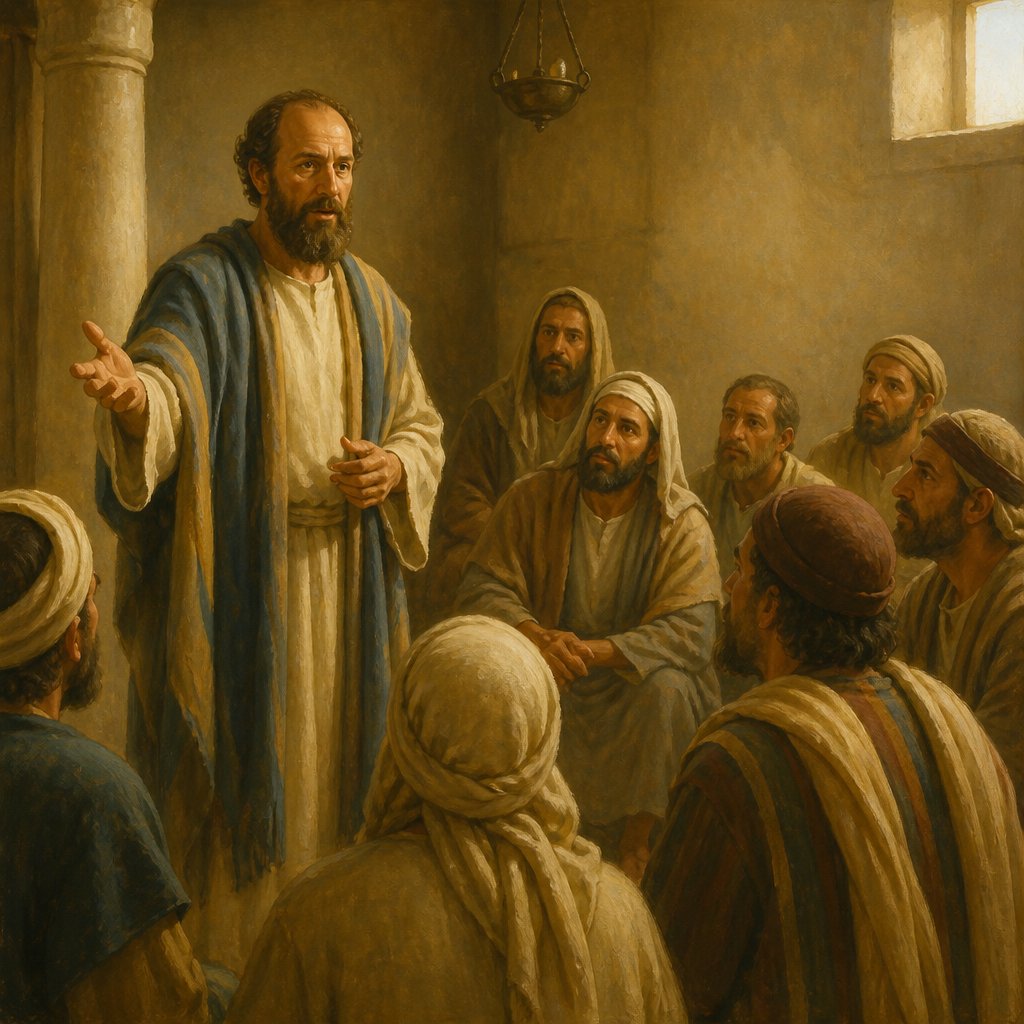
Sure, here is a detailed and in-depth commentary on Acts 13:16 from the King James Version:
"Then Paul stood up, and beckoning with his hand said, Men of Israel, and ye that fear God, give audience."
In this verse, Paul stands up and addresses the audience, which consists of both Jews and God-fearing Gentiles. His gesture of beckoning with his hand demonstrates his desire to capture the attention of his listeners, to emphasize the importance of what he is about to say.
The context of this verse is important for understanding its significance. In Acts 13, Paul is on his first missionary journey with Barnabas, and they have been preaching the gospel in various synagogues. In this particular instance, they are in Pisidian Antioch, and Paul is given the opportunity to speak to the congregation. His address is a significant moment in the establishment of the early Christian church, as he is delivering a message that will shape the beliefs and practices of the early followers of Christ.
The overarching theme of Acts 13:16 is the inclusion of Gentiles in the gospel message. Paul specifically addresses "Men of Israel, and ye that fear God," signaling that his message is not only directed at Jews but also at Gentiles who are open to the teachings of the God of Israel. This inclusivity reflects the broader theme of the universality of the gospel, which is a key aspect of Paul's theology. Throughout his missionary journeys, Paul consistently seeks to reach out to both Jews and Gentiles, emphasizing that the message of salvation is for all people, regardless of their background or ethnicity.
The address also serves as a demonstration of Paul's skill as a communicator and preacher. He is able to command the attention of the audience and deliver a message that is both persuasive and compelling. This reflects the importance of effective communication in spreading the gospel and persuading others to embrace the Christian faith. Paul's willingness to engage with his audience, whether they are Jews or Gentiles, also demonstrates his commitment to sharing the message of Christ with all who are willing to listen.
Symbolically, the gesture of Paul beckoning with his hand can be seen as an invitation to the audience to listen and respond to the gospel message. It signifies the importance of actively engaging with the message rather than passively receiving it. It also represents the importance of the individual's response to the gospel, as Paul is calling on the listeners to pay attention and consider the significance of what he is about to say.
In conclusion, Acts 13:16 is a significant verse in the book of Acts, as it not only captures a key moment in Paul's missionary journey but also reflects the broader themes of inclusivity, effective communication, and the individual's response to the gospel message. As Paul addresses both Jews and Gentiles, he demonstrates his commitment to sharing the message of Christ with all people, and his gesture of beckoning with his hand serves as a symbolic invitation for the audience to actively engage with the message.
Have questions about Acts 13:16?
Dive deeper into this scripture with Bible Chat — an AI-powered tool for exploring God's Word through conversation. Ask questions, get context, and grow in your understanding of the Bible.
Get Our Apps


Acts 13:16 Artwork

Acts 13:16 - "Then Paul stood up, and beckoning with his hand said, Men of Israel, and ye that fear God, give audience."
"Then Paul stood up, and beckoning with his hand said, Men of Israel, and ye that fear God, give audience." - Acts 13:16

Acts 16:13 - "And on the sabbath we went out of the city by a river side, where prayer was wont to be made; and we sat down, and spake unto the women which resorted thither."

Acts 3:16

Acts 3:16

Acts 3:16

Acts 3:16

Acts 16 v18

Acts 16 v26

Acts 16:17

Acts 13:43

Acts 2:16 - "But this is that which was spoken by the prophet Joel;"

Acts 16:12-13 - "From there we traveled to Philippi, a Roman colony and the leading city of that district of Macedonia. And we stayed there several days. On the Sabbath we went outside the city gate to the river, where we expected to find a place of prayer. We sat down and began to speak to the women who had gathered there."

Acts 16:8 - "And they passing by Mysia came down to Troas."

Acts 18:16 - "And he drave them from the judgment seat."

Acts 13:30 - "But God raised him from the dead:"

Acts 13:49 - "And the word of the Lord was published throughout all the region."

Acts 13:52 - "And the disciples were filled with joy, and with the Holy Ghost."

Acts 10:16 - "This was done thrice: and the vessel was received up again into heaven."

Acts 16:2 - "Which was well reported of by the brethren that were at Lystra and Iconium."

Acts 16:5 - "And so were the churches established in the faith, and increased in number daily."

Acts 13:37 - "But he, whom God raised again, saw no corruption."

Acts 16:16 - "¶ And it came to pass, as we went to prayer, a certain damsel possessed with a spirit of divination met us, which brought her masters much gain by soothsaying:"

Acts 2:13 - "Others mocking said, These men are full of new wine."

Acts 13:13 - "Now when Paul and his company loosed from Paphos, they came to Perga in Pamphylia: and John departing from them returned to Jerusalem."

Acts 23:13 - "And they were more than forty which had made this conspiracy."

Acts 18:13 - "Saying, This fellow persuadeth men to worship God contrary to the law."

Acts 14:16 - "Who in times past suffered all nations to walk in their own ways."

Acts 16:32 - "And they spake unto him the word of the Lord, and to all that were in his house."

"But this is that which was spoken by the prophet Joel;" - Acts 2:16