What does Acts 10:29 mean?
"Therefore came I unto you without gainsaying, as soon as I was sent for: I ask therefore for what intent ye have sent for me?" - Acts 10:29
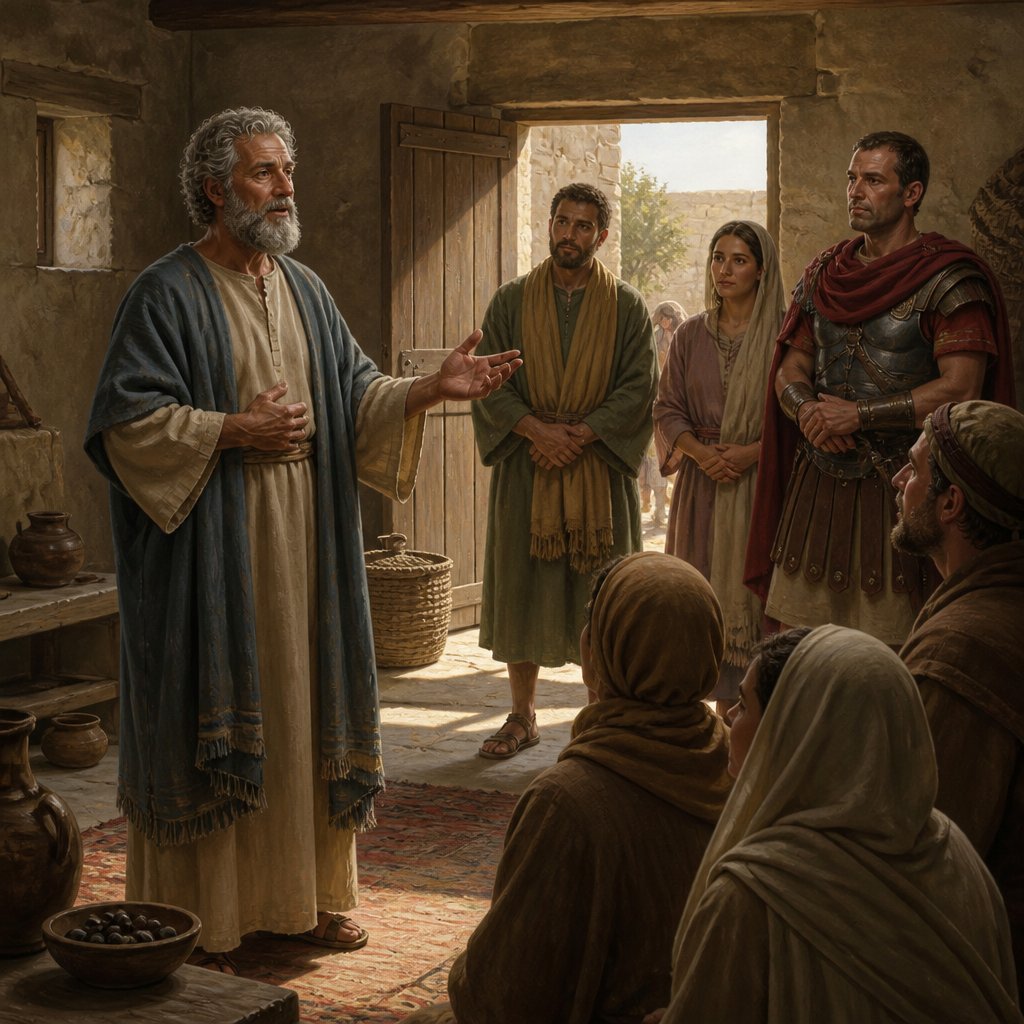
The Bible verse Acts 10:29 from the King James Version (KJV) states, "Therefore came I unto you without gainsaying, as soon as I was sent for: I ask therefore for what intent ye have sent for me?" This verse is part of a significant event in the book of Acts, where Peter, a disciple of Jesus Christ, is summoned to the house of a Gentile named Cornelius. To fully understand the meaning and significance of this verse, it is important to delve into the themes, context, and symbolism surrounding it.
The book of Acts is a continuation of the Gospel of Luke and serves as a historical account of the early Christian church and the spread of the gospel. In Acts 10, we see the beginning of the inclusion of Gentiles into the church, a significant shift from the exclusivity of the Jewish faith. The context of Acts 10:29 is that Cornelius, a Roman centurion, has a vision from an angel instructing him to send for Peter. Meanwhile, Peter also has a vision from God, which challenges his beliefs about associating with Gentiles. As a result, Peter is sent for by Cornelius, and in verse 29, Peter is questioning the reason for his summoning.
The theme of inclusion and the breaking down of barriers is evident in Acts 10, as Peter, a devout Jew, is being called to the house of a Gentile. This event marks a pivotal moment in the early church, emphasizing the universality of the gospel message and the expansion of God's grace to all people, regardless of their background or ethnicity. In asking for the intent behind his summons, Peter is essentially acknowledging the significance of crossing cultural boundaries and demonstrating a willingness to engage with those outside his own community.
The verse also symbolizes the obedience and responsiveness of Peter to the prompting of the Holy Spirit. Despite his initial reservations about associating with Gentiles, Peter does not hesitate to heed the call to visit Cornelius. His willingness to go "without gainsaying" reflects his submission to the leading of God's Spirit and his openness to God's unfolding plan for the expansion of the gospel.
Furthermore, Acts 10:29 illustrates the importance of discerning God's purpose and seeking clarity in our actions. Peter's question "for what intent ye have sent for me?" indicates his desire to understand the divine purpose behind his visit. This demonstrates the importance of seeking God's guidance and understanding the motives behind our actions, rather than acting impulsively or out of personal agenda.
As believers today, Acts 10:29 serves as a reminder to us to be open to the leading of the Holy Spirit and to embrace the diversity of God's kingdom. It challenges us to question our own biases and preconceived notions, and to be willing to engage with those who are different from us. It also encourages us to seek discernment and clarity in our actions, ensuring that our motives are aligned with God's purposes.
In conclusion, Acts 10:29 holds profound significance within the broader narrative of the book of Acts and the early Christian church. It encapsulates themes of inclusion, obedience to the Holy Spirit, and discerning God's purpose. The context of Peter's visit to Cornelius' house marks a pivotal moment in the history of Christianity, symbolizing the breaking down of cultural barriers and the universal reach of the gospel message. As believers, we are called to embody the same openness and willingness to engage with those outside our own communities, as well as to seek clarity and discernment in our actions.
Have questions about Acts 10:29?
Dive deeper into this scripture with Bible Chat — an AI-powered tool for exploring God's Word through conversation. Ask questions, get context, and grow in your understanding of the Bible.
Get Our Apps


Acts 10:29 Artwork

Acts 10:29 - "Therefore came I unto you without gainsaying, as soon as I was sent for: I ask therefore for what intent ye have sent for me?"
"Therefore came I unto you without gainsaying, as soon as I was sent for: I ask therefore for what intent ye have sent for me?" - Acts 10:29

put on a scroll acts 15:29

1 Chronicles 29:29 - "Now the acts of David the king, first and last, behold, they are written in the book of Samuel the seer, and in the book of Nathan the prophet, and in the book of Gad the seer,"

Acts 8:29 - "Then the Spirit said unto Philip, Go near, and join thyself to this chariot."

Acts 16:29 - "Then he called for a light, and sprang in, and came trembling, and fell down before Paul and Silas,"

Acts 7:29 - "Then fled Moses at this saying, and was a stranger in the land of Madian, where he begat two sons."

Acts 5:29 - "¶ Then Peter and the other apostles answered and said, We ought to obey God rather than men."

Acts 28:29 - "And when he had said these words, the Jews departed, and had great reasoning among themselves."

1 Kings 14:29 - "¶ Now the rest of the acts of Rehoboam, and all that he did, are they not written in the book of the chronicles of the kings of Judah?"

Acts 9:29 - "And he spake boldly in the name of the Lord Jesus, and disputed against the Grecians: but they went about to slay him."

Acts 20:29 - "For I know this, that after my departing shall grievous wolves enter in among you, not sparing the flock."

Acts 21:29 - "(For they had seen before with him in the city Trophimus an Ephesian, whom they supposed that Paul had brought into the temple.)"

Acts 23:29 - "Whom I perceived to be accused of questions of their law, but to have nothing laid to his charge worthy of death or of bonds."

Acts 4:29 - "And now, Lord, behold their threatenings: and grant unto thy servants, that with all boldness they may speak thy word,"

Acts 13:29 - "And when they had fulfilled all that was written of him, they took him down from the tree, and laid him in a sepulchre."

Acts 11:29 - "Then the disciples, every man according to his ability, determined to send relief unto the brethren which dwelt in Judaea:"

acts 10:44-46

Acts 27:29 - "Then fearing lest we should have fallen upon rocks, they cast four anchors out of the stern, and wished for the day."

Job 29:10 - "The nobles held their peace, and their tongue cleaved to the roof of their mouth."

Proverbs 29:10 - "The bloodthirsty hate the upright: but the just seek his soul."

Genesis 10:29 - "And Ophir, and Havilah, and Jobab: all these were the sons of Joktan."

Acts 10:10 - "And he became very hungry, and would have eaten: but while they made ready, he fell into a trance,"

The Plague of Darkness - Exodus 10:21-29

The Plague of Darkness - Exodus 10:21-29

The Plague of Darkness - Exodus 10:21-29

The Plague of Darkness - Exodus 10:21-29

The Plague of Darkness - Exodus 10:21-29

The Plague of Darkness - Exodus 10:21-29

The Plague of Darkness - Exodus 10:21-29