What does 2 Samuel 9:3 mean?
"And the king said, Is there not yet any of the house of Saul, that I may shew the kindness of God unto him? And Ziba said unto the king, Jonathan hath yet a son, which is lame on his feet." - 2 Samuel 9:3
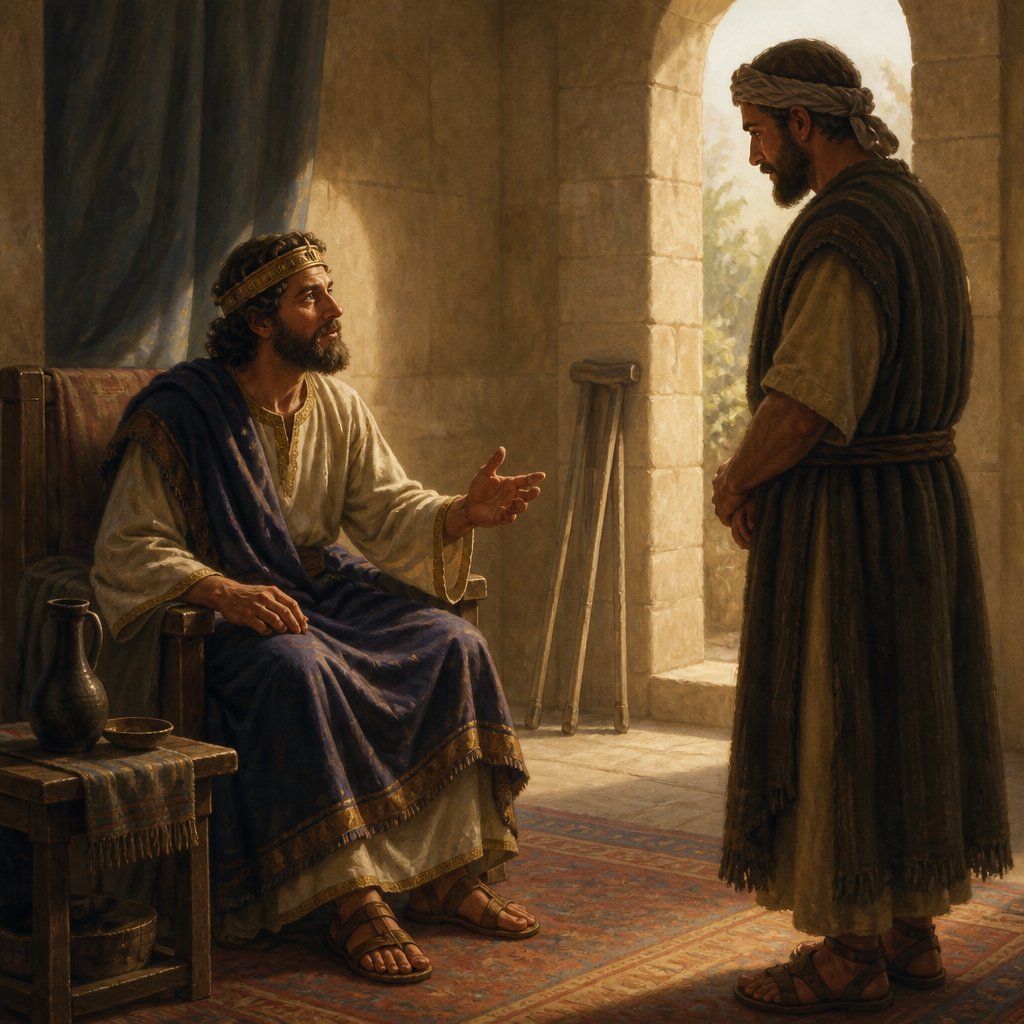
The Bible verse 2 Samuel 9:3 from the King James Version (KJV) reads, "And the king said, Is there not yet any of the house of Saul, that I may shew the kindness of God unto him? And Ziba said unto the king, Jonathan hath yet a son, which is lame on his feet."
This verse is part of the larger narrative of King David's reign and his desire to show kindness to the descendants of Saul, the previous king of Israel. The verse introduces the character of Mephibosheth, the son of Jonathan and grandson of Saul, who is "lame on his feet." To understand the full meaning and impact of this verse, it's important to consider the historical and cultural context in which it is situated, as well as the deeper themes and symbolism it carries.
The story of King David's kindness to Mephibosheth is a powerful illustration of several key themes in the Bible, including grace, mercy, and the redemptive power of God. It also highlights the concept of covenant loyalty and the fulfillment of God's promises.
In the historical context, Saul was the first king of Israel, and David was anointed as his successor. After Saul's death, David became king and established his own dynasty. The transition of power from the house of Saul to the house of David was marked by conflict and bloodshed. Despite the enmity between the two houses, David makes a surprising and radical move by seeking out any remaining descendants of Saul in order to show them kindness.
The mention of Mephibosheth being "lame on his feet" is significant in several ways. In ancient Israel, physical perfection was often equated with moral and spiritual worth. A person with a physical disability would have been seen as lesser or even cursed by God. By highlighting Mephibosheth's lameness, the text underscores the depth of David's kindness, as he reaches out to someone who would have been considered an outcast in his society.
The theme of kindness and mercy is central to this verse and to the larger narrative. David's desire to show kindness to a descendant of Saul reflects his understanding of the concept of hesed, a Hebrew word often translated as "lovingkindness" or "steadfast love." This concept emphasizes God's faithful and enduring love for His people, and David's actions mirror this divine attribute.
The mention of showing "the kindness of God" is also significant. It reflects David's understanding that true kindness is a reflection of the character of God, and it aligns with the biblical principle of imitating God's attributes. In this act of seeking out and blessing Mephibosheth, David becomes a vessel of God's grace and love.
Furthermore, the verse serves as a powerful symbol of God's redemptive work. The offer of kindness to Mephibosheth, despite his background and physical condition, can be seen as a foreshadowing of God's unconditional love and acceptance of all people. It echoes the broader biblical theme of God's ability to bring beauty and purpose out of brokenness and suffering.
In conclusion, 2 Samuel 9:3 from the King James Version of the Bible carries deep meaning and significance within the larger narrative of David's reign and the biblical themes it encompasses. It highlights the radical nature of true kindness, the redemptive power of God, and the divine attribute of steadfast love. The verse continues to inspire and challenge readers to embody the same spirit of grace and mercy in their interactions with others.
Have questions about 2 Samuel 9:3?
Dive deeper into this scripture with Bible Chat — an AI-powered tool for exploring God's Word through conversation. Ask questions, get context, and grow in your understanding of the Bible.
Get Our Apps


2 Samuel 9:3 Artwork

2 Samuel 9:3 - "And the king said, Is there not yet any of the house of Saul, that I may shew the kindness of God unto him? And Ziba said unto the king, Jonathan hath yet a son, which is lame on his feet."
"And the king said, Is there not yet any of the house of Saul, that I may shew the kindness of God unto him? And Ziba said unto the king, Jonathan hath yet a son, which is lame on his feet." - 2 Samuel 9:3

2 Samuel 3:9 - "So do God to Abner, and more also, except, as the LORD hath sworn to David, even so I do to him;"

2 samuel 9:7 fhdhdhdhhd

1 Samuel 9:3 - "And the asses of Kish Saul's father were lost. And Kish said to Saul his son, Take now one of the servants with thee, and arise, go seek the asses."

2 Samuel 11:9
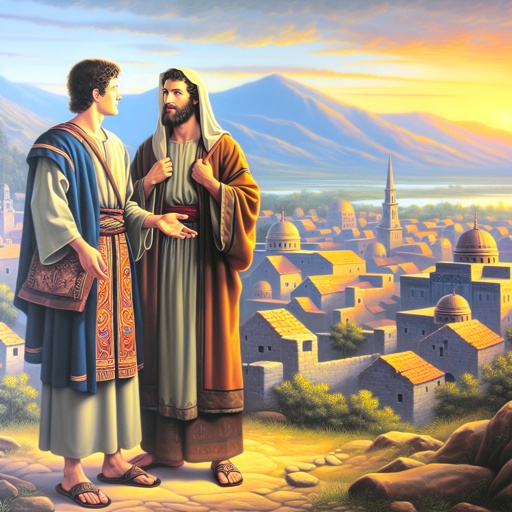
1 Samuel 9:1-2

1 Samuel 3:9 - "Therefore Eli said unto Samuel, Go, lie down: and it shall be, if he call thee, that thou shalt say, Speak, LORD; for thy servant heareth. So Samuel went and lay down in his place."

2 Samuel 3:2 - "¶ And unto David were sons born in Hebron: and his firstborn was Amnon, of Ahinoam the Jezreelitess;"

2 Samuel 4:3 - "And the Beerothites fled to Gittaim, and were sojourners there until this day.)"

2 Samuel 3:4 - "And the fourth, Adonijah the son of Haggith; and the fifth, Shephatiah the son of Abital;"

2 Samuel 3:3 - "And his second, Chileab, of Abigail the wife of Nabal the Carmelite; and the third, Absalom the son of Maacah the daughter of Talmai king of Geshur;"

2 Samuel 2:9 - "And made him king over Gilead, and over the Ashurites, and over Jezreel, and over Ephraim, and over Benjamin, and over all Israel."

2 Samuel 8:9 - "¶ When Toi king of Hamath heard that David had smitten all the host of Hadadezer,"

2 Samuel 9:9 - "¶ Then the king called to Ziba, Saul's servant, and said unto him, I have given unto thy master's son all that pertained to Saul and to all his house."

2 Samuel 6:9 - "And David was afraid of the LORD that day, and said, How shall the ark of the LORD come to me?"

2 Samuel 15:9 - "And the king said unto him, Go in peace. So he arose, and went to Hebron."

2 Samuel 3:33 - "And the king lamented over Abner, and said, Died Abner as a fool dieth?"

2 Samuel 3:5 - "And the sixth, Ithream, by Eglah David's wife. These were born to David in Hebron."
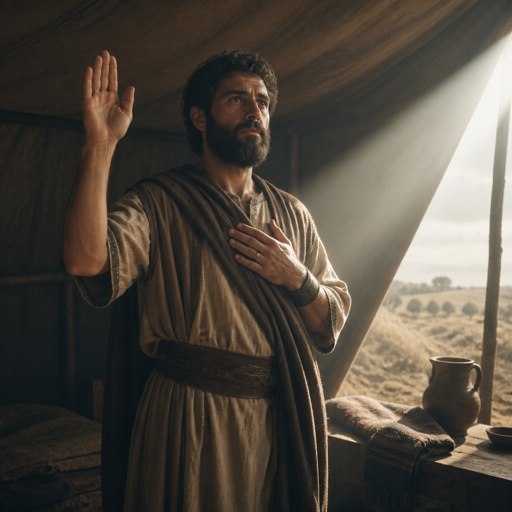
"So do God to Abner, and more also, except, as the LORD hath sworn to David, even so I do to him;" - 2 Samuel 3:9

2 Samuel 2:3 - "And his men that were with him did David bring up, every man with his household: and they dwelt in the cities of Hebron."

2 Samuel 7:3 - "And Nathan said to the king, Go, do all that is in thine heart; for the LORD is with thee."

2 Samuel 3:11 - "And he could not answer Abner a word again, because he feared him."

2 Samuel 9:5 - "¶ Then king David sent, and fetched him out of the house of Machir, the son of Ammiel, from Lo-debar."

2 Samuel 9:1 - "And David said, Is there yet any that is left of the house of Saul, that I may shew him kindness for Jonathan's sake?"

2 Samuel 11:9 - "But Uriah slept at the door of the king's house with all the servants of his lord, and went not down to his house."

2 Samuel 9:13 - "So Mephibosheth dwelt in Jerusalem: for he did eat continually at the king's table; and was lame on both his feet."

1 Samuel 2:9 - "He will keep the feet of his saints, and the wicked shall be silent in darkness; for by strength shall no man prevail."

2 Samuel 3:37 - "For all the people and all Israel understood that day that it was not of the king to slay Abner the son of Ner."

2 Samuel 22:9 - "There went up a smoke out of his nostrils, and fire out of his mouth devoured: coals were kindled by it."