What does 2 Samuel 8:3 mean?
"¶ David smote also Hadadezer, the son of Rehob, king of Zobah, as he went to recover his border at the river Euphrates." - 2 Samuel 8:3
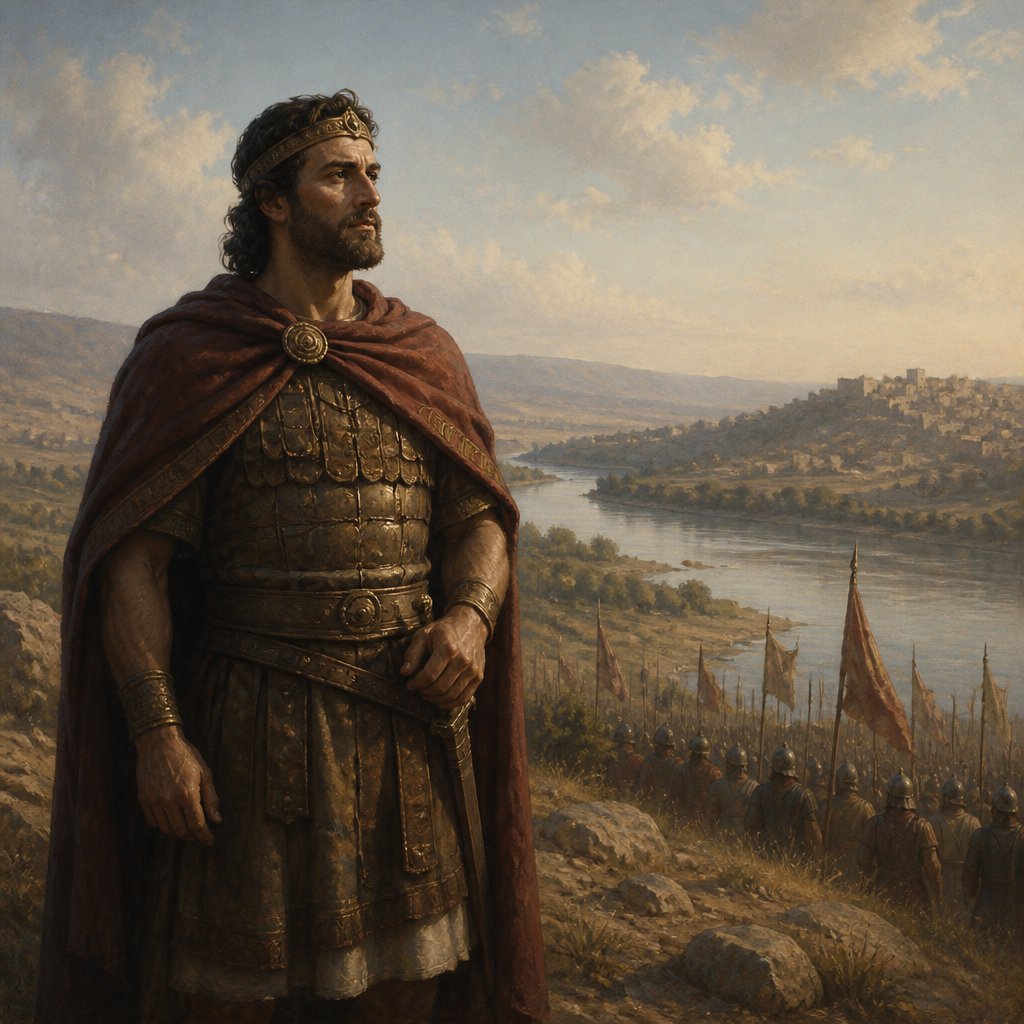
The verse 2 Samuel 8:3 in the King James Version of the Bible states, "David smote also Hadadezer, the son of Rehob, king of Zobah, as he went to recover his border at the river Euphrates." This passage is part of the historical narrative of David's reign as King of Israel and sheds light on the military conquests and territorial expansion achieved under his leadership.
To fully comprehend the meaning and significance of this verse, it is essential to delve into the broader context of 2 Samuel 8. This chapter provides a detailed account of David's military campaigns and victories, as well as the consolidation of his kingdom following the death of King Saul. It underscores David's prowess as a military strategist and leader, and the fulfillment of God's promises to establish his dominion. Additionally, the chapter underscores the fulfillment of divine prophecies and the establishment of Israel as a dominant power in the region.
Furthermore, the verse serves as a testament to David's leadership and his commitment to safeguarding the territorial integrity of Israel. The reference to Hadadezer, the son of Rehob, king of Zobah, indicates a formidable adversary that David confronted and defeated. Zobah was an Aramean kingdom located in the region of present-day Syria, and Hadadezer's attempt to reclaim territory at the river Euphrates represented a direct threat to the borders of Israel. David's decisive victory over Hadadezer demonstrated his strategic acumen and military strength, as well as his unwavering determination to protect the boundaries of God's chosen nation.
Symbolically, this passage conveys the broader theme of divine providence and the fulfillment of God's promises to His chosen people. Throughout the Old Testament, the Israelites' possession of the land of Canaan is depicted as a manifestation of God's covenant with Abraham and His faithfulness to His chosen people. The defeat of Hadadezer and the expansion of Israel's territory under David's reign mirror the fulfillment of God's promises and the establishment of Israel as a formidable power in the region.
Moreover, the verse underscores the theme of divine assistance and intervention in the affairs of nations. David's success in battle is attributed not only to his military prowess but also to the divine assistance provided by God. Throughout the biblical narrative, God is portrayed as the ultimate source of strength and guidance for His people, and the verse in question exemplifies the notion of divine providence in the context of military conquests and territorial expansion.
From a historical and geopolitical perspective, the verse also sheds light on the ancient Near Eastern context of the Israelite monarchy. The reference to the river Euphrates as a contested border area reflects the strategic significance of this region in the geopolitical landscape of the ancient Near East. The conquest of territories along the Euphrates River was a significant military achievement, as it enabled David to secure vital trade routes and establish Israel as a dominant power in the region.
In conclusion, 2 Samuel 8:3 in the King James Version of the Bible holds profound significance within the broader context of David's reign and the establishment of Israel as a dominant power in the ancient Near East. The verse serves as a testament to David's leadership, military prowess, and unwavering commitment to safeguarding the territorial integrity of God's chosen nation. Moreover, it underscores the theme of divine providence and the fulfillment of God's promises in the context of military conquests and territorial expansion. Ultimately, this passage offers valuable insights into the historical, theological, and geopolitical dimensions of the Old Testament narrative.
Have questions about 2 Samuel 8:3?
Dive deeper into this scripture with Bible Chat — an AI-powered tool for exploring God's Word through conversation. Ask questions, get context, and grow in your understanding of the Bible.
Get Our Apps


2 Samuel 8:3 Artwork

2 Samuel 8:3 - "¶ David smote also Hadadezer, the son of Rehob, king of Zobah, as he went to recover his border at the river Euphrates."
"¶ David smote also Hadadezer, the son of Rehob, king of Zobah, as he went to recover his border at the river Euphrates." - 2 Samuel 8:3

1 Samuel 8:3 - "And his sons walked not in his ways, but turned aside after lucre, and took bribes, and perverted judgment."

2 Samuel 19:8

2 Samuel 19:8

2 Samuel 19:8

2 Samuel 19:8

2 samuel 23:8-21

2 Samuel 8:8 - "And from Betah, and from Berothai, cities of Hadadezer, king David took exceeding much brass."
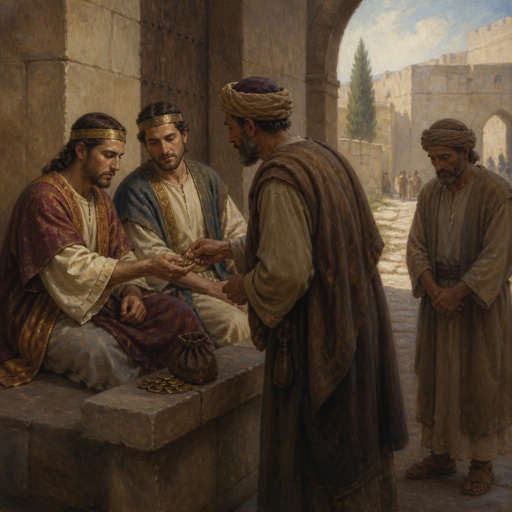
"And his sons walked not in his ways, but turned aside after lucre, and took bribes, and perverted judgment." - 1 Samuel 8:3

1 Samuel 3:8 - "And the LORD called Samuel again the third time. And he arose and went to Eli, and said, Here am I; for thou didst call me. And Eli perceived that the LORD had called the child."

2 Samuel 3:2 - "¶ And unto David were sons born in Hebron: and his firstborn was Amnon, of Ahinoam the Jezreelitess;"

2 Samuel 2:8 - "¶ But Abner the son of Ner, captain of Saul's host, took Ish-bosheth the son of Saul, and brought him over to Mahanaim;"

2 Samuel 8:9 - "¶ When Toi king of Hamath heard that David had smitten all the host of Hadadezer,"

2 Samuel 8:16 - "And Joab the son of Zeruiah was over the host; and Jehoshaphat the son of Ahilud was recorder;"

2 Samuel 4:3 - "And the Beerothites fled to Gittaim, and were sojourners there until this day.)"

2 Samuel 22:8 - "Then the earth shook and trembled; the foundations of heaven moved and shook, because he was wroth."

2 Samuel 8:17 - "And Zadok the son of Ahitub, and Ahimelech the son of Abiathar, were the priests; and Seraiah was the scribe;"

2 Samuel 8:7 - "And David took the shields of gold that were on the servants of Hadadezer, and brought them to Jerusalem."

2 Samuel 8:15 - "And David reigned over all Israel; and David executed judgment and justice unto all his people."

2 Samuel 3:4 - "And the fourth, Adonijah the son of Haggith; and the fifth, Shephatiah the son of Abital;"

2 Samuel 3:3 - "And his second, Chileab, of Abigail the wife of Nabal the Carmelite; and the third, Absalom the son of Maacah the daughter of Talmai king of Geshur;"

2 Samuel 3:33 - "And the king lamented over Abner, and said, Died Abner as a fool dieth?"

2 Samuel 3:5 - "And the sixth, Ithream, by Eglah David's wife. These were born to David in Hebron."

2 Samuel 2:3 - "And his men that were with him did David bring up, every man with his household: and they dwelt in the cities of Hebron."

2 Samuel 14:8 - "And the king said unto the woman, Go to thine house, and I will give charge concerning thee."

2 Samuel 8:12 - "Of Syria, and of Moab, and of the children of Ammon, and of the Philistines, and of Amalek, and of the spoil of Hadadezer, son of Rehob, king of Zobah."

2 Samuel 8:18 - "And Benaiah the son of Jehoiada was over both the Cherethites and the Pelethites; and David's sons were chief rulers."

2 Samuel 7:3 - "And Nathan said to the king, Go, do all that is in thine heart; for the LORD is with thee."

2 Samuel 3:11 - "And he could not answer Abner a word again, because he feared him."