What does 2 Samuel 3:37 mean?
"For all the people and all Israel understood that day that it was not of the king to slay Abner the son of Ner." - 2 Samuel 3:37
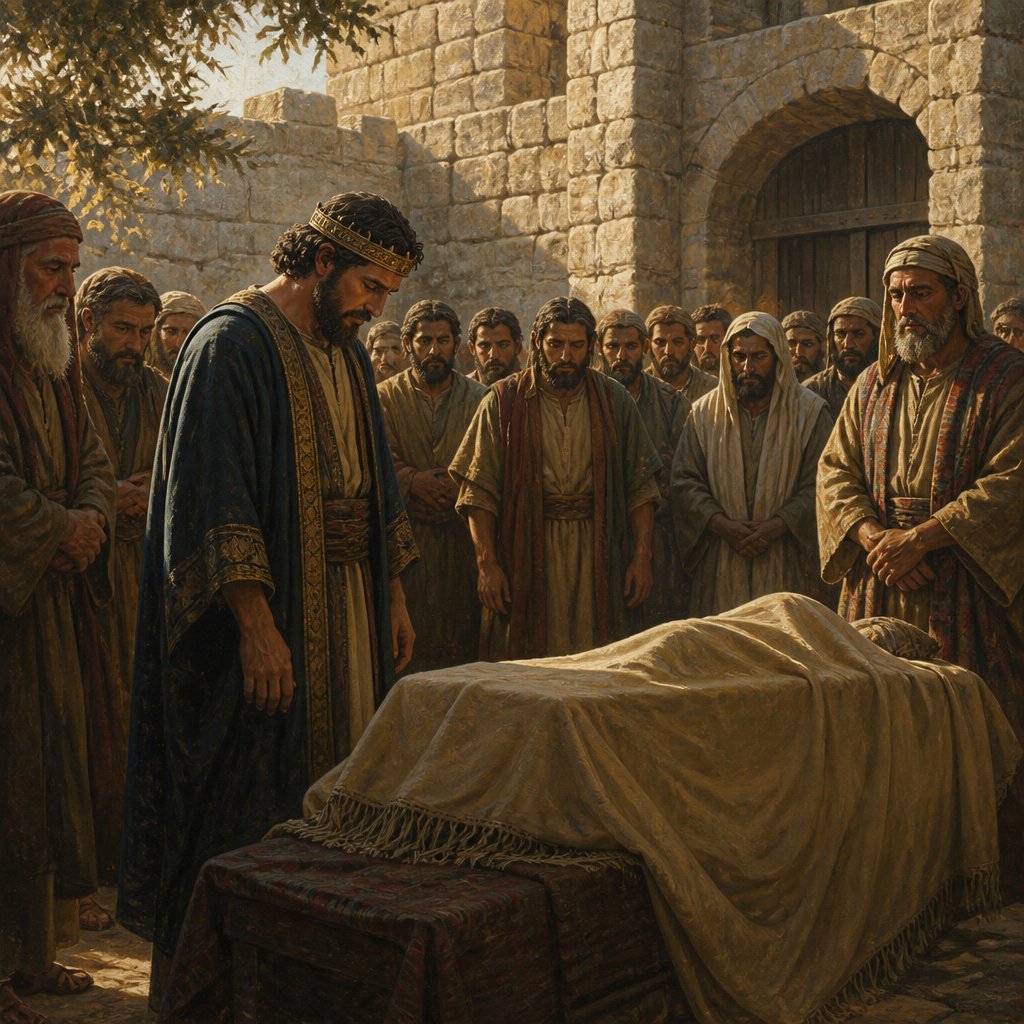
The Bible verse 2 Samuel 3:37 states, "For all the people and all Israel understood that day that it was not of the king to slay Abner the son of Ner."
This verse comes from the Old Testament book of 2 Samuel, which chronicles the rise and reign of King David. In this particular passage, King David is lamenting the death of Abner, the commander of Saul's army, who had recently been killed by Joab, one of David's own commanders.
The context of this verse is crucial to understanding its significance. Abner had defected to David's side after Saul's death, and although he had been loyal to David, his killing by Joab was a source of great sorrow and frustration for King David. David's expression of grief was not just a personal response to the loss of a trusted ally, but also a public statement about his leadership and his commitment to justice and mercy.
This verse has several important themes and messages. One of the main themes is the idea of justice and righteousness. By openly mourning the death of Abner and disavowing any involvement in his killing, David is demonstrating his commitment to justice and fairness. This helps to establish the legitimacy of his reign and his commitment to upholding God's law.
Another important theme in this verse is the notion of unity and reconciliation. The death of Abner had the potential to create division and strife within Israel, as he was a significant and influential figure. However, David's public display of sorrow and condemnation of the act served to unify the people and reinforce his commitment to peace and unity within the kingdom.
This verse also showcases David's leadership and integrity. By making it clear that he did not condone or order Abner's death, David is setting an example of moral leadership for his people. He is showing that he is a king who values righteousness and refuses to resort to violence and treachery in order to eliminate his enemies.
In terms of symbolism, this verse can be seen as a representation of the struggle for moral authority and the pursuit of justice in a fallen world. David's grief over Abner's death reflects the pain and suffering that injustice and violence can cause, but it also demonstrates his determination to stand for what is right and just. In this way, the verse can serve as a reminder of the importance of holding fast to moral principles and seeking to uphold justice even in the face of adversity.
In conclusion, 2 Samuel 3:37 is a powerful and significant verse that speaks to themes of justice, leadership, and the pursuit of righteousness. It provides a valuable insight into King David's character and his commitment to upholding God's law and maintaining unity and peace within Israel. It also serves as a timeless reflection on the challenges of navigating moral dilemmas and the importance of seeking justice and reconciliation in a flawed world.
Have questions about 2 Samuel 3:37?
Dive deeper into this scripture with Bible Chat — an AI-powered tool for exploring God's Word through conversation. Ask questions, get context, and grow in your understanding of the Bible.
Get Our Apps


2 Samuel 3:37 Artwork

2 Samuel 3:37 - "For all the people and all Israel understood that day that it was not of the king to slay Abner the son of Ner."

"For all the people and all Israel understood that day that it was not of the king to slay Abner the son of Ner." - 2 Samuel 3:37

2 Samuel 3:7 - "And Saul had a concubine, whose name was Rizpah, the daughter of Aiah: and Ish-bosheth said to Abner, Wherefore hast thou gone in unto my father's concubine?"

2 Samuel 23:37 - "Zelek the Ammonite, Naharai the Beerothite, armourbearer to Joab the son of Zeruiah,"

2 Samuel 15:37 - "So Hushai David's friend came into the city, and Absalom came into Jerusalem."

2 Samuel 22:37 - "Thou hast enlarged my steps under me; so that my feet did not slip."

2 Samuel 13:37 - "¶ But Absalom fled, and went to Talmai, the son of Ammihud, king of Geshur. And David mourned for his son every day."

"And Saul had a concubine, whose name was Rizpah, the daughter of Aiah: and Ish-bosheth said to Abner, Wherefore hast thou gone in unto my father's concubine?" - 2 Samuel 3:7

1 Samuel 3:7 - "Now Samuel did not yet know the LORD, neither was the word of the LORD yet revealed unto him."

"Zelek the Ammonite, Naharai the Beerothite, armourbearer to Joab the son of Zeruiah," - 2 Samuel 23:37

"So Hushai David's friend came into the city, and Absalom came into Jerusalem." - 2 Samuel 15:37

2 Samuel 3:2 - "¶ And unto David were sons born in Hebron: and his firstborn was Amnon, of Ahinoam the Jezreelitess;"

2 Samuel 4:3 - "And the Beerothites fled to Gittaim, and were sojourners there until this day.)"

2 Samuel 3:4 - "And the fourth, Adonijah the son of Haggith; and the fifth, Shephatiah the son of Abital;"

2 Samuel 3:3 - "And his second, Chileab, of Abigail the wife of Nabal the Carmelite; and the third, Absalom the son of Maacah the daughter of Talmai king of Geshur;"

2 Samuel 3:11 - "And he could not answer Abner a word again, because he feared him."

2 Samuel 3:33 - "And the king lamented over Abner, and said, Died Abner as a fool dieth?"

2 Samuel 3:5 - "And the sixth, Ithream, by Eglah David's wife. These were born to David in Hebron."

2 Samuel 2:3 - "And his men that were with him did David bring up, every man with his household: and they dwelt in the cities of Hebron."

"Thou hast enlarged my steps under me; so that my feet did not slip." - 2 Samuel 22:37

2 Samuel 7:3 - "And Nathan said to the king, Go, do all that is in thine heart; for the LORD is with thee."

"Now Samuel did not yet know the LORD, neither was the word of the LORD yet revealed unto him." - 1 Samuel 3:7

2 Samuel 3:15 - "And Ish-bosheth sent, and took her from her husband, even from Phaltiel the son of Laish."

2 Samuel 3:36 - "And all the people took notice of it, and it pleased them: as whatsoever the king did pleased all the people."

2 Samuel 14:3 - "And come to the king, and speak on this manner unto him. So Joab put the words in her mouth."

Nabal becomes like stone in 1 Samuel 25:37

Nabal becomes like stone in 1 Samuel 25:37

2 Samuel 3:6 - "¶ And it came to pass, while there was war between the house of Saul and the house of David, that Abner made himself strong for the house of Saul."

2 Samuel 3:38 - "And the king said unto his servants, Know ye not that there is a prince and a great man fallen this day in Israel?"

"¶ But Absalom fled, and went to Talmai, the son of Ammihud, king of Geshur. And David mourned for his son every day." - 2 Samuel 13:37