What does 2 Samuel 3:32 mean?
"And they buried Abner in Hebron: and the king lifted up his voice, and wept at the grave of Abner; and all the people wept." - 2 Samuel 3:32
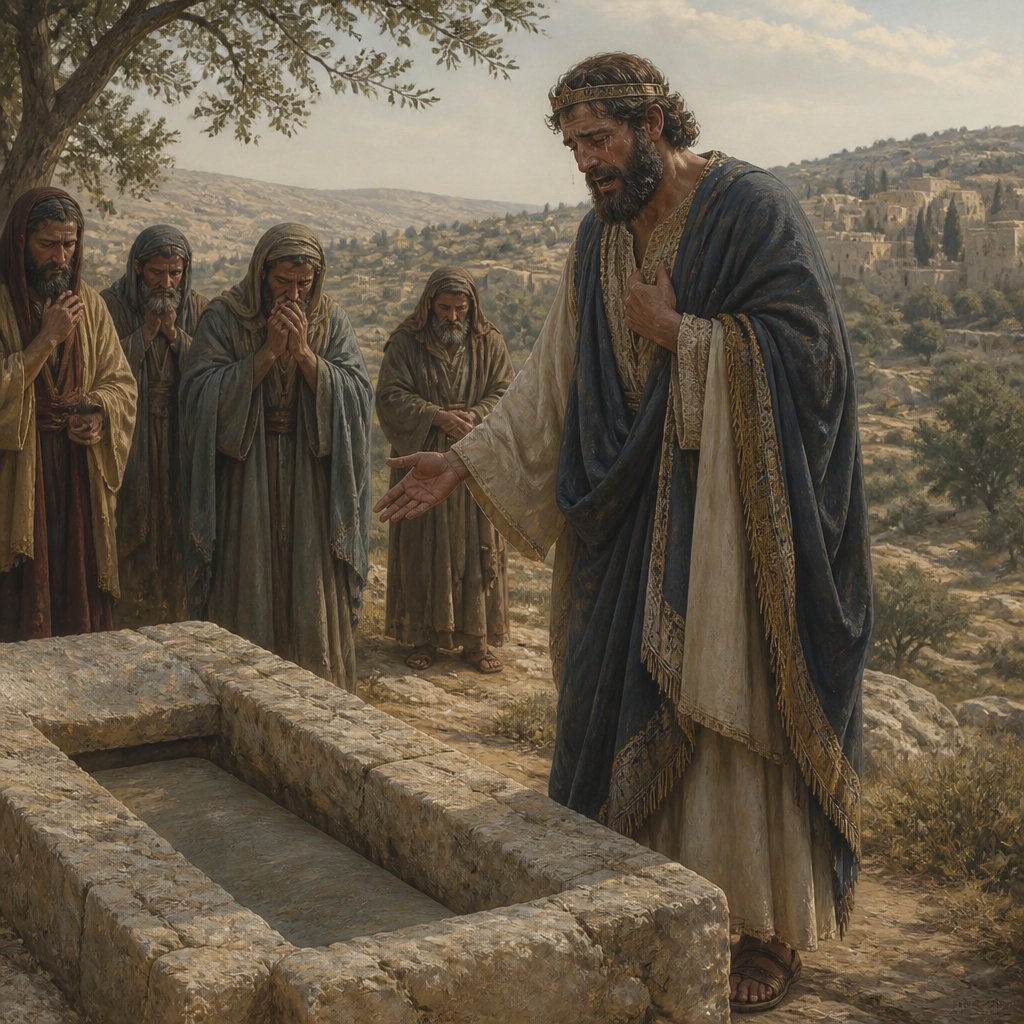
The Bible verse 2 Samuel 3:32 in the King James Version reads, "And they buried Abner in Hebron: and the king lifted up his voice, and wept at the grave of Abner; and all the people wept."
This verse is part of a larger narrative in the book of 2 Samuel that describes the events following the death of Abner, a prominent figure in King Saul's administration. Abner was a skilled military leader and a close ally of King Saul, who was the first king of Israel. After Saul's death, Abner became a key player in the political landscape of Israel. He supported Ishbosheth, Saul's son, as the new king, opposing David who was chosen by God to be the true king of Israel.
In 2 Samuel 3:32, we see the aftermath of Abner's death. The text informs us that Abner was buried in Hebron, a city with great significance in biblical history. Hebron was a city of refuge for those who accidentally committed murder, and it was also a place where Abraham, the father of the Israelite nation, lived for a time.
The verse also describes how King David reacted to the death of Abner. It says that the king "lifted up his voice, and wept at the grave of Abner; and all the people wept." This reaction is significant because it shows David's deep emotional response to the loss of a key figure, even though Abner had been his adversary in the past. David's mourning demonstrates his capacity for empathy and forgiveness, qualities that are often associated with God's grace in the Bible.
The themes present in 2 Samuel 3:32 are numerous and complex. One of the central themes is the reality of death and the grief that accompanies it. The fact that both the king and the people wept emphasizes the universality of human suffering and the common experience of mourning. Grief is a powerful emotion that can bring people together, regardless of their differences, and this verse highlights the shared humanity of all people in the face of loss.
Another theme present in this verse is the complexity of human relationships and the potential for reconciliation. Despite the enmity between David and Abner in the past, David's genuine display of sorrow at Abner's grave suggests that he harbored no ill will towards him. This event serves as a reminder that personal grudges and animosities can be set aside in the face of death, and that even those who were once enemies are capable of finding common ground in their shared humanity.
In a broader context, 2 Samuel 3:32 can be seen as part of the larger narrative of David's rise to power and the establishment of his kingdom. The death of Abner was a pivotal moment in this process, as it ultimately led to the consolidation of power under David's rule. This verse, then, represents a moment of transition and change, as David grapples with the loss of a significant figure and comes to terms with the shifting political landscape of Israel.
Symbolism is also present in this verse, particularly in the act of burial. In biblical tradition, the act of burying the dead holds deep symbolic significance. It is a ritual that serves as a demonstration of respect for the deceased and a recognition of their intrinsic worth as human beings. The fact that Abner was buried in Hebron, a city associated with refuge and the ancestral home of the Israelite nation, adds layers of meaning to this act. It suggests a connection to the broader narrative of God's covenant with His people and the enduring significance of their history and traditions.
In conclusion, 2 Samuel 3:32 offers a poignant portrayal of grief, reconciliation, and the inevitability of change. Through its depiction of David's mourning and the universal response of the people, it reminds readers of the common experience of suffering and the capacity for empathy and understanding. It also serves as a pivotal moment in the larger narrative of David's reign, and it carries deep symbolic significance in its portrayal of the act of burial. Overall, this verse represents a powerful reflection on the complexity of human relationships and the universal experience of loss.
Have questions about 2 Samuel 3:32?
Dive deeper into this scripture with Bible Chat — an AI-powered tool for exploring God's Word through conversation. Ask questions, get context, and grow in your understanding of the Bible.
Get Our Apps


2 Samuel 3:32 Artwork

2 Samuel 3:32 - "And they buried Abner in Hebron: and the king lifted up his voice, and wept at the grave of Abner; and all the people wept."
"And they buried Abner in Hebron: and the king lifted up his voice, and wept at the grave of Abner; and all the people wept." - 2 Samuel 3:32

2 Samuel 3:2 - "¶ And unto David were sons born in Hebron: and his firstborn was Amnon, of Ahinoam the Jezreelitess;"
"¶ And unto David were sons born in Hebron: and his firstborn was Amnon, of Ahinoam the Jezreelitess;" - 2 Samuel 3:2

2 Samuel 23:32 - "Eliahba the Shaalbonite, of the sons of Jashen, Jonathan,"

2 Samuel 22:32 - "For who is God, save the LORD? and who is a rock, save our God?"

"Eliahba the Shaalbonite, of the sons of Jashen, Jonathan," - 2 Samuel 23:32

2 Samuel 2:32 - "¶ And they took up Asahel, and buried him in the sepulchre of his father, which was in Beth-lehem. And Joab and his men went all night, and they came to Hebron at break of day."

1 Samuel 2:32 - "And thou shalt see an enemy in my habitation, in all the wealth which God shall give Israel: and there shall not be an old man in thine house for ever."

1 Samuel 3:2 - "And it came to pass at that time, when Eli was laid down in his place, and his eyes began to wax dim, that he could not see;"

isaiah 32:2-3 emphasis on Jesus Christ being unnatractive

2 Samuel 4:3 - "And the Beerothites fled to Gittaim, and were sojourners there until this day.)"
"For who is God, save the LORD? and who is a rock, save our God?" - 2 Samuel 22:32

2 Samuel 19:32 - "Now Barzillai was a very aged man, even fourscore years old: and he had provided the king of sustenance while he lay at Mahanaim; for he was a very great man."

2 Samuel 3:4 - "And the fourth, Adonijah the son of Haggith; and the fifth, Shephatiah the son of Abital;"

2 Samuel 3:3 - "And his second, Chileab, of Abigail the wife of Nabal the Carmelite; and the third, Absalom the son of Maacah the daughter of Talmai king of Geshur;"
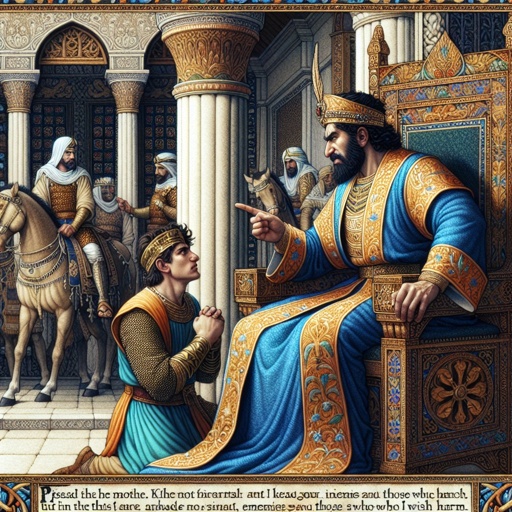
2 Samuel 18:32 - "And the king said unto Cushi, Is the young man Absalom safe? And Cushi answered, The enemies of my lord the king, and all that rise against thee to do thee hurt, be as that young man is."

2 Samuel 3:11 - "And he could not answer Abner a word again, because he feared him."

2 Samuel 3:33 - "And the king lamented over Abner, and said, Died Abner as a fool dieth?"

2 Samuel 3:5 - "And the sixth, Ithream, by Eglah David's wife. These were born to David in Hebron."

2 Samuel 15:32 - "¶ And it came to pass, that when David was come to the top of the mount, where he worshipped God, behold, Hushai the Archite came to meet him with his coat rent, and earth upon his head:"

2 Samuel 2:3 - "And his men that were with him did David bring up, every man with his household: and they dwelt in the cities of Hebron."

2 Samuel 7:3 - "And Nathan said to the king, Go, do all that is in thine heart; for the LORD is with thee."

2 Chronicles 32:3 - "He took counsel with his princes and his mighty men to stop the waters of the fountains which were without the city: and they did help him."

2 Samuel 3:37 - "For all the people and all Israel understood that day that it was not of the king to slay Abner the son of Ner."

2 Samuel 3:15 - "And Ish-bosheth sent, and took her from her husband, even from Phaltiel the son of Laish."

2 Samuel 3:36 - "And all the people took notice of it, and it pleased them: as whatsoever the king did pleased all the people."

2 Samuel 14:3 - "And come to the king, and speak on this manner unto him. So Joab put the words in her mouth."

2 Samuel 3:6 - "¶ And it came to pass, while there was war between the house of Saul and the house of David, that Abner made himself strong for the house of Saul."

2 Samuel 3:38 - "And the king said unto his servants, Know ye not that there is a prince and a great man fallen this day in Israel?"