What does 2 Samuel 3:26 mean?
"And when Joab was come out from David, he sent messengers after Abner, which brought him again from the well of Sirah: but David knew it not." - 2 Samuel 3:26
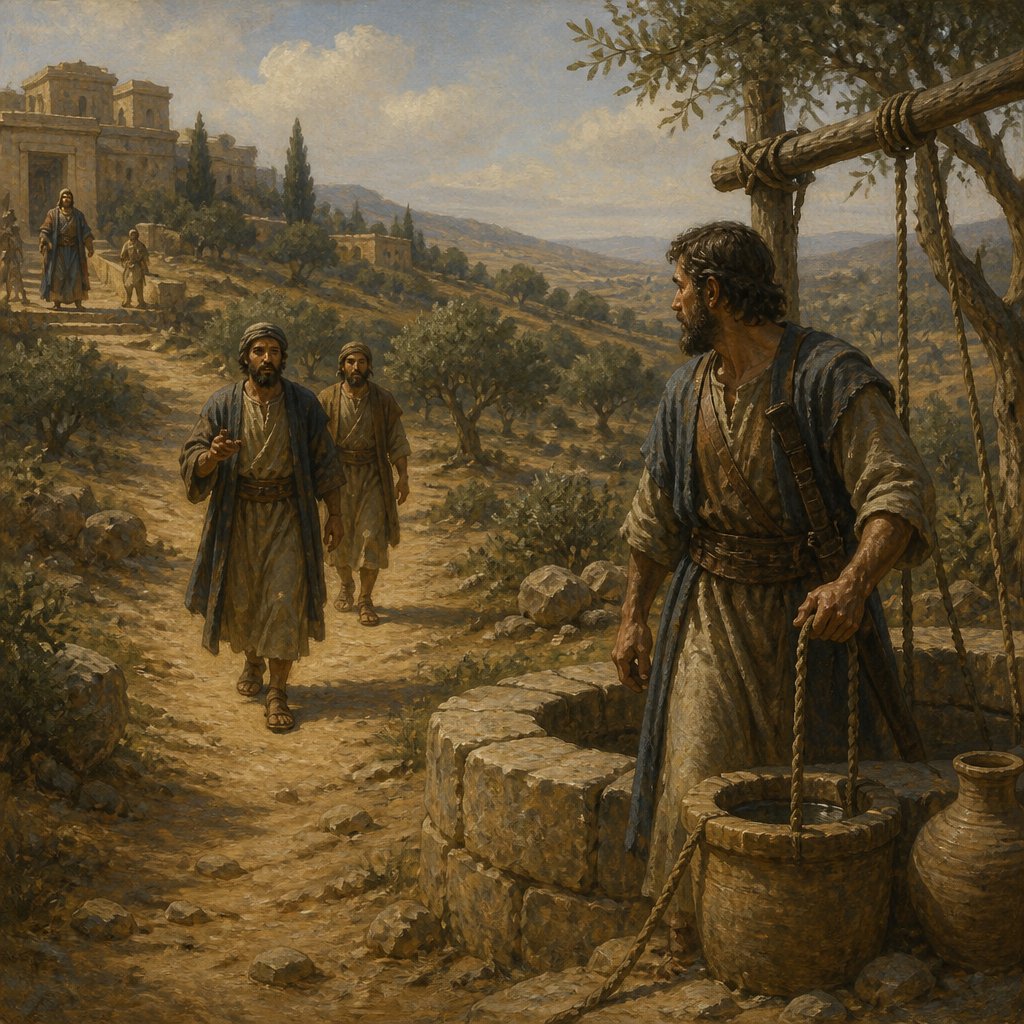
2 Samuel 3:26 (KJV) says, "And when Joab was come out from David, he sent messengers after Abner, which brought him again from the well of Sirah: but David knew it not." This verse comes from the Old Testament, specifically from the book of 2 Samuel, which tells the story of King David's reign over Israel.
To understand the full meaning and context of this verse, it is important to consider the events leading up to it. In the previous chapters of 2 Samuel, we learn that Abner, the commander of Saul's army, had defected to David's side after Saul's death. This was a significant political and military move, as it solidified David's hold on the kingdom of Israel. However, tensions still remained between David's forces and those loyal to Saul's house.
In this verse, we see the actions of Joab, one of David's leading military commanders. Joab, who was known for his aggressive and sometimes ruthless tactics, sends messengers to bring Abner back from the well of Sirah. However, it is important to note that David was unaware of Joab's actions. This sets the stage for the events that unfold in the following verses, including Joab's betrayal and the death of Abner at his hands.
One of the key themes in this verse is the complex and often treacherous nature of political power and alliances. Throughout the book of 2 Samuel, we see the characters vying for power and navigating the shifting allegiances and loyalties that come with it. Joab's actions in this verse are driven by his own motivations, which ultimately lead to violence and conflict.
Another important theme in this verse is the idea of betrayal and deceit. Joab's decision to bring Abner back and then kill him behind David's back demonstrates the duplicity and underhanded tactics that were prevalent in the political landscape of ancient Israel. This theme of betrayal is further underscored by the fact that David, who is portrayed as a wise and just ruler, was unaware of Joab's actions.
Symbolism also plays a significant role in this verse. The well of Sirah, where Abner is brought back from, can be seen as a symbolic representation of deception and manipulation. Throughout the Bible, wells often serve as important landmarks and sites of significant events. In this context, the well of Sirah can be seen as a place where deceit and treachery take root, ultimately leading to tragic consequences.
In a broader sense, this verse serves as a cautionary tale about the dangers of political power and the moral compromises that often accompany it. It also highlights the complexities of human nature, as even the most esteemed figures like David are not immune to the deceit and betrayal of those around them.
In conclusion, 2 Samuel 3:26 offers a sobering portrayal of the political and moral complexities that characterized ancient Israel. Through the actions of Joab and the tragic fate of Abner, we are reminded of the enduring themes of power, betrayal, and the often tragic consequences of human ambition. This verse serves as a powerful testament to the timeless truths and lessons found within the pages of the Old Testament.
Have questions about 2 Samuel 3:26?
Dive deeper into this scripture with Bible Chat — an AI-powered tool for exploring God's Word through conversation. Ask questions, get context, and grow in your understanding of the Bible.
Get Our Apps


2 Samuel 3:26 Artwork

2 Samuel 3:26 - "And when Joab was come out from David, he sent messengers after Abner, which brought him again from the well of Sirah: but David knew it not."
"And when Joab was come out from David, he sent messengers after Abner, which brought him again from the well of Sirah: but David knew it not." - 2 Samuel 3:26

1 Samuel 2:26 - "And the child Samuel grew on, and was in favour both with the LORD, and also with men."

2 Samuel 17:26 - "So Israel and Absalom pitched in the land of Gilead."

2 Samuel 23:26 - "Helez the Paltite, Ira the son of Ikkesh the Tekoite,"

2 Samuel 20:26 - "And Ira also the Jairite was a chief ruler about David."

2 Samuel 12:26 - "And Joab fought against Rabbah of the children of Ammon, and took the royal city."

1 Samuel 26:3 - "And Saul pitched in the hill of Hachilah, which is before Jeshimon, by the way. But David abode in the wilderness, and he saw that Saul came after him into the wilderness."

"And the child Samuel grew on, and was in favour both with the LORD, and also with men." - 1 Samuel 2:26

2 Samuel 11:26 - "¶ And when the wife of Uriah heard that Uriah her husband was dead, she mourned for her husband."

2 Samuel 22:26 - "With the merciful thou wilt shew thyself merciful, and with the upright man thou wilt shew thyself upright."

"Helez the Paltite, Ira the son of Ikkesh the Tekoite," - 2 Samuel 23:26

"So Israel and Absalom pitched in the land of Gilead." - 2 Samuel 17:26

2 Samuel 3:2 - "¶ And unto David were sons born in Hebron: and his firstborn was Amnon, of Ahinoam the Jezreelitess;"

1 Samuel 26:2 - "Then Saul arose, and went down to the wilderness of Ziph, having three thousand chosen men of Israel with him, to seek David in the wilderness of Ziph."

2 Samuel 4:3 - "And the Beerothites fled to Gittaim, and were sojourners there until this day.)"

2 Samuel 3:4 - "And the fourth, Adonijah the son of Haggith; and the fifth, Shephatiah the son of Abital;"

2 Samuel 3:3 - "And his second, Chileab, of Abigail the wife of Nabal the Carmelite; and the third, Absalom the son of Maacah the daughter of Talmai king of Geshur;"

"And Ira also the Jairite was a chief ruler about David." - 2 Samuel 20:26

2 Samuel 2:26 - "Then Abner called to Joab, and said, Shall the sword devour for ever? knowest thou not that it will be bitterness in the latter end? how long shall it be then, ere thou bid the people return from following their brethren?"

2 Samuel 3:11 - "And he could not answer Abner a word again, because he feared him."

2 Samuel 3:33 - "And the king lamented over Abner, and said, Died Abner as a fool dieth?"

2 Samuel 3:5 - "And the sixth, Ithream, by Eglah David's wife. These were born to David in Hebron."

2 Samuel 15:26 - "But if he thus say, I have no delight in thee; behold, here am I, let him do to me as seemeth good unto him."

2 Samuel 7:26 - "And let thy name be magnified for ever, saying, The LORD of hosts is the God over Israel: and let the house of thy servant David be established before thee."

2 Samuel 2:3 - "And his men that were with him did David bring up, every man with his household: and they dwelt in the cities of Hebron."

2 Samuel 7:3 - "And Nathan said to the king, Go, do all that is in thine heart; for the LORD is with thee."

2 Samuel 13:26 - "Then said Absalom, If not, I pray thee, let my brother Amnon go with us. And the king said unto him, Why should he go with thee?"

2 Samuel 1:26 - "I am distressed for thee, my brother Jonathan: very pleasant hast thou been unto me: thy love to me was wonderful, passing the love of women."

2 Samuel 3:37 - "For all the people and all Israel understood that day that it was not of the king to slay Abner the son of Ner."