What does 2 Samuel 23:3 mean?
"The God of Israel said, the Rock of Israel spake to me, He that ruleth over men must be just, ruling in the fear of God." - 2 Samuel 23:3
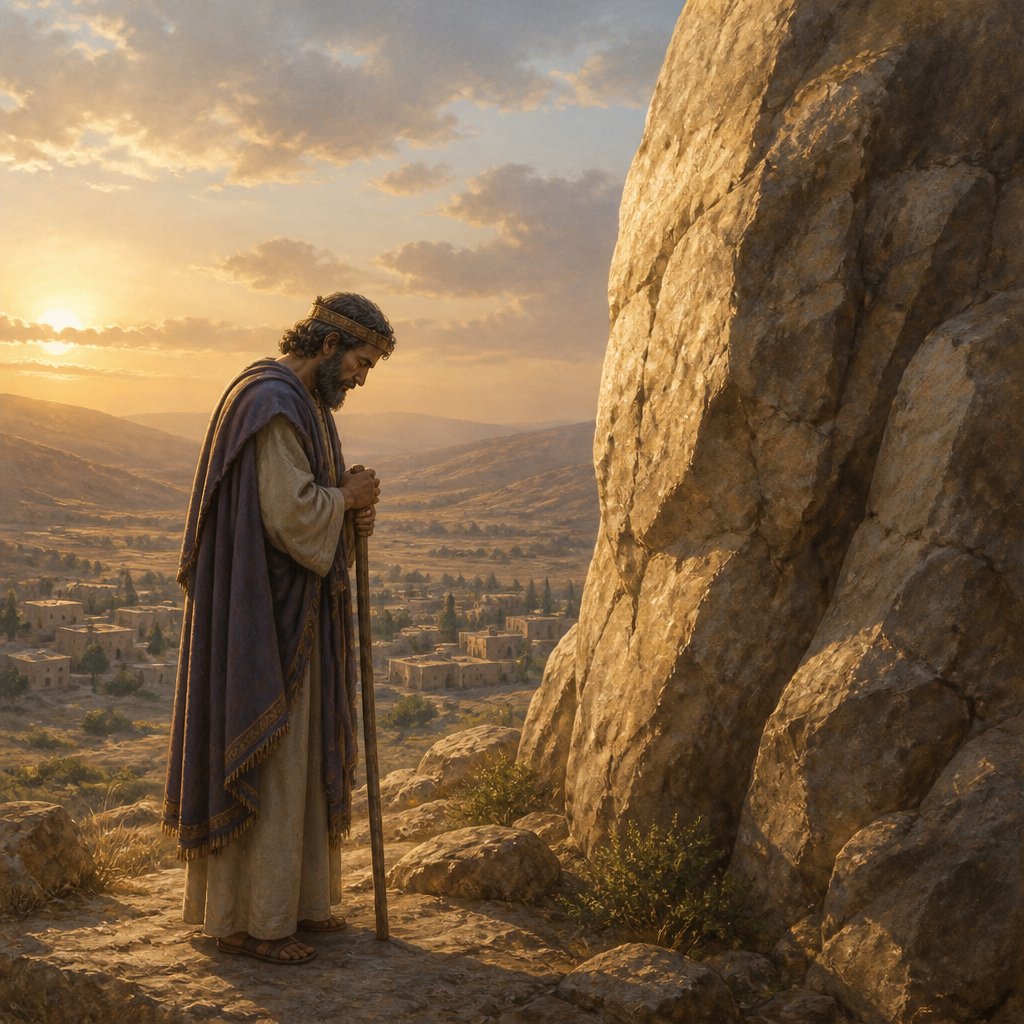
2 Samuel 23:3 (KJV) reads:
"The God of Israel said, the Rock of Israel spake to me, He that ruleth over men must be just, ruling in the fear of God."
This verse comes from the last words of David, as recorded in the book of 2 Samuel. In this passage, David reflects on his own reign as king and on the qualities of a just ruler. The verse emphasizes the importance of justice and the fear of God in leadership.
The verse begins with the statement "The God of Israel said, the Rock of Israel spake to me." This introduces the idea that the words that follow are not merely David's own thoughts or opinions, but rather a divine revelation he has received. In the Bible, the concept of the "Rock" is often used to symbolize God's strength, stability, and faithfulness. By using this imagery, the verse establishes the authority and trustworthiness of the message being conveyed.
The verse then presents the qualities of a just ruler. It states, "He that ruleth over men must be just, ruling in the fear of God." This statement highlights two essential characteristics of a good leader. First, a just ruler is one who governs with fairness, equity, and righteousness. This aligns with the biblical concept of justice, which emphasizes treating all individuals with fairness and without showing favoritism. Second, a just ruler rules in the fear of God. This implies that a leader's actions and decisions should be guided by a reverence and respect for God, acknowledging His authority and seeking to uphold His laws and principles.
The verse also reveals the relationship between justice and the fear of God. The fear of God does not denote a cowering or trembling in terror, but rather a deep reverence and awe of God's power, holiness, and sovereignty. It is this fear of God that should inform and guide a leader's commitment to justice. In the biblical context, the fear of God is not about being afraid of punishment, but about recognizing God's authority and seeking to align one's life with His will.
One of the key themes of this verse is the divine mandate for just leadership. Throughout the Bible, there is a consistent emphasis on the importance of justice, especially for those in positions of power and authority. This verse underscores the idea that leadership comes with the responsibility to govern justly, to ensure fairness and equity for all people under their care. Moreover, the verse emphasizes that such justice must be rooted in the fear of God, acknowledging His ultimate authority and seeking to align with His righteous standards.
The context of this verse is also important to consider. It is part of David's final words, revealing his reflections and insights after years of experience as a king. David himself was a complex and flawed leader, as seen in the accounts of his triumphs and failures throughout the biblical narratives. Yet, in his final words, he expresses the ideal of just and God-fearing leadership, pointing to the standard he recognizes as truly commendable.
In addition, the symbolism in this verse is significant. The imagery of God as the Rock of Israel symbolizes His unchanging nature, His strength, and His reliability. This portrayal reiterates the firm foundation of God's principles, which should underpin the leadership of those who rule over men. The image of the Rock also conveys the idea of stability and security, emphasizing the trustworthiness of God's guidance for leaders.
In conclusion, 2 Samuel 23:3 (KJV) presents a powerful statement about the qualities of just and God-fearing leadership. It emphasizes the importance of ruling with fairness and equity, while also acknowledging the authority and righteousness of God. This verse carries a timeless message about the divine standard for leadership, inspiring leaders to govern with integrity and a deep reverence for God.
Have questions about 2 Samuel 23:3?
Dive deeper into this scripture with Bible Chat — an AI-powered tool for exploring God's Word through conversation. Ask questions, get context, and grow in your understanding of the Bible.
Get Our Apps


2 Samuel 23:3 Artwork

2 Samuel 23:3 - "The God of Israel said, the Rock of Israel spake to me, He that ruleth over men must be just, ruling in the fear of God."
"The God of Israel said, the Rock of Israel spake to me, He that ruleth over men must be just, ruling in the fear of God." - 2 Samuel 23:3
2 Samuel 3:23 - "When Joab and all the host that was with him were come, they told Joab, saying, Abner the son of Ner came to the king, and he hath sent him away, and he is gone in peace."

2 Samuel 23:38 - "Ira an Ithrite, Gareb an Ithrite,"

2 Samuel 23:28 - "Zalmon the Ahohite, Maharai the Netophathite,"

2 Samuel 23:35 - "Hezrai the Carmelite, Paarai the Arbite,"

2 Samuel 23:25 - "Shammah the Harodite, Elika the Harodite,"

2 Samuel 23:27 - "Abiezer the Anethothite, Mebunnai the Hushathite,"

2 Samuel 23:2 - "The Spirit of the LORD spake by me, and his word was in my tongue."

2 Samuel 23:31 - "Abi-albon the Arbathite, Azmaveth the Barhumite,"

2 Samuel 23:39 - "Uriah the Hittite: thirty and seven in all."

2 Samuel 23:30 - "Benaiah the Pirathonite, Hiddai of the brooks of Gaash,"

2 samuel 23:8-21

2 Samuel 23:32 - "Eliahba the Shaalbonite, of the sons of Jashen, Jonathan,"

2 Samuel 23:33 - "Shammah the Hararite, Ahiam the son of Sharar the Hararite,"

2 Samuel 23:14 - "And David was then in an hold, and the garrison of the Philistines was then in Beth-lehem."

2 Samuel 23:26 - "Helez the Paltite, Ira the son of Ikkesh the Tekoite,"

2 Samuel 23:36 - "Igal the son of Nathan of Zobah, Bani the Gadite,"

2 Samuel 23:23 - "He was more honourable than the thirty, but he attained not to the first three. And David set him over his guard."

2 Samuel 14:23 - "So Joab arose and went to Geshur, and brought Absalom to Jerusalem."

2 Samuel 23:37 - "Zelek the Ammonite, Naharai the Beerothite, armourbearer to Joab the son of Zeruiah,"

2 Samuel 6:23 - "Therefore Michal the daughter of Saul had no child unto the day of her death."

2 Samuel 23:34 - "Eliphelet the son of Ahasbai, the son of the Maachathite, Eliam the son of Ahithophel the Gilonite,"

2 Samuel 23:24 - "Asahel the brother of Joab was one of the thirty; Elhanan the son of Dodo of Beth-lehem,"

2 Samuel 23:12 - "But he stood in the midst of the ground, and defended it, and slew the Philistines: and the LORD wrought a great victory."

2 Samuel 23:29 - "Heleb the son of Baanah, a Netophathite, Ittai the son of Ribai out of Gibeah of the children of Benjamin,"

"Shammah the Harodite, Elika the Harodite," - 2 Samuel 23:25

2 Samuel 23:22 - "These things did Benaiah the son of Jehoiada, and had the name among three mighty men."

"Hezrai the Carmelite, Paarai the Arbite," - 2 Samuel 23:35

"Zalmon the Ahohite, Maharai the Netophathite," - 2 Samuel 23:28