What does 2 Samuel 20:5 mean?
"So Amasa went to assemble the men of Judah: but he tarried longer than the set time which he had appointed him." - 2 Samuel 20:5
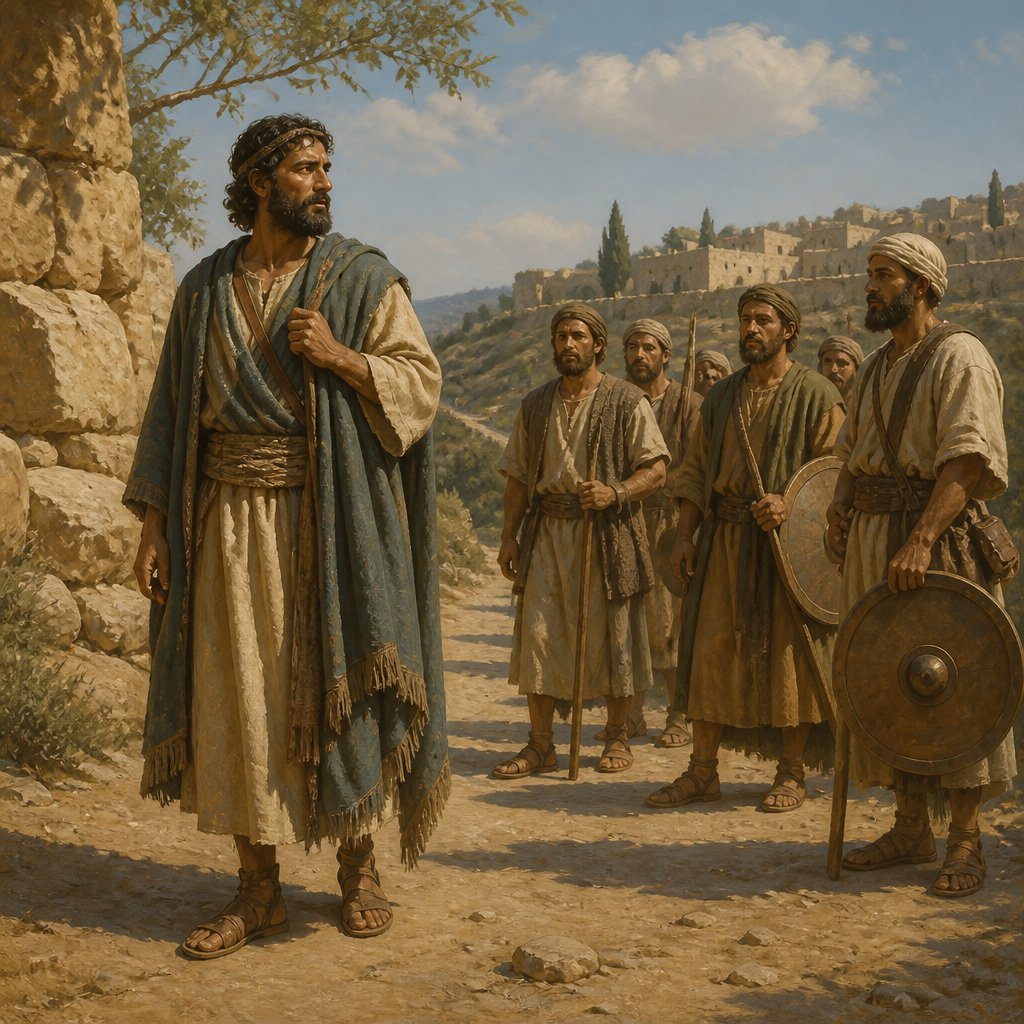
In 2 Samuel 20:5 of the King James Version of the Bible, it states, "So Amasa went to assemble the men of Judah: but he tarried longer than the set time which he had appointed him." This verse is part of a larger narrative that involves the political and military turmoil in Israel following the death of King David. To fully understand the meaning and context of this verse, it is important to examine the historical and literary context as well as the themes and symbolism present in the passage.
The book of 2 Samuel chronicles the reign of King David, a central figure in the history of Israel. The events described in this particular verse take place after David's son Absalom has rebelled against his father and attempted to usurp the throne. Although Absalom's rebellion has been quelled and he has been killed, the nation is still in a state of unrest and division.
In this verse, Amasa is being sent by David to assemble the men of Judah for a military campaign. However, he "tarried longer than the set time which he had appointed him." This delay in assembling the troops has both practical and symbolic implications within the narrative.
From a practical standpoint, Amasa's failure to gather the men at the appointed time has an impact on the military operations. It reflects a lack of efficiency and organization within the ranks of David's forces, which can have serious consequences in a time of political and military upheaval.
On a deeper level, the delay also serves as a reflection of the political and social fragmentation that characterizes this period in Israel's history. The internal conflicts and power struggles within the nation have led to a breakdown in the unity and cohesion of the people, as symbolized by Amasa's inability to gather the men as planned. This lack of unity and cohesion represents a significant threat to the stability and well-being of the nation as a whole.
The theme of disunity and its consequences is a pervasive one throughout the Bible, and it is particularly relevant in the context of 2 Samuel 20:5. The verse serves as a reminder of the importance of unity and cooperation within the community, both in times of peace and in times of conflict. It highlights the destructive effects of internal divisions and the significance of working together for the common good.
The symbolism present in this passage can also be interpreted in a broader theological sense. The delay in assembling the troops can be seen as a metaphor for the delays and obstacles that believers encounter in their spiritual journeys. Just as Amasa faced challenges in fulfilling his appointed task, individuals may encounter setbacks and difficulties as they seek to fulfill their life's purpose or serve God in their own way.
Overall, 2 Samuel 20:5 reflects the themes of disunity and its consequences, as well as the importance of perseverance and cooperation in the face of challenges. It also serves as a reminder of the broader theological principles of spiritual growth and the obstacles that can arise along the way. By understanding the historical and literary context, as well as the themes and symbolism present in this verse, readers can gain a deeper appreciation for its significance within the larger narrative of the Bible.
Have questions about 2 Samuel 20:5?
Dive deeper into this scripture with Bible Chat — an AI-powered tool for exploring God's Word through conversation. Ask questions, get context, and grow in your understanding of the Bible.
Get Our Apps


2 Samuel 20:5 Artwork

2 Samuel 20:5 - "So Amasa went to assemble the men of Judah: but he tarried longer than the set time which he had appointed him."
"So Amasa went to assemble the men of Judah: but he tarried longer than the set time which he had appointed him." - 2 Samuel 20:5

2 Samuel 5:20 - "And David came to Baal-perazim, and David smote them there, and said, The LORD hath broken forth upon mine enemies before me, as the breach of waters. Therefore he called the name of that place Baal-perazim."

2 Samuel 22:17-20

2 Samuel 20:20 - "And Joab answered and said, Far be it, far be it from me, that I should swallow up or destroy."

2 Samuel 20:25 - "And Sheva was scribe: and Zadok and Abiathar were the priests:"

2 Samuel 5:12

2 Samuel 20:24 - "And Adoram was over the tribute: and Jehoshaphat the son of Ahilud was recorder:"

2 Samuel 20:26 - "And Ira also the Jairite was a chief ruler about David."

2 Samuel 5:16 - "And Elishama, and Eliada, and Eliphalet."

2 Samuel 2:20 - "Then Abner looked behind him, and said, Art thou Asahel? And he answered, I am."

2 Samuel 5:15 - "Ibhar also, and Elishua, and Nepheg, and Japhia,"

2 Samuel 16:20 - "¶ Then said Absalom to Ahithophel, Give counsel among you what we shall do."

2 Samuel 5:21 - "And there they left their images, and David and his men burned them."

2 Samuel 5:18 - "The Philistines also came and spread themselves in the valley of Rephaim."

2 Samuel 5:7 - "Nevertheless David took the strong hold of Zion: the same is the city of David."

2 Samuel 5:10 - "And David went on, and grew great, and the LORD God of hosts was with him."

2 Samuel 1:20 - "Tell it not in Gath, publish it not in the streets of Askelon; lest the daughters of the Philistines rejoice, lest the daughters of the uncircumcised triumph."

2 Samuel 20:4 - "¶ Then said the king to Amasa, Assemble me the men of Judah within three days, and be thou here present."
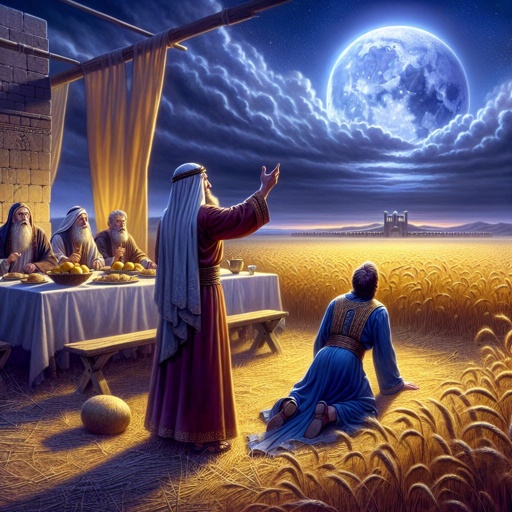
1 Samuel 20:5 - "And David said unto Jonathan, Behold, to morrow is the new moon, and I should not fail to sit with the king at meat: but let me go, that I may hide myself in the field unto the third day at even."

2 Samuel 7:20 - "And what can David say more unto thee? for thou, Lord GOD, knowest thy servant."

2 Samuel 20:23 - "¶ Now Joab was over all the host of Israel: and Benaiah the son of Jehoiada was over the Cherethites and over the Pelethites:"

2 Samuel 11:5 - "And the woman conceived, and sent and told David, and said, I am with child."

2 Samuel 5:22 - "¶ And the Philistines came up yet again, and spread themselves in the valley of Rephaim."

"And Elishama, and Eliada, and Eliphalet." - 2 Samuel 5:16

2 Samuel 3:5 - "And the sixth, Ithream, by Eglah David's wife. These were born to David in Hebron."

2 Samuel 22:20 - "He brought me forth also into a large place: he delivered me, because he delighted in me."

1 Samuel 5:2 - "When the Philistines took the ark of God, they brought it into the house of Dagon, and set it by Dagon."

2 Samuel 20:13 - "When he was removed out of the highway, all the people went on after Joab, to pursue after Sheba the son of Bichri."

2 Samuel 3:20 - "So Abner came to David to Hebron, and twenty men with him. And David made Abner and the men that were with him a feast."