What does 2 Samuel 1:8 mean?
"And he said unto me, Who art thou? And I answered him, I am an Amalekite." - 2 Samuel 1:8
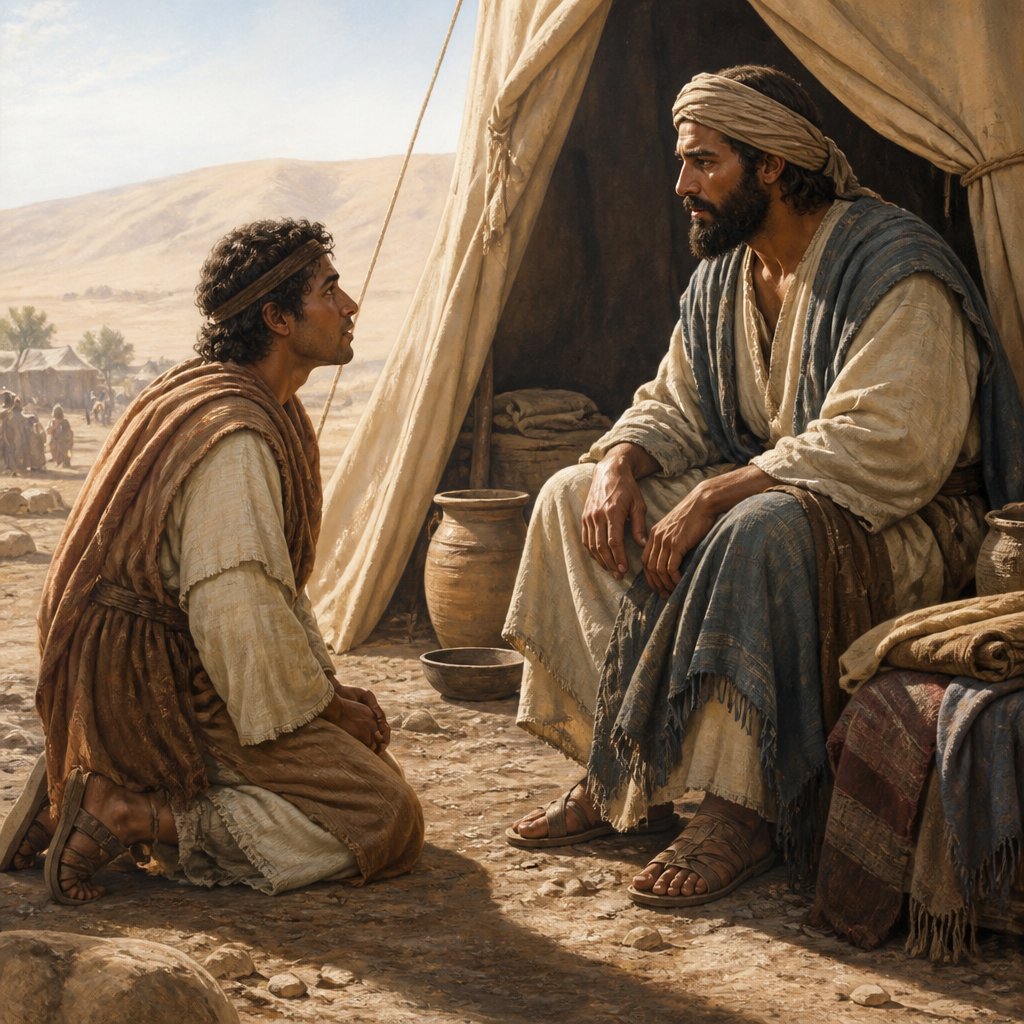
The Bible verse 2 Samuel 1:8 from the King James Version (KJV) reads:
"And he said unto me, Who art thou? And I answered him, I am an Amalekite."
This verse comes from the Old Testament, in the book of 2 Samuel, which details the life of King David. In this particular passage, an Amalekite man approaches David with news of King Saul's death. The Amalekite claims to have killed Saul, and he presents Saul's crown and bracelet as evidence. This verse is part of the Amalekite's narrative as he explains his encounter with Saul and his involvement in Saul's demise.
The verse is significant in several ways, and it offers insights into themes of identity, loyalty, and the consequences of one's actions. Additionally, it provides historical and contextual information about the Amalekites and their relationship with the people of Israel.
The question "Who art thou?" holds a deeper significance beyond mere identification. It speaks to the Amalekite's sense of self and his place in the world. This question of identity is a recurring theme in the Bible, as individuals are often called to reflect on their true nature and purpose. The Amalekite's response, "I am an Amalekite," conveys a sense of pride in his heritage and lineage. However, it also highlights the longstanding enmity between the Amalekites and the Israelites, which has roots in historical conflicts and biblical narratives.
The Amalekites were traditional enemies of the Israelites, dating back to the time of the exodus from Egypt. They were known for their unprovoked attacks on the Israelites and for their opposition to God's chosen people. Throughout the Bible, the Amalekites are portrayed as a symbol of wickedness and hostility towards God's purposes. Therefore, the Amalekite's claim may be seen as an attempt to assert his identity within a historical context of enmity and conflict.
Furthermore, the Amalekite's claim to have killed King Saul raises questions about loyalty and the consequences of one's actions. While the Amalekite presents himself as the one who ended Saul's life, his account differs from the version of events presented in the preceding chapters of 1 Samuel. According to the biblical narrative, King Saul committed suicide by falling on his own sword after being wounded in battle. The Amalekite's claim to have played a role in Saul's death demonstrates the potential for falsehood and self-serving motives. It also serves as a reminder of the grave consequences of pride, disobedience, and the pursuit of personal gain.
In a broader sense, this verse underscores the themes of accountability and justice. The Amalekite's actions have far-reaching implications, and he is called to answer for his role in the death of a king. This emphasis on accountability aligns with broader biblical teachings on moral responsibility and the consequences of sin. It serves as a cautionary tale, warning individuals about the dangers of deceit, treachery, and the pursuit of power at any cost.
Symbolically, the Amalekite's self-identification as an Amalekite carries weight beyond its immediate context. It serves as a representation of historical and spiritual enmity, as well as a reminder of the enduring consequences of ancient conflicts. It also highlights the complex interplay between individual identity and collective history, as well as the ways in which one's actions can reverberate through time.
In conclusion, 2 Samuel 1:8 offers a rich tapestry of themes and symbolism that resonate throughout the biblical narrative. It serves as a reminder of the intertwining of individual identity with historical context, as well as the themes of loyalty, accountability, and justice. As with many passages in the Bible, this verse invites readers to reflect on their own actions and choices, as well as the broader implications of their place in the world.
Have questions about 2 Samuel 1:8?
Dive deeper into this scripture with Bible Chat — an AI-powered tool for exploring God's Word through conversation. Ask questions, get context, and grow in your understanding of the Bible.
Get Our Apps


2 Samuel 1:8 Artwork

2 Samuel 1:8 - "And he said unto me, Who art thou? And I answered him, I am an Amalekite."
"And he said unto me, Who art thou? And I answered him, I am an Amalekite." - 2 Samuel 1:8

1 Samuel 8:2 - "Now the name of his firstborn was Joel; and the name of his second, Abiah: they were judges in Beer-sheba."

2 Samuel 8:1 - "And after this it came to pass, that David smote the Philistines, and subdued them: and David took Metheg-ammah out of the hand of the Philistines."

2 Samuel 1. 17-27

1 Samuel 8:1 - "And it came to pass, when Samuel was old, that he made his sons judges over Israel."

2 Samuel 19:8

2 Samuel 19:8

2 Samuel 19:8

2 Samuel 19:8

1 Samuel 8:6 - "¶ But the thing displeased Samuel, when they said, Give us a king to judge us. And Samuel prayed unto the LORD."

1 Samuel 8:21 - "And Samuel heard all the words of the people, and he rehearsed them in the ears of the LORD."

1 Samuel 8:10 - "¶ And Samuel told all the words of the LORD unto the people that asked of him a king."

1 Samuel 8:7

2 samuel 23:8-21

1 Samuel 8:4 - "Then all the elders of Israel gathered themselves together, and came to Samuel unto Ramah,"

2 Samuel 8:8 - "And from Betah, and from Berothai, cities of Hadadezer, king David took exceeding much brass."

1 Samuel 13:8 - "¶ And he tarried seven days, according to the set time that Samuel had appointed: but Samuel came not to Gilgal; and the people were scattered from him."

1 Samuel 8:19 - "¶ Nevertheless the people refused to obey the voice of Samuel; and they said, Nay; but we will have a king over us;"

1 Samuel 16:8 - "Then Jesse called Abinadab, and made him pass before Samuel. And he said, Neither hath the LORD chosen this."

2 Samuel 2:8 - "¶ But Abner the son of Ner, captain of Saul's host, took Ish-bosheth the son of Saul, and brought him over to Mahanaim;"

2 Samuel 1:27 - "How are the mighty fallen, and the weapons of war perished!"

1 Samuel 8:22 - "And the LORD said to Samuel, Hearken unto their voice, and make them a king. And Samuel said unto the men of Israel, Go ye every man unto his city."

1 Samuel 8:13 - "And he will take your daughters to be confectionaries, and to be cooks, and to be bakers."

2 Samuel 8:16 - "And Joab the son of Zeruiah was over the host; and Jehoshaphat the son of Ahilud was recorder;"

2 Samuel 1:17 - "¶ And David lamented with this lamentation over Saul and over Jonathan his son:"

2 Samuel 22:8 - "Then the earth shook and trembled; the foundations of heaven moved and shook, because he was wroth."

1 Samuel 7:8 - "And the children of Israel said to Samuel, Cease not to cry unto the LORD our God for us, that he will save us out of the hand of the Philistines."

2 Samuel 8:17 - "And Zadok the son of Ahitub, and Ahimelech the son of Abiathar, were the priests; and Seraiah was the scribe;"

2 Samuel 8:7 - "And David took the shields of gold that were on the servants of Hadadezer, and brought them to Jerusalem."