What does 2 Samuel 1:7 mean?
"And when he looked behind him, he saw me, and called unto me. And I answered, Here am I." - 2 Samuel 1:7
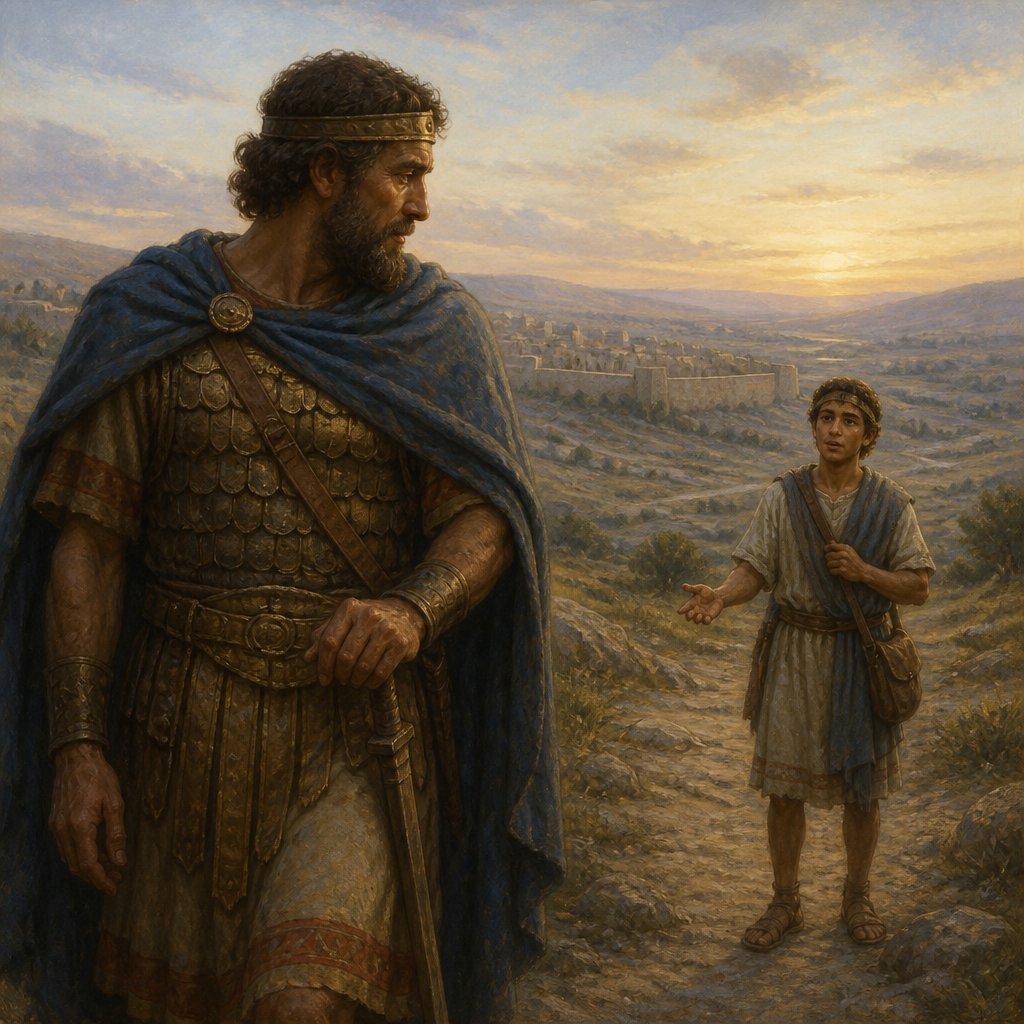
The verse 2 Samuel 1:7 in the King James Version (KJV) of the Bible reads, "And when he looked behind him, he saw me, and called unto me. And I answered, Here am I." This verse is spoken by an Amalekite who had come to David with news of King Saul's death. The verse takes place during a tumultuous time in Israel's history, after King Saul had been killed in battle and David was about to assume the throne.
This verse is significant in several ways, as it speaks to the themes of responsibility, truth, and honor. In the context of the story, the Amalekite is claiming that he was responsible for delivering the final blow to Saul, which led to his death. The man's claim is later proven to be false, as the Bible makes it clear that Saul took his own life after being badly wounded in battle.
The verse also addresses the theme of truth. The Amalekite's claim is not only false, but it also contradicts the version of events that is given in the book of 1 Samuel. This serves as a reminder of the consequences of speaking falsehoods and distorting the truth.
Furthermore, the verse speaks to the theme of honor and respect. The Amalekite claims to have shown mercy to Saul in his dying moments by granting his request to be killed, but his account of the events suggests that he was not acting out of respect for Saul's wishes, but out of a desire for personal gain or reward. This lack of honor and respect for the deceased king serves as a cautionary tale about the importance of acting with integrity and humility, especially in times of conflict and power struggles.
The context of this verse is essential for understanding its full meaning and significance. The book of 2 Samuel recounts the events of David's reign as king, a period marked by both triumphs and tragedies. The death of King Saul is a pivotal moment in David's journey to the throne, and it sets the stage for the political and military challenges that he will face as he consolidates his rule.
The symbolism of this verse can be interpreted in several ways. The act of the Amalekite claiming responsibility for Saul's death can be seen as a symbol of the ways in which people may try to cover up their own misdeeds or shift the blame onto others. It is a cautionary reminder of the consequences of dishonesty and the importance of taking responsibility for one's actions.
The verse can also be seen as a symbol of the complexities and contradictions of human nature. The Amalekite's actions and motivations are ambiguous, and his account of events raises questions about morality and accountability. This ambiguity reflects the often murky and morally complex reality of human behavior, particularly in times of conflict and struggle for power.
In conclusion, 2 Samuel 1:7 in the King James Version of the Bible is a verse that speaks to the themes of responsibility, truth, and honor. Its context in the story of David's rise to power highlights the political and moral challenges that he faced, and its symbolism serves as a cautionary reminder of the consequences of dishonesty and the complexities of human nature. This verse offers valuable insights into the moral and ethical dilemmas that can arise in times of conflict and power struggles, and it continues to resonate as a powerful and thought-provoking piece of scripture.
Have questions about 2 Samuel 1:7?
Dive deeper into this scripture with Bible Chat — an AI-powered tool for exploring God's Word through conversation. Ask questions, get context, and grow in your understanding of the Bible.
Get Our Apps


2 Samuel 1:7 Artwork

2 Samuel 1:7 - "And when he looked behind him, he saw me, and called unto me. And I answered, Here am I."
"And when he looked behind him, he saw me, and called unto me. And I answered, Here am I." - 2 Samuel 1:7

2 Samuel 7:1–29

2 samuel 9:7 fhdhdhdhhd

1 Samuel 2:7 - "The LORD maketh poor, and maketh rich: he bringeth low, and lifteth up."

2 Samuel 1. 17-27

1 Samuel 7:2 - "And it came to pass, while the ark abode in Kirjath-jearim, that the time was long; for it was twenty years: and all the house of Israel lamented after the LORD."

1 Samuel 7:15 - "And Samuel judged Israel all the days of his life."

2 Samuel 7:1 - "And it came to pass, when the king sat in his house, and the LORD had given him rest round about from all his enemies;"

1 Samuel 14:7

1 Samuel 28:7

1 Samuel 8:7

1 Samuel 7:5 - "And Samuel said, Gather all Israel to Mizpeh, and I will pray for you unto the LORD."

1 Samuel 7:9 - "¶ And Samuel took a sucking lamb, and offered it for a burnt offering wholly unto the LORD: and Samuel cried unto the LORD for Israel; and the LORD heard him."

1 Samuel 3:7 - "Now Samuel did not yet know the LORD, neither was the word of the LORD yet revealed unto him."

2 Samuel 5:7 - "Nevertheless David took the strong hold of Zion: the same is the city of David."

2 Samuel 1:27 - "How are the mighty fallen, and the weapons of war perished!"

"The LORD maketh poor, and maketh rich: he bringeth low, and lifteth up." - 1 Samuel 2:7

1 Samuel 7:13 - "¶ So the Philistines were subdued, and they came no more into the coast of Israel: and the hand of the LORD was against the Philistines all the days of Samuel."

2 Samuel 7:4 - "¶ And it came to pass that night, that the word of the LORD came unto Nathan, saying,"

2 Samuel 1:17 - "¶ And David lamented with this lamentation over Saul and over Jonathan his son:"

1 Samuel 2:26 - "And the child Samuel grew on, and was in favour both with the LORD, and also with men."

1 Samuel 7:8 - "And the children of Israel said to Samuel, Cease not to cry unto the LORD our God for us, that he will save us out of the hand of the Philistines."

1 Samuel 7:12 - "Then Samuel took a stone, and set it between Mizpeh and Shen, and called the name of it Eben-ezer, saying, Hitherto hath the LORD helped us."
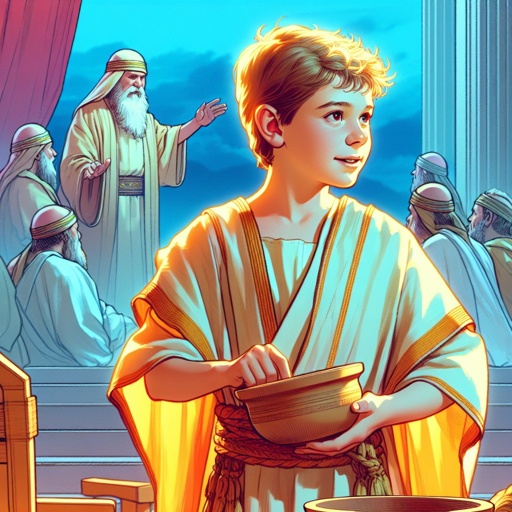
1 Samuel 2:18 - "¶ But Samuel ministered before the LORD, being a child, girded with a linen ephod."

2 Samuel 10:7 - "And when David heard of it, he sent Joab, and all the host of the mighty men."

2 Samuel 8:7 - "And David took the shields of gold that were on the servants of Hadadezer, and brought them to Jerusalem."

2 Samuel 17:7 - "And Hushai said unto Absalom, The counsel that Ahithophel hath given is not good at this time."

2 Samuel 7:3 - "And Nathan said to the king, Go, do all that is in thine heart; for the LORD is with thee."
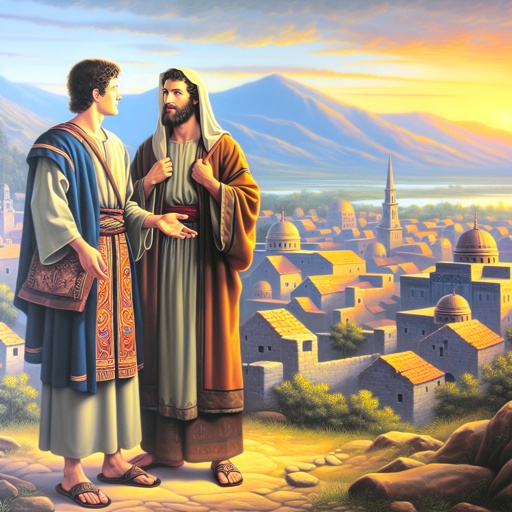
1 Samuel 9:1-2