What does 2 Samuel 1:2 mean?
"It came even to pass on the third day, that, behold, a man came out of the camp from Saul with his clothes rent, and earth upon his head: and so it was, when he came to David, that he fell to the earth, and did obeisance." - 2 Samuel 1:2
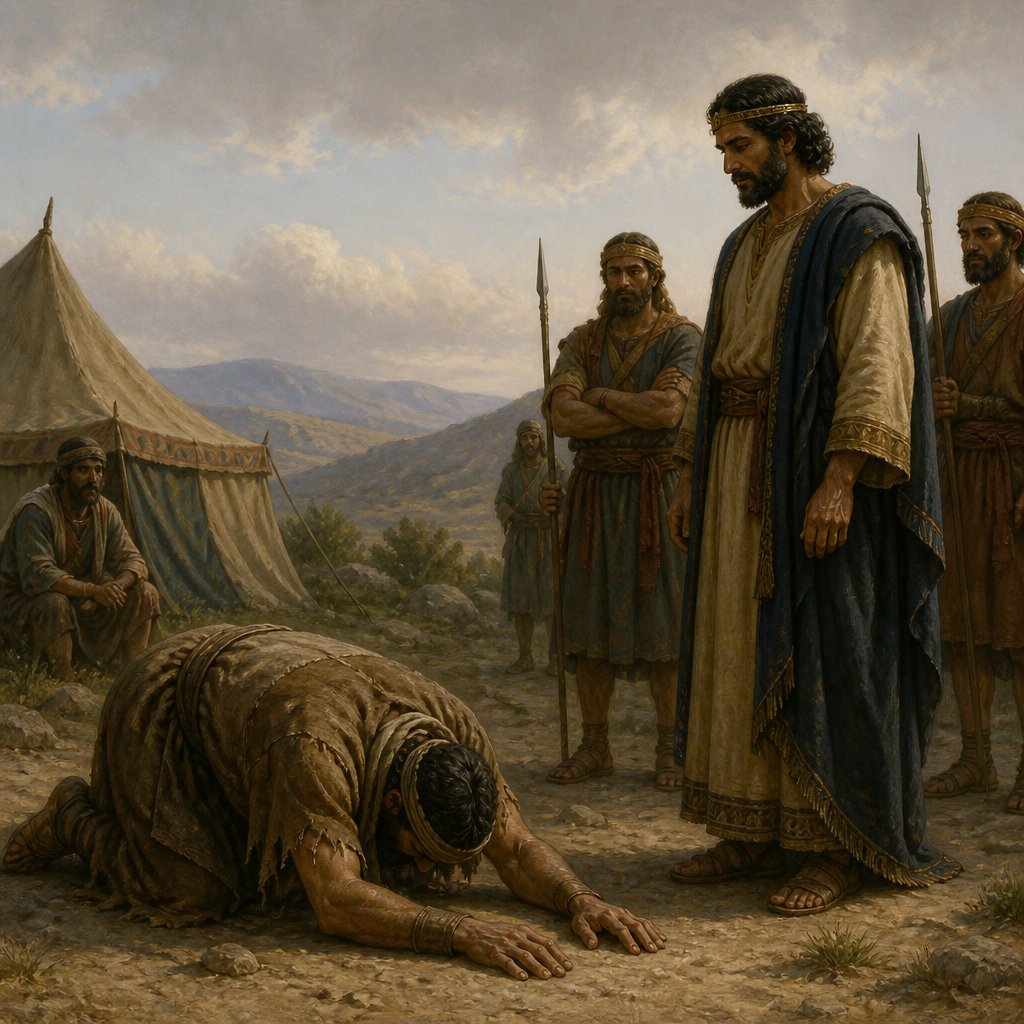
The verse 2 Samuel 1:2 from the King James Version of the Bible reads as follows:
"It came even to pass on the third day, that, behold, a man came out of the camp from Saul with his clothes rent, and earth upon his head: and so it was, when he came to David, that he fell to the earth, and did obeisance."
This verse is just the beginning of a larger passage in the book of 2 Samuel, which tells the story of the aftermath of the deaths of both King Saul and his son, Jonathan. The man mentioned in this verse is an Amalekite who comes to David, claiming to have killed Saul at Saul's own request. He brings Saul's crown and bracelet to show David as proof of his claim.
The themes present in this verse and the larger story in 2 Samuel include loyalty, honor, and the consequences of decisions made in times of war. Additionally, this passage also explores the concept of truth and integrity.
This verse is significant in the context of the story of David's rise to power as the King of Israel. Saul, the first king of Israel, dies in battle against the Philistines along with his son Jonathan. David, who had been anointed as the future king of Israel, was deeply grieved by the deaths of Saul and Jonathan, and he mourned for them.
The arrival of the Amalekite in this verse is a crucial moment in the development of the story. It sets the stage for the events that follow, as well as David's response to the news of Saul's death. The Amalekite's claim to have killed Saul at Saul's request raises questions about the truth of his story and his motivations. This incident also presents an opportunity for David to act with honor and integrity in his response to the Amalekite's claim.
The symbolism in this verse is profound. The man's torn clothes and dust on his head are signs of mourning and distress, reflecting the seriousness of the news he brings. His act of falling to the earth and doing obeisance before David indicates his recognition of David's authority and his desire for mercy or favor. The torn clothes and dust are also symbolic of the violence and destruction of war.
The broader themes of loyalty and honor are also present in this verse. The Amalekite's claim of having killed Saul in a merciful act and his act of coming to David with Saul's regal items can be seen as an attempt to gain favor or reward. However, David's response to the news and his later actions demonstrate his commitment to honoring the memory of Saul, despite the troubled relationship he had with him.
This verse, and the entire story in 2 Samuel, can be used as a reflection on the consequences of our actions, the importance of truth, and the display of honor and integrity in the face of difficult circumstances. It also teaches us about the complexities of human relationships, the significance of honoring the memory of those who have passed, and the inherent challenges of leadership and decision-making. Ultimately, this verse and the story it is a part of offer valuable lessons for our own lives and the choices we make.
Have questions about 2 Samuel 1:2?
Dive deeper into this scripture with Bible Chat — an AI-powered tool for exploring God's Word through conversation. Ask questions, get context, and grow in your understanding of the Bible.
Get Our Apps


2 Samuel 1:2 Artwork

2 Samuel 1:2-4 David is shocked the man is scared image in color

2 Samuel 1:2-4 David is shocked the man is scared image in color

2 Samuel 1:2-4 David is shocked the man is scared image in color less details
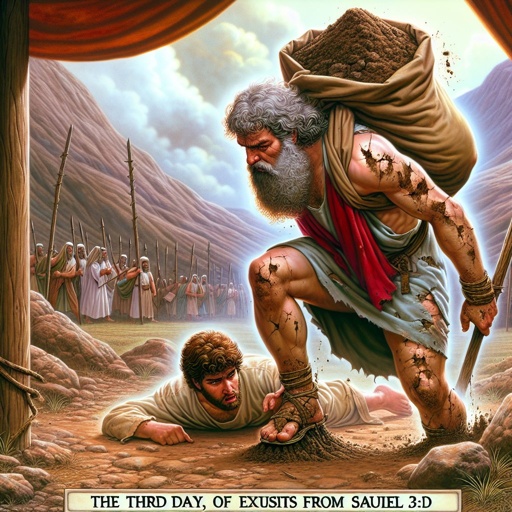
2 Samuel 1:2 - "It came even to pass on the third day, that, behold, a man came out of the camp from Saul with his clothes rent, and earth upon his head: and so it was, when he came to David, that he fell to the earth, and did obeisance."
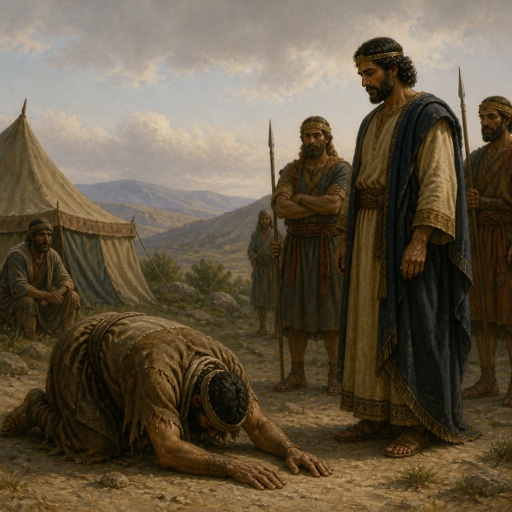
"It came even to pass on the third day, that, behold, a man came out of the camp from Saul with his clothes rent, and earth upon his head: and so it was, when he came to David, that he fell to the earth, and did obeisance." - 2 Samuel 1:2
1 Samuel 9:1-2

1 Samuel 2:26 - "And the child Samuel grew on, and was in favour both with the LORD, and also with men."
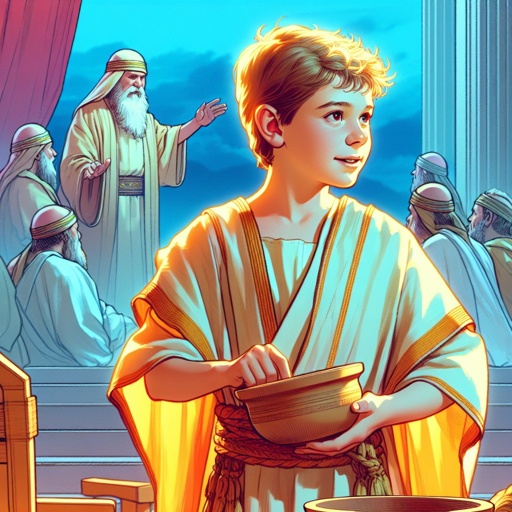
1 Samuel 2:18 - "¶ But Samuel ministered before the LORD, being a child, girded with a linen ephod."

1 Samuel 2:12

2 Samuel 24:22

2 Samuel 6:14

2 Samuel 24:22

2 Samuel 24:22

2 Samuel 7:1–29

1 Samuel 2:2 - "There is none holy as the LORD: for there is none beside thee: neither is there any rock like our God."

2 samuel 9:7 fhdhdhdhhd

Trusting God and Finding Peace: 1 Samuel 1-2

2 Samuel 1. 17-27

Trusting God and Finding Peace 1 Samuel 1; 2

2 Samuel 1:27 - "How are the mighty fallen, and the weapons of war perished!"

2 Samuel 19:1 - "And it was told Joab, Behold, the king weepeth and mourneth for Absalom."

1 Samuel 2:4 - "The bows of the mighty men are broken, and they that stumbled are girded with strength."

2 Samuel 1:17 - "¶ And David lamented with this lamentation over Saul and over Jonathan his son:"

1 Samuel 2:12 - "¶ Now the sons of Eli were sons of Belial; they knew not the LORD."

1 Samuel 2:21 - "And the LORD visited Hannah, so that she conceived, and bare three sons and two daughters. And the child Samuel grew before the LORD."

2 Samuel 14:1 - "Now Joab the son of Zeruiah perceived that the king's heart was toward Absalom."

1 Samuel 2:7 - "The LORD maketh poor, and maketh rich: he bringeth low, and lifteth up."

2 Samuel 6:1 - "Again, David gathered together all the chosen men of Israel, thirty thousand."

1 Samuel 5:2 - "When the Philistines took the ark of God, they brought it into the house of Dagon, and set it by Dagon."

2 Samuel 1:19 - "The beauty of Israel is slain upon thy high places: how are the mighty fallen!"