What does 2 Samuel 19:27 mean?
"And he hath slandered thy servant unto my lord the king; but my lord the king is as an angel of God: do therefore what is good in thine eyes." - 2 Samuel 19:27
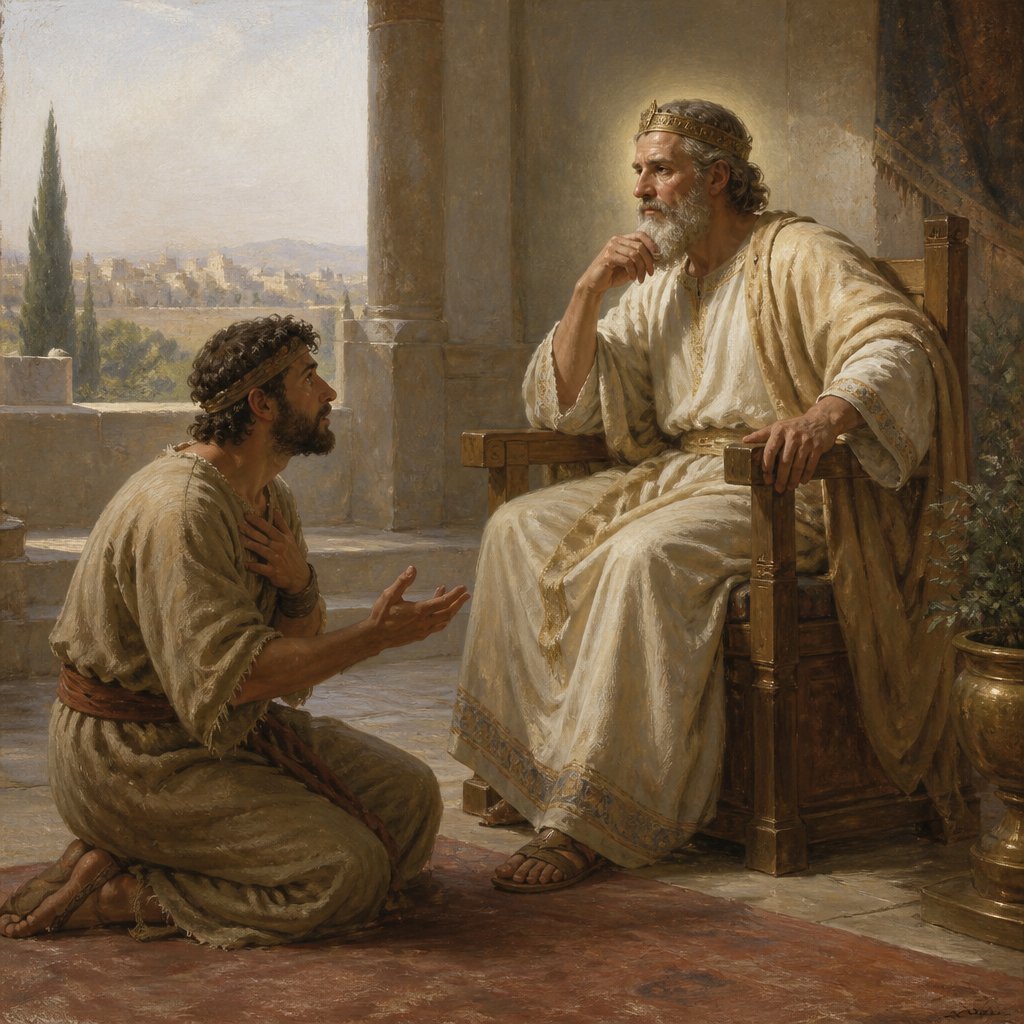
The Bible verse 2 Samuel 19:27 in the King James Version reads, "And he hath slandered thy servant unto my lord the king; but my lord the king is as an angel of God: do therefore what is good in thine eyes." This verse is part of the narrative of David's return to Jerusalem after the rebellion of his son, Absalom. It is a brief exchange between David and a man named Barzillai, who had helped David and his men during their time of exile.
In this verse, Barzillai is acknowledging that someone has slandered him to the king, but he is still showing respect and deference to David. He refers to the king as "an angel of God" and expresses his willingness to accept whatever decision David makes. This statement is a mark of Barzillai's humility and loyalty, as well as his recognition of David's authority as the rightful king.
The context of this verse is crucial to understanding its significance. David had been forced to flee from his own son, Absalom, who had rebelled and declared himself king. Despite David's deep grief over his son's rebellion, he still maintained his role as a wise and just ruler. Barzillai's words are a testament to David's reputation as a fair and godly leader, even in the face of adversity.
One of the key themes in this verse is the idea of loyalty and humility in the face of slander and adversity. Barzillai's response to being slandered is a powerful example of his steadfast loyalty to David, despite the potential consequences. His willingness to accept whatever decision the king makes shows a deep humility and trust in David's judgment.
The symbolism in this verse lies in the contrast between the actions of Absalom and those of Barzillai. While Absalom was driven by ambition and rebellion, Barzillai demonstrates unwavering loyalty and humility. By referring to David as "an angel of God," Barzillai elevates David to a divine status, emphasizing his belief in David's rightful rule. This symbolizes the ultimate authority and justice that David represents as a ruler chosen by God.
Furthermore, the verse serves as a reminder of the importance of maintaining integrity and loyalty, even in the face of slander and adversity. Barzillai's actions stand in stark contrast to the treachery and betrayal exhibited by Absalom and his followers. By remaining steadfast in his support of David, Barzillai sets an example of unwavering loyalty and humility.
In a broader sense, this verse also reflects the Christian concept of submitting to authority and trusting in God's ultimate judgment. Barzillai's deference to the king and willingness to accept whatever decision is made reflects a larger spiritual principle of humility and trust in God's providence.
In conclusion, 2 Samuel 19:27 is a brief yet powerful example of loyalty, humility, and trust in the face of adversity. It underscores the importance of maintaining integrity and loyalty, even in the face of slander and betrayal. The verse also serves as a reminder of the ultimate authority and justice represented by the rightful rulers chosen by God. It is a timeless lesson in humility, trust, and submission to authority, with implications that resonate far beyond the specific historical context of the biblical narrative.
Have questions about 2 Samuel 19:27?
Dive deeper into this scripture with Bible Chat — an AI-powered tool for exploring God's Word through conversation. Ask questions, get context, and grow in your understanding of the Bible.
Get Our Apps


2 Samuel 19:27 Artwork

2 Samuel 19:27 - "And he hath slandered thy servant unto my lord the king; but my lord the king is as an angel of God: do therefore what is good in thine eyes."
"And he hath slandered thy servant unto my lord the king; but my lord the king is as an angel of God: do therefore what is good in thine eyes." - 2 Samuel 19:27

2 Samuel 23:27 - "Abiezer the Anethothite, Mebunnai the Hushathite,"

2 Samuel 1. 17-27

2 Samuel 19:8

2 Samuel 1:27 - "How are the mighty fallen, and the weapons of war perished!"

2 Samuel 19:8

2 Samuel 19:8

2 Samuel 19:8

2 Samuel 19:24

2 Samuel 19:1 - "And it was told Joab, Behold, the king weepeth and mourneth for Absalom."

2 Samuel 13:27 - "But Absalom pressed him, that he let Amnon and all the king's sons go with him."

"Abiezer the Anethothite, Mebunnai the Hushathite," - 2 Samuel 23:27

2 Samuel 22:19 - "They prevented me in the day of my calamity: but the LORD was my stay."

2 Samuel 22:27 - "With the pure thou wilt shew thyself pure; and with the froward thou wilt shew thyself unsavoury."

2 Samuel 24:19 - "And David, according to the saying of Gad, went up as the LORD commanded."

2 Samuel 2:19 - "And Asahel pursued after Abner; and in going he turned not to the right hand nor to the left from following Abner."

2 Samuel 12:27 - "And Joab sent messengers to David, and said, I have fought against Rabbah, and have taken the city of waters."

2 Kings 19:27 - "But I know thy abode, and thy going out, and thy coming in, and thy rage against me."

2 Samuel 1:19 - "The beauty of Israel is slain upon thy high places: how are the mighty fallen!"

2 Samuel 2:27 - "And Joab said, As God liveth, unless thou hadst spoken, surely then in the morning the people had gone up every one from following his brother."

2 Samuel 14:27 - "And unto Absalom there were born three sons, and one daughter, whose name was Tamar: she was a woman of a fair countenance."

2 Samuel 19:2 - "And the victory that day was turned into mourning unto all the people: for the people heard say that day how the king was grieved for his son."

"How are the mighty fallen, and the weapons of war perished!" - 2 Samuel 1:27

1 Samuel 27:2 - "And David arose, and he passed over with the six hundred men that were with him unto Achish, the son of Maoch, king of Gath."

2 Samuel 19:23 - "Therefore the king said unto Shimei, Thou shalt not die. And the king sware unto him."

2 Samuel 11:19 - "And charged the messenger, saying, When thou hast made an end of telling the matters of the war unto the king,"

2 Samuel 23:19 - "Was he not most honourable of three? therefore he was their captain: howbeit he attained not unto the first three."

2 Samuel 17:19 - "And the woman took and spread a covering over the well's mouth, and spread ground corn thereon; and the thing was not known."

2 Samuel 19:33 - "And the king said unto Barzillai, Come thou over with me, and I will feed thee with me in Jerusalem."