What does 2 Samuel 14:27 mean?
"And unto Absalom there were born three sons, and one daughter, whose name was Tamar: she was a woman of a fair countenance." - 2 Samuel 14:27
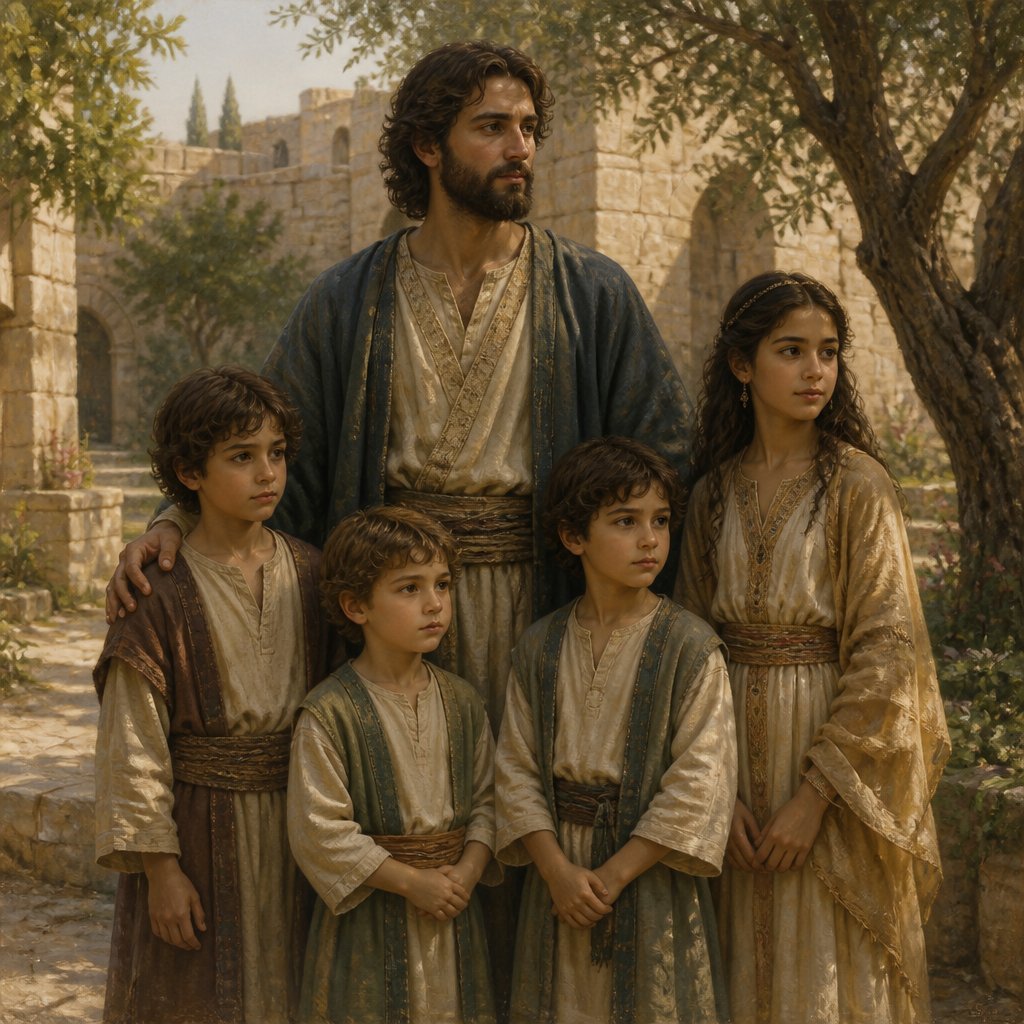
The verse 2 Samuel 14:27 from the King James Version of the Bible reads, "And unto Absalom there were born three sons, and one daughter, whose name was Tamar: she was a woman of a fair countenance." This verse is nestled within the story of Absalom, a son of King David, who rebels against his father and tries to seize the throne.
To fully understand the meaning and context of this verse, it is important to delve into the surrounding narrative. Absalom was one of David's sons, who was known for his striking appearance and charming personality. However, his relationship with his father was strained due to a complicated family history, including the rape of his sister Tamar by their half-brother Amnon. Absalom's feelings of betrayal and anger towards his father eventually lead him to rebel against David and attempt to take the throne for himself.
In this verse, we are introduced to Absalom's children, specifically his three sons and one daughter named Tamar. The mention of Tamar is significant, as it evokes the memory of the tragic event in which she was violated by her half-brother, Amnon. Tamar's name is symbolic of the pain and trauma that had befallen their family, and her description as "a woman of fair countenance" emphasizes her beauty and innocence, which makes the previous violation even more devastating.
One of the prominent themes in this verse is the notion of family and legacy. Despite the turmoil and strife within the family, Absalom's children represent the continuation of his lineage and the enduring impact of their family history. The inclusion of Tamar's name also serves as a reminder of the consequences of sin and the profound impact it has on future generations. Additionally, this verse highlights the interconnectedness of familial relationships and the reverberations of past sins on the present and future.
Furthermore, the mention of Tamar's "fair countenance" can be interpreted as a reflection of her inner beauty and virtue, which contrasts with the heinous act committed against her. It serves as a poignant reminder of the injustice and cruelty that exists in the world, even within one's own family. This juxtaposition of Tamar's outward appearance and the trauma she endured serves as a commentary on the complex nature of human experience and the tension between beauty and brokenness.
Symbolically, Tamar's presence in this verse can be seen as a representation of the enduring impact of trauma and the resilience of the human spirit. Despite the hardships she faced, Tamar's name and legacy continue to be remembered, serving as a testament to the strength and perseverance of those who have suffered.
In conclusion, 2 Samuel 14:27 is a verse that carries profound thematic and symbolic significance within the larger narrative of Absalom and the complexities of family dynamics. It serves as a reminder of the lasting impact of sin and trauma, and the enduring legacy of those who have suffered. Through the inclusion of Tamar's name and description, this verse invites contemplation on the interplay of beauty and brokenness, and the enduring resilience of the human spirit.
Have questions about 2 Samuel 14:27?
Dive deeper into this scripture with Bible Chat — an AI-powered tool for exploring God's Word through conversation. Ask questions, get context, and grow in your understanding of the Bible.
Get Our Apps


2 Samuel 14:27 Artwork

2 Samuel 14:27 - "And unto Absalom there were born three sons, and one daughter, whose name was Tamar: she was a woman of a fair countenance."
"And unto Absalom there were born three sons, and one daughter, whose name was Tamar: she was a woman of a fair countenance." - 2 Samuel 14:27

1 Samuel 14:27

2 Samuel 23:27 - "Abiezer the Anethothite, Mebunnai the Hushathite,"

2 Samuel 1. 17-27

2 Samuel 1:27 - "How are the mighty fallen, and the weapons of war perished!"

2 Samuel 6:14

2 Samuel 6:14–22

2 Samuel 13:27 - "But Absalom pressed him, that he let Amnon and all the king's sons go with him."

"Abiezer the Anethothite, Mebunnai the Hushathite," - 2 Samuel 23:27

2 Samuel 23:14 - "And David was then in an hold, and the garrison of the Philistines was then in Beth-lehem."

2 Samuel 22:27 - "With the pure thou wilt shew thyself pure; and with the froward thou wilt shew thyself unsavoury."

2 Samuel 12:27 - "And Joab sent messengers to David, and said, I have fought against Rabbah, and have taken the city of waters."

2 Samuel 14:23 - "So Joab arose and went to Geshur, and brought Absalom to Jerusalem."

2 Samuel 2:27 - "And Joab said, As God liveth, unless thou hadst spoken, surely then in the morning the people had gone up every one from following his brother."

"How are the mighty fallen, and the weapons of war perished!" - 2 Samuel 1:27

2 Samuel 22:14 - "The LORD thundered from heaven, and the most High uttered his voice."

2 Samuel 16:14 - "And the king, and all the people that were with him, came weary, and refreshed themselves there."

2 Samuel 14:1 - "Now Joab the son of Zeruiah perceived that the king's heart was toward Absalom."

1 Samuel 27:2 - "And David arose, and he passed over with the six hundred men that were with him unto Achish, the son of Maoch, king of Gath."

2 Samuel 14:28 - "¶ So Absalom dwelt two full years in Jerusalem, and saw not the king's face."

2 Samuel 11:14 - "¶ And it came to pass in the morning, that David wrote a letter to Joab, and sent it by the hand of Uriah."

2 Samuel 2:14 - "And Abner said to Joab, Let the young men now arise, and play before us. And Joab said, Let them arise."

2 Samuel 5:14 - "And these be the names of those that were born unto him in Jerusalem; Shammua, and Shobab, and Nathan, and Solomon,"

2 Samuel 6:14 - "And David danced before the LORD with all his might; and David was girded with a linen ephod."

1 Samuel 14:27 - "But Jonathan heard not when his father charged the people with the oath: wherefore he put forth the end of the rod that was in his hand, and dipped it in an honeycomb, and put his hand to his mouth; and his eyes were enlightened."

2 Samuel 14:3 - "And come to the king, and speak on this manner unto him. So Joab put the words in her mouth."

2 Samuel 14:8 - "And the king said unto the woman, Go to thine house, and I will give charge concerning thee."

2 Samuel 18:27 - "And the watchman said, Me thinketh the running of the foremost is like the running of Ahimaaz the son of Zadok. And the king said, He is a good man, and cometh with good tidings."

2 Samuel 19:27 - "And he hath slandered thy servant unto my lord the king; but my lord the king is as an angel of God: do therefore what is good in thine eyes."