What does 2 Samuel 12:23 mean?
"But now he is dead, wherefore should I fast? can I bring him back again? I shall go to him, but he shall not return to me." - 2 Samuel 12:23
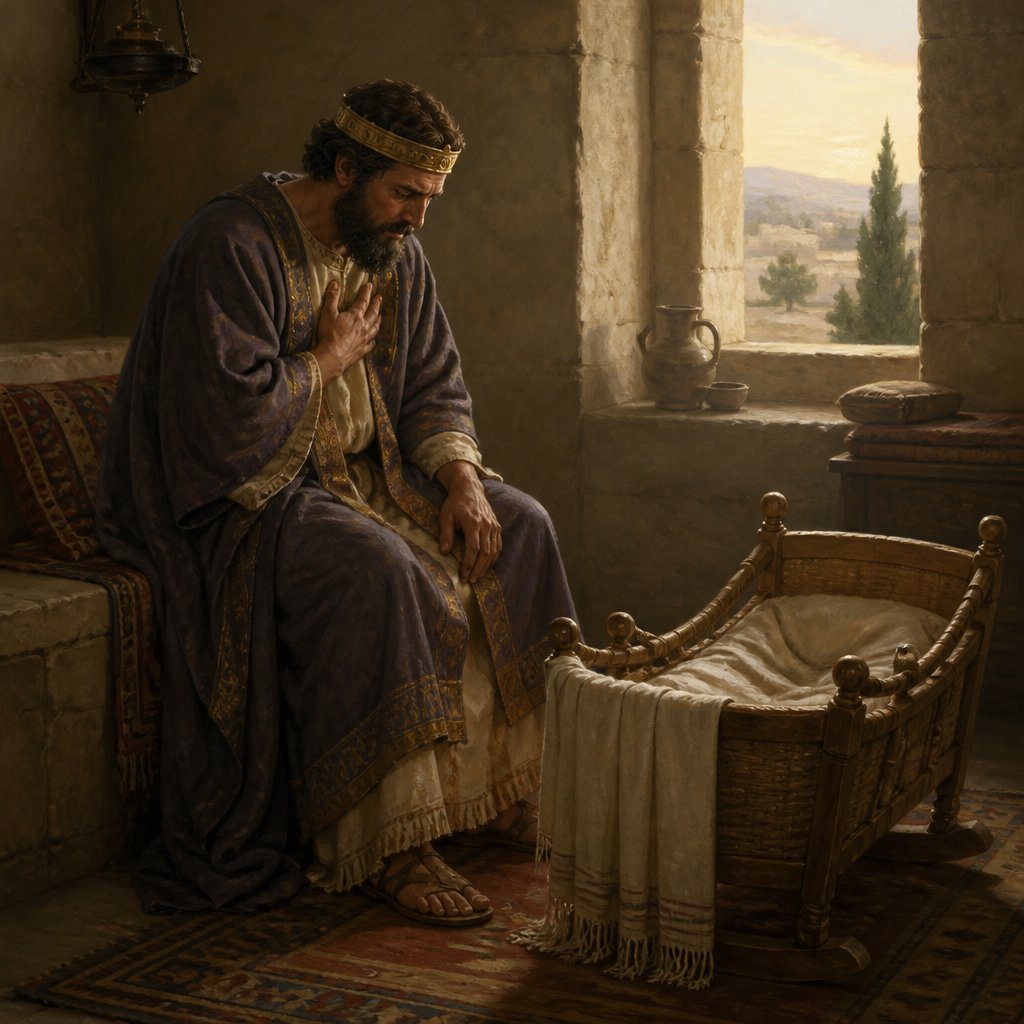
The verse 2 Samuel 12:23 in the King James Version (KJV) of the Bible reads, "But now he is dead, wherefore should I fast? can I bring him back again? I shall go to him, but he shall not return to me."
This verse comes in the aftermath of the prophet Nathan's confrontation with King David regarding his adultery with Bathsheba and the murder of her husband, Uriah. David's and Bathsheba's first child becomes critically ill, and David spends days fasting and praying for the child's recovery. However, the child dies, and David's response to his death is what this verse captures.
The overarching theme of this verse is the acceptance of God's will and the hope of life after death. David's lament over the death of his child is understandable, as any parent would feel the loss deeply. However, his words also reflect a deep sense of faith and belief in God's sovereignty. Instead of continuing to mourn, David acknowledges that the child is gone and that there is no way to bring him back. This speaks to the cycle of life and death that is a fundamental aspect of human existence.
The verse also showcases David's understanding of the afterlife. He says, "I shall go to him, but he shall not return to me," indicating his belief that he will be reunited with his child in the afterlife. This assertion of hope in the face of loss is a powerful testament to David's faith in God's plan and a belief in the eternal nature of the soul.
The context of this verse is critical to understanding its significance. David's actions regarding Bathsheba and Uriah had consequences that extended beyond his own life and affected innocent individuals, such as their child. The child's death serves as a reminder of the broader impact of sin and the necessity of seeking forgiveness and reconciliation with God. Additionally, the verse also highlights the human experience of grief and the need for acceptance and faith in difficult times.
The symbolism in this verse lies in the contrast between worldly sorrow and eternal hope. While David experiences the immediate pain of losing his child, his words reveal a deeper understanding of the spiritual realm. The belief in an afterlife and the possibility of reunion with loved ones who have passed on provides comfort and solace in the face of earthly loss.
Furthermore, the verse also serves as a reflection of the Christian belief in the resurrection and life after death. This verse can be interpreted as a precursor to Christ's promise of eternal life and reunion with believers in heaven. In this sense, David's words resonate beyond his personal grief and become a source of inspiration for believers facing their own trials and hardships.
In conclusion, 2 Samuel 12:23 captures the complex emotions of grief, acceptance, and hope in the face of loss. It reflects David's unwavering faith in God's sovereignty and the assurance of life after death. The verse serves as a reminder of the eternal nature of the soul and the promise of reunion with loved ones in the afterlife. Ultimately, it speaks to the profound truths of the human experience and the enduring hope found in faith.
Have questions about 2 Samuel 12:23?
Dive deeper into this scripture with Bible Chat — an AI-powered tool for exploring God's Word through conversation. Ask questions, get context, and grow in your understanding of the Bible.
Get Our Apps


2 Samuel 12:23 Artwork

2 Samuel 12:23 - "But now he is dead, wherefore should I fast? can I bring him back again? I shall go to him, but he shall not return to me."
"But now he is dead, wherefore should I fast? can I bring him back again? I shall go to him, but he shall not return to me." - 2 Samuel 12:23

2 Samuel 23:12 - "But he stood in the midst of the ground, and defended it, and slew the Philistines: and the LORD wrought a great victory."

"But he stood in the midst of the ground, and defended it, and slew the Philistines: and the LORD wrought a great victory." - 2 Samuel 23:12

2 Samuel 23:38 - "Ira an Ithrite, Gareb an Ithrite,"

2 Samuel 23:28 - "Zalmon the Ahohite, Maharai the Netophathite,"

2 Samuel 23:35 - "Hezrai the Carmelite, Paarai the Arbite,"

2 Samuel 23:27 - "Abiezer the Anethothite, Mebunnai the Hushathite,"

2 Samuel 23:25 - "Shammah the Harodite, Elika the Harodite,"

2 Samuel 23:2 - "The Spirit of the LORD spake by me, and his word was in my tongue."

2 Samuel 23:31 - "Abi-albon the Arbathite, Azmaveth the Barhumite,"

2 Samuel 23:39 - "Uriah the Hittite: thirty and seven in all."

2 Samuel 23:30 - "Benaiah the Pirathonite, Hiddai of the brooks of Gaash,"

2 samuel 23:8-21

Genesis 1:2 3

2 Samuel 23:32 - "Eliahba the Shaalbonite, of the sons of Jashen, Jonathan,"

2 Samuel 23:33 - "Shammah the Hararite, Ahiam the son of Sharar the Hararite,"

2 Samuel 23:14 - "And David was then in an hold, and the garrison of the Philistines was then in Beth-lehem."

2 Samuel 23:26 - "Helez the Paltite, Ira the son of Ikkesh the Tekoite,"

1 Samuel 23:12 - "Then said David, Will the men of Keilah deliver me and my men into the hand of Saul? And the LORD said, They will deliver thee up."

2 Samuel 23:36 - "Igal the son of Nathan of Zobah, Bani the Gadite,"

2 Samuel 5:12

1 Samuel 2:12

2 Samuel 12:2 - "The rich man had exceeding many flocks and herds:"

2 Samuel 23:23 - "He was more honourable than the thirty, but he attained not to the first three. And David set him over his guard."

2 Samuel 14:23 - "So Joab arose and went to Geshur, and brought Absalom to Jerusalem."

2 Samuel 23:37 - "Zelek the Ammonite, Naharai the Beerothite, armourbearer to Joab the son of Zeruiah,"

2 Samuel 6:23 - "Therefore Michal the daughter of Saul had no child unto the day of her death."

2 Samuel 12:12 - "For thou didst it secretly: but I will do this thing before all Israel, and before the sun."

2 Samuel 23:34 - "Eliphelet the son of Ahasbai, the son of the Maachathite, Eliam the son of Ahithophel the Gilonite,"