What does 2 Samuel 11:27 mean?
"And when the mourning was past, David sent and fetched her to his house, and she became his wife, and bare him a son. But the thing that David had done displeased the LORD." - 2 Samuel 11:27
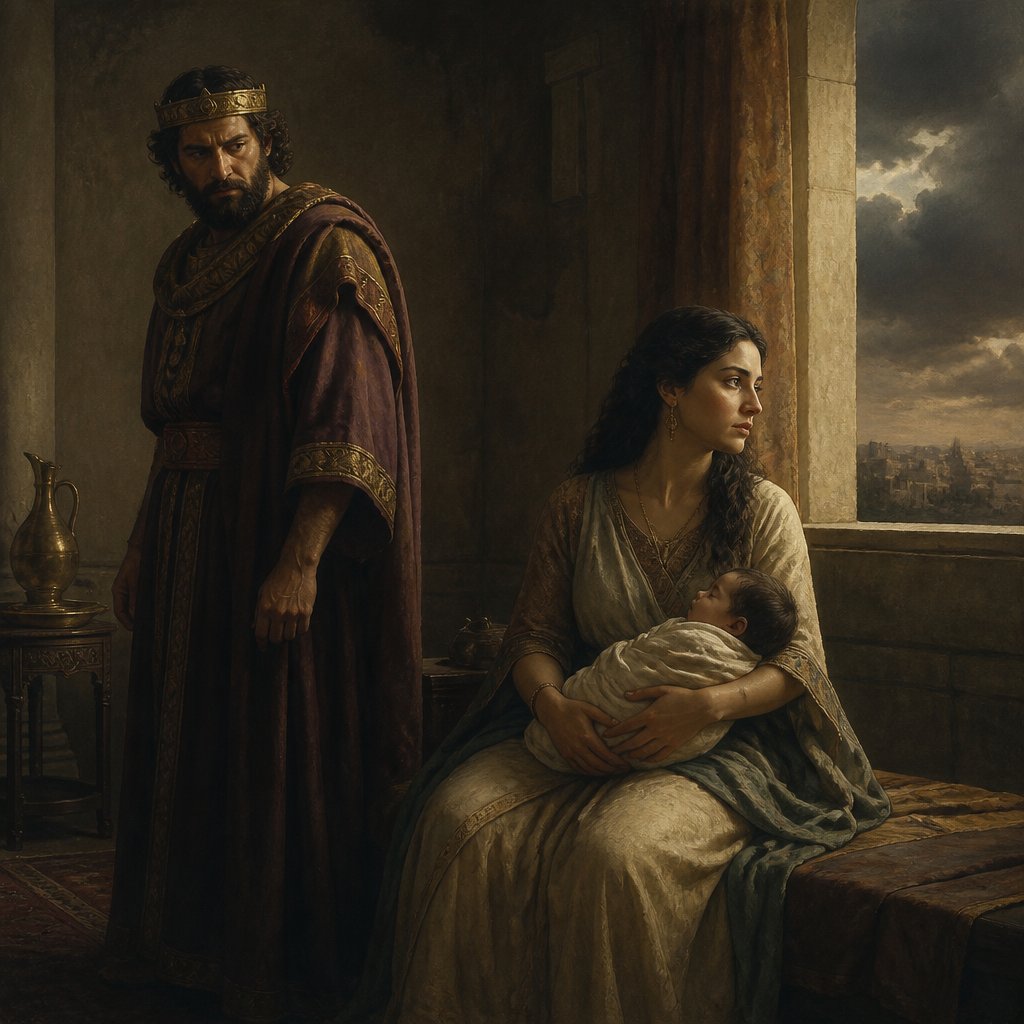
The Bible verse 2 Samuel 11:27 from the King James Version reads, "And when the mourning was past, David sent and fetched her to his house, and she became his wife, and bare him a son. But the thing that David had done displeased the Lord."
This passage comes at the end of a chapter that chronicles one of the most well-known and controversial stories in the Bible - the affair between King David and Bathsheba. The story begins with David, the king of Israel, gazing upon Bathsheba, the wife of Uriah the Hittite, as she bathes. David's lust leads him to commit adultery with Bathsheba, and she becomes pregnant. In an attempt to cover up his sin, David calls for Uriah to come back from battle and tries to get him to sleep with his wife so that he would think the child is his. However, when Uriah refuses to go home to his wife while his fellow soldiers are still at war, David sends Uriah back to the battlefield with a letter instructing the commander to place him in the front lines where he is likely to be killed. After Uriah's death, David takes Bathsheba as his wife.
The verse 2 Samuel 11:27 follows the death of Bathsheba's first son with David. After a period of mourning, David takes Bathsheba into his house and she bears him a son. However, the scripture also states that the actions of David have displeased the Lord.
The story of David and Bathsheba has been the subject of much discussion and debate over the years, and it raises many important themes and issues. Firstly, it serves as a cautionary tale about the corruption of power. David, who was chosen by God to be king, fell into sin and abused his authority as a leader. This reminds us that even the most righteous and anointed individuals are susceptible to temptation and sin.
The story also highlights the destructive nature of sin and its consequences. David's illicit affair with Bathsheba led to a cascade of tragic events, including the death of their child. Moreover, it also led to the death of Uriah, Bathsheba's husband, and caused great pain and suffering for all involved. This serves as a powerful reminder of the far-reaching consequences of our actions, and it underscores the importance of repentance and seeking forgiveness for our sins.
The verse also demonstrates the mercy and grace of God. Despite David's grievous sin, God continued to love and care for him. God sent the prophet Nathan to confront David with his sin, and David ultimately repented and sought forgiveness. This displays the compassionate and loving nature of God, who is always willing to forgive those who genuinely repent and turn back to Him.
Moreover, the verse also points to the sovereignty and righteousness of God. Despite the actions of David, God remains displeased and His standard of holiness is unwavering. This serves as a reminder that God's standards are unchanging, and He holds all people, including kings and leaders, accountable for their actions.
In terms of symbolism, the story of David and Bathsheba can be seen as a representation of the eternal struggle between righteousness and sin. Bathsheba, often portrayed as a seductive temptress, can be seen as a symbolic figure of sin and temptation, while David represents the fallibility and weakness of human nature. The story serves as a vivid illustration of the age-old battle between the desires of the flesh and the call to righteousness.
In conclusion, the Bible verse 2 Samuel 11:27 and the story of David and Bathsheba are powerful and thought-provoking passages that continue to resonate with readers today. They remind us of the timeless truths about the destructive nature of sin, the importance of seeking forgiveness, and the unchanging righteousness of God. Ultimately, the story of David and Bathsheba serves as a powerful reminder of the need for humility, repentance, and reliance on God's grace.
Have questions about 2 Samuel 11:27?
Dive deeper into this scripture with Bible Chat — an AI-powered tool for exploring God's Word through conversation. Ask questions, get context, and grow in your understanding of the Bible.
Get Our Apps


2 Samuel 11:27 Artwork

2 Samuel 11:27 - "And when the mourning was past, David sent and fetched her to his house, and she became his wife, and bare him a son. But the thing that David had done displeased the LORD."
"And when the mourning was past, David sent and fetched her to his house, and she became his wife, and bare him a son. But the thing that David had done displeased the LORD." - 2 Samuel 11:27

2 Samuel 11:9

2 Samuel 11

2 samuel 11

2 Samuel 11:11

2 Samuel 23:27 - "Abiezer the Anethothite, Mebunnai the Hushathite,"

2 Samuel 1. 17-27

2 Samuel 1:27 - "How are the mighty fallen, and the weapons of war perished!"

2 Samuel 13:27 - "But Absalom pressed him, that he let Amnon and all the king's sons go with him."

"Abiezer the Anethothite, Mebunnai the Hushathite," - 2 Samuel 23:27

2 Samuel 22:27 - "With the pure thou wilt shew thyself pure; and with the froward thou wilt shew thyself unsavoury."

2 Samuel 2:11 - "And the time that David was king in Hebron over the house of Judah was seven years and six months."

2 Samuel 12:27 - "And Joab sent messengers to David, and said, I have fought against Rabbah, and have taken the city of waters."

2 Samuel 11:18 - "¶ Then Joab sent and told David all the things concerning the war;"

2 Corinthians 11:27 - "In weariness and painfulness, in watchings often, in hunger and thirst, in fastings often, in cold and nakedness."

2 Samuel 2:27 - "And Joab said, As God liveth, unless thou hadst spoken, surely then in the morning the people had gone up every one from following his brother."

2 Samuel 14:27 - "And unto Absalom there were born three sons, and one daughter, whose name was Tamar: she was a woman of a fair countenance."

"How are the mighty fallen, and the weapons of war perished!" - 2 Samuel 1:27

2 Samuel 21:11 - "And it was told David what Rizpah the daughter of Aiah, the concubine of Saul, had done."

1 Samuel 27:2 - "And David arose, and he passed over with the six hundred men that were with him unto Achish, the son of Maoch, king of Gath."

2 Samuel 11:5 - "And the woman conceived, and sent and told David, and said, I am with child."

2 Samuel 11:22 - "¶ So the messenger went, and came and shewed David all that Joab had sent him for."

2 Samuel 3:11 - "And he could not answer Abner a word again, because he feared him."

2 Samuel 11:14 - "¶ And it came to pass in the morning, that David wrote a letter to Joab, and sent it by the hand of Uriah."

2 Samuel 22:11 - "And he rode upon a cherub, and did fly: and he was seen upon the wings of the wind."

2 Samuel 18:27 - "And the watchman said, Me thinketh the running of the foremost is like the running of Ahimaaz the son of Zadok. And the king said, He is a good man, and cometh with good tidings."

1 Samuel 27:11 - "And David saved neither man nor woman alive, to bring tidings to Gath, saying, Lest they should tell on us, saying, So did David, and so will be his manner all the while he dwelleth in the country of the Philistines."

2 Samuel 11:6 - "¶ And David sent to Joab, saying, Send me Uriah the Hittite. And Joab sent Uriah to David."

2 Samuel 11:26 - "¶ And when the wife of Uriah heard that Uriah her husband was dead, she mourned for her husband."