What does 2 Samuel 11:21 mean?
"Who smote Abimelech the son of Jerubbesheth? did not a woman cast a piece of a millstone upon him from the wall, that he died in Thebez? why went ye nigh the wall? then say thou, Thy servant Uriah the Hittite is dead also." - 2 Samuel 11:21
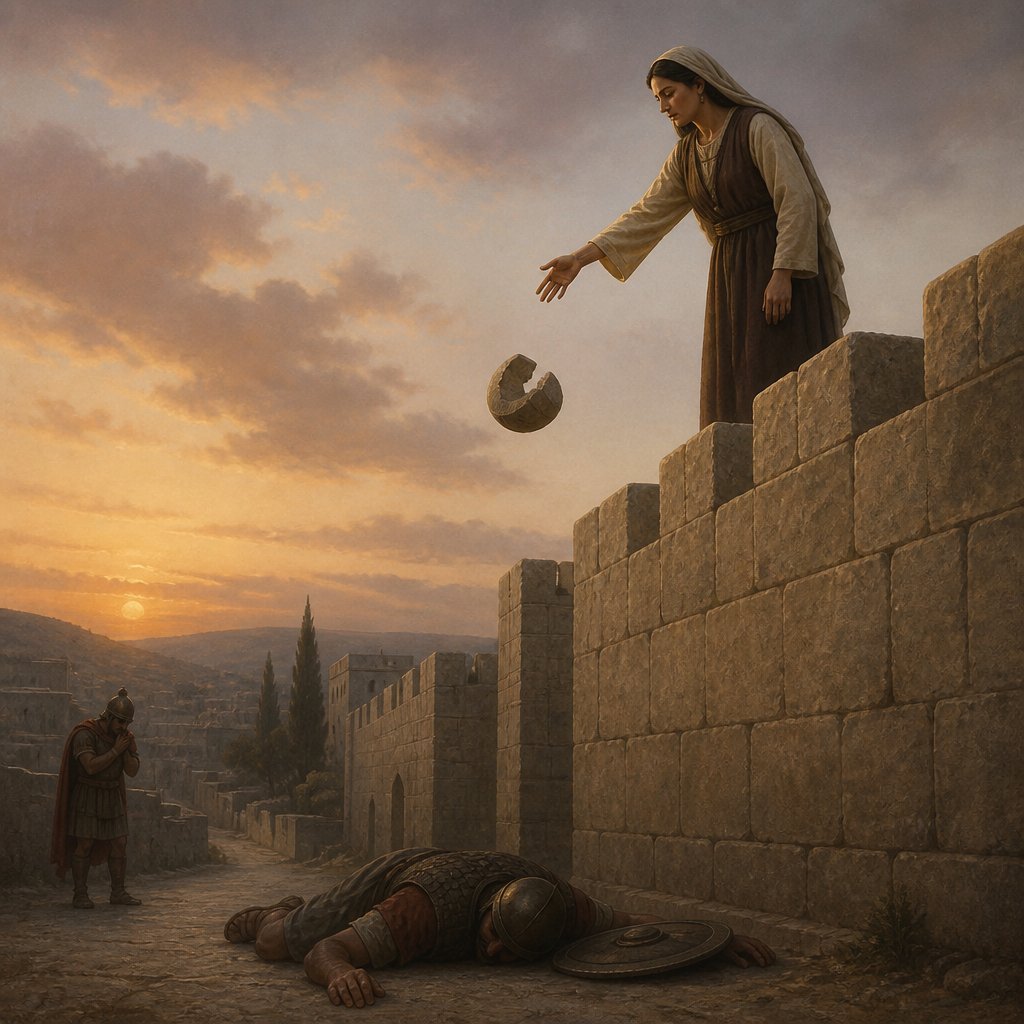
The Bible verse 2 Samuel 11:21 in the King James Version (KJV) states, "Who smote Abimelech the son of Jerubbesheth? did not a woman cast a piece of a millstone upon him from the wall, that he died in Thebez? why went ye nigh the wall? then say thou, Thy servant Uriah the Hittite is dead also."
This verse is part of the story of King David's affair with Bathsheba and the subsequent murder of her husband Uriah. The verse is part of a larger narrative that depicts the consequences of David's sin and the way in which his actions impact the lives of those around him.
The passage begins with a retelling of the events of Abimelech's death in the city of Thebez. Abimelech was a son of Gideon (Jerubbesheth) and he had been ruling over Israel in a tyrannical manner. The verse calls attention to the fact that it was a woman who ultimately killed Abimelech by casting a piece of a millstone upon him from the wall. This act shows the unexpected ways in which God can bring about justice and deliverance, using the most unlikely of people to accomplish his purposes.
In the broader context of the story, the parallels between Abimelech's death and Uriah's death are evident. Both men were killed in unexpected and seemingly insignificant ways, yet both deaths were consequences of the actions of those in power. Abimelech's death highlights the theme of God's justice and the unexpected ways in which it can be carried out, while also serving as a foreshadowing of the consequences that David will face for his own sins.
The verse also serves as a reminder of the interconnectedness of actions and consequences. The men who were with Uriah in battle are questioned about why they had approached the wall, leading to Uriah's death. This interrogation serves as a call to examine the choices and actions that led to Uriah's demise, and serves as a reminder that no action occurs in isolation. Every decision and every choice has ramifications and impacts not only the individual making the decision, but also those around them.
Symbolism plays a significant role in this verse as well. The image of a woman casting a piece of a millstone upon Abimelech is a powerful and unexpected one. Traditionally, millstones were used for grinding grain, and were heavy and unwieldy objects. The fact that it was a woman who wielded this object to bring about Abimelech's downfall is significant, as it challenges traditional notions of power and agency. In the same way, the use of a seemingly insignificant and unexpected event to bring about justice highlights the ways in which God works in the world, using the most unlikely of circumstances to accomplish his purposes.
In conclusion, 2 Samuel 11:21 in the KJV is a verse that highlights themes of justice, consequences, and the unexpected ways in which God can work in the world. It serves as a reminder of the interconnectedness of actions and their impacts, and the surprising ways in which God can use the most unlikely of circumstances to bring about his purposes. It also serves as a foreshadowing of the consequences that King David will face for his own sins, and a reminder of the power and agency of those who are often overlooked. Overall, this verse serves as a powerful and thought-provoking reminder of the ways in which God's justice and sovereignty are at work in the world.
Have questions about 2 Samuel 11:21?
Dive deeper into this scripture with Bible Chat — an AI-powered tool for exploring God's Word through conversation. Ask questions, get context, and grow in your understanding of the Bible.
Get Our Apps


2 Samuel 11:21 Artwork

2 Samuel 11:21 - "Who smote Abimelech the son of Jerubbesheth? did not a woman cast a piece of a millstone upon him from the wall, that he died in Thebez? why went ye nigh the wall? then say thou, Thy servant Uriah the Hittite is dead also."
"Who smote Abimelech the son of Jerubbesheth? did not a woman cast a piece of a millstone upon him from the wall, that he died in Thebez? why went ye nigh the wall? then say thou, Thy servant Uriah the Hittite is dead also." - 2 Samuel 11:21

2 Samuel 21:11 - "And it was told David what Rizpah the daughter of Aiah, the concubine of Saul, had done."

2 Samuel 11:9

"And it was told David what Rizpah the daughter of Aiah, the concubine of Saul, had done." - 2 Samuel 21:11

2 Samuel 11

2 samuel 11

2 Samuel 11:11

2 Samuel 21:21 - "And when he defied Israel, Jonathan the son of Shimea the brother of David slew him."

2 samuel 23:8-21

2 Samuel 5:21 - "And there they left their images, and David and his men burned them."

1 Samuel 2:21 - "And the LORD visited Hannah, so that she conceived, and bare three sons and two daughters. And the child Samuel grew before the LORD."

2 Samuel 13:21 - "¶ But when king David heard of all these things, he was very wroth."

2 Samuel 2:11 - "And the time that David was king in Hebron over the house of Judah was seven years and six months."

2 Samuel 11:18 - "¶ Then Joab sent and told David all the things concerning the war;"

2 Samuel 21:22 - "These four were born to the giant in Gath, and fell by the hand of David, and by the hand of his servants."

2 Kings 11:21 - "Seven years old was Jehoash when he began to reign."

2 Samuel 11:5 - "And the woman conceived, and sent and told David, and said, I am with child."

2 Samuel 11:22 - "¶ So the messenger went, and came and shewed David all that Joab had sent him for."

2 Samuel 3:11 - "And he could not answer Abner a word again, because he feared him."

2 Samuel 11:14 - "¶ And it came to pass in the morning, that David wrote a letter to Joab, and sent it by the hand of Uriah."

1 Samuel 21:11 - "And the servants of Achish said unto him, Is not this David the king of the land? did they not sing one to another of him in dances, saying, Saul hath slain his thousands, and David his ten thousands?"

2 Samuel 22:21 - "The LORD rewarded me according to my righteousness: according to the cleanness of my hands hath he recompensed me."

2 Samuel 19:21 - "But Abishai the son of Zeruiah answered and said, Shall not Shimei be put to death for this, because he cursed the LORD'S anointed?"

2 Samuel 21:18 - "And it came to pass after this, that there was again a battle with the Philistines at Gob: then Sibbechai the Hushathite slew Saph, which was of the sons of the giant."

2 Samuel 22:11 - "And he rode upon a cherub, and did fly: and he was seen upon the wings of the wind."

2 Samuel 21:13 - "And he brought up from thence the bones of Saul and the bones of Jonathan his son; and they gathered the bones of them that were hanged."

2 Samuel 21:7 - "But the king spared Mephibosheth, the son of Jonathan the son of Saul, because of the LORD'S oath that was between them, between David and Jonathan the son of Saul."

2 Samuel 11:6 - "¶ And David sent to Joab, saying, Send me Uriah the Hittite. And Joab sent Uriah to David."

2 Samuel 11:26 - "¶ And when the wife of Uriah heard that Uriah her husband was dead, she mourned for her husband."