What does 2 Kings 8:8 mean?
"And the king said unto Hazael, Take a present in thine hand, and go, meet the man of God, and enquire of the LORD by him, saying, Shall I recover of this disease?" - 2 Kings 8:8
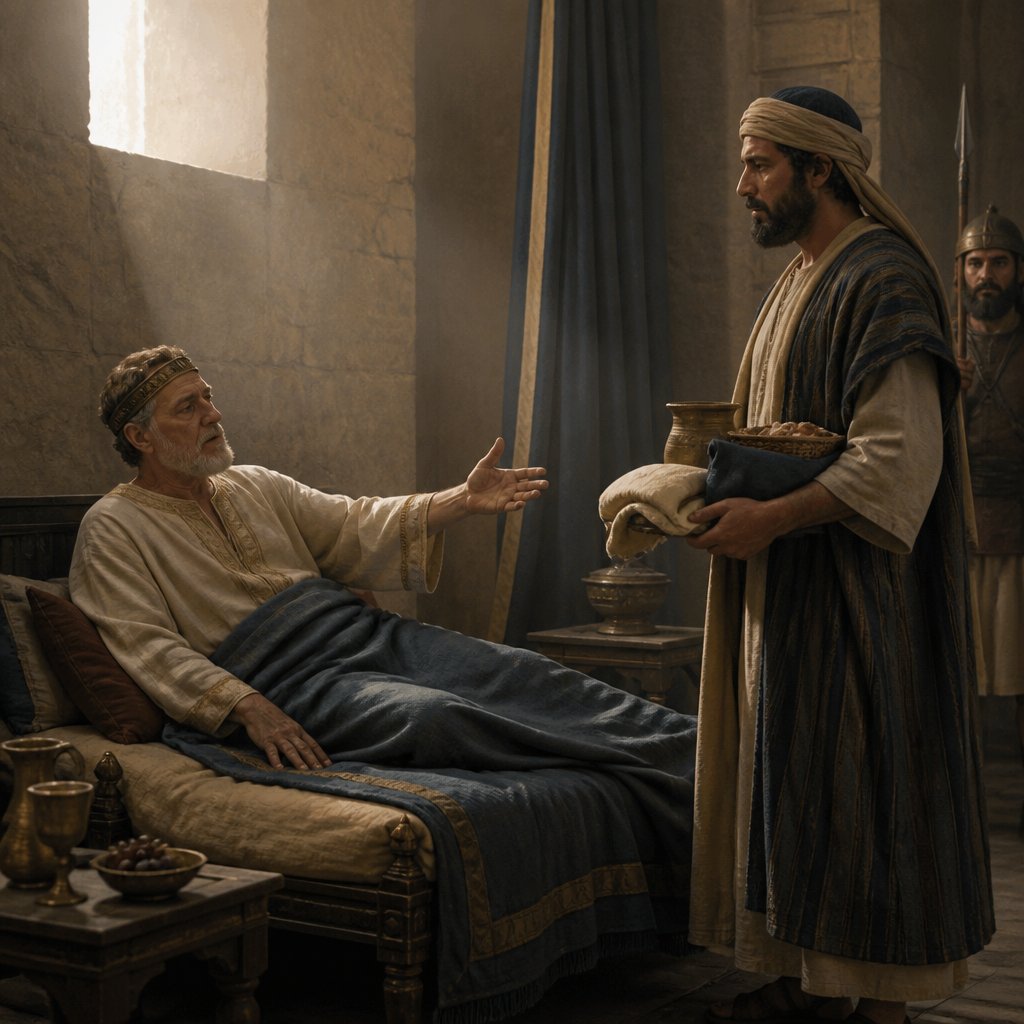
The Bible verse 2 Kings 8:8 from the King James Version (KJV) states, "And the king said unto Hazael, Take a present in thine hand, and go, meet the man of God, and inquire of the Lord by him, saying, Shall I recover of this disease?"
This verse is derived from the Old Testament book of 2 Kings, which chronicles the history of the Israelite monarchy and the prophets Elijah and Elisha. In this particular verse, we witness the interaction between the king of Syria, Ben-hadad, and his servant Hazael. Ben-hadad is suffering from a serious illness, and he sends Hazael to seek counsel from the prophet Elisha regarding his chances of recovery.
The verse holds significance within the larger narrative of 2 Kings as it illustrates the complex interplay between political power, faith, and prophecy. At the center of this exchange is the theme of divine intervention and the belief in the power of God to heal and guide the destinies of nations and individuals.
The context of this verse is important for understanding its implications. Ben-hadad, the king of Syria, was a powerful and influential ruler in the ancient Near East. His kingdom was often in conflict with the kingdom of Israel, and his interactions with the prophets Elisha and Elijah shed light on the religious and political dynamics of the region. The request to seek guidance from the man of God indicates a belief in the prophetic power of Elisha and a recognition of the importance of divine intervention in the affairs of nations.
The verse also carries symbolic significance. The act of seeking guidance from a prophet reflects the timeless human desire for reassurance and guidance from a higher power. In this case, the king's willingness to humble himself and seek counsel from Elisha symbolizes a recognition of the limitations of earthly power and a willingness to submit to the will of God.
The mention of a "present" to be taken to Elisha also reflects the honor and respect traditionally accorded to prophets and people of spiritual authority. The practice of giving gifts or offerings when seeking guidance or blessings from a religious figure is a recurring motif throughout the Bible and other ancient texts. It underscores the idea of reciprocity and the belief that divine favor can be obtained through acts of piety and humility.
The verse also raises questions about the nature of prophecy and the responsibilities of those who hold spiritual authority. Elisha's role as a mediator between God and the rulers of the time highlights the importance of moral and ethical guidance in matters of governance. It suggests that political leaders are accountable not only to their subjects but also to a higher moral and spiritual order.
In conclusion, 2 Kings 8:8 offers a glimpse into the complex interplay of power, faith, and prophecy in the ancient Near East. It illustrates the enduring human desire for divine guidance and the recognition of the limitations of earthly power. The verse serves as a reminder of the timeless themes of humility, faith, and the pursuit of divine wisdom that continue to resonate with readers today.
Have questions about 2 Kings 8:8?
Dive deeper into this scripture with Bible Chat — an AI-powered tool for exploring God's Word through conversation. Ask questions, get context, and grow in your understanding of the Bible.
Get Our Apps


2 Kings 8:8 Artwork

2 Kings 8:8 - "And the king said unto Hazael, Take a present in thine hand, and go, meet the man of God, and enquire of the LORD by him, saying, Shall I recover of this disease?"
"And the king said unto Hazael, Take a present in thine hand, and go, meet the man of God, and enquire of the LORD by him, saying, Shall I recover of this disease?" - 2 Kings 8:8

2 KINGS 8:29

2 Kings 8:23 - "And the rest of the acts of Joram, and all that he did, are they not written in the book of the chronicles of the kings of Judah?"

2 Kings 13:8 - "¶ Now the rest of the acts of Jehoahaz, and all that he did, and his might, are they not written in the book of the chronicles of the kings of Israel?"

2 Kings 17:8 - "And walked in the statutes of the heathen, whom the LORD cast out from before the children of Israel, and of the kings of Israel, which they had made."

2 Kings 12:8 - "And the priests consented to receive no more money of the people, neither to repair the breaches of the house."

2 Kings 8:18 - "And he walked in the way of the kings of Israel, as did the house of Ahab: for the daughter of Ahab was his wife: and he did evil in the sight of the LORD."

1 Kings 8:6-8

2 Kings 8:20 - "¶ In his days Edom revolted from under the hand of Judah, and made a king over themselves."

2 Kings 8:11 - "And he settled his countenance stedfastly, until he was ashamed: and the man of God wept."

2 Kings 16:8 - "And Ahaz took the silver and gold that was found in the house of the LORD, and in the treasures of the king's house, and sent it for a present to the king of Assyria."

2 Kings 8:2 - "And the woman arose, and did after the saying of the man of God: and she went with her household, and sojourned in the land of the Philistines seven years."

2 Kings 6:8 - "¶ Then the king of Syria warred against Israel, and took counsel with his servants, saying, In such and such a place shall be my camp."

1 Kings 8:2 - "And all the men of Israel assembled themselves unto king Solomon at the feast in the month Ethanim, which is the seventh month."

2 Kings 18:8 - "He smote the Philistines, even unto Gaza, and the borders thereof, from the tower of the watchmen to the fenced city."

2 Kings 8:22 - "Yet Edom revolted from under the hand of Judah unto this day. Then Libnah revolted at the same time."

2 Kings 8:25 - "¶ In the twelfth year of Joram the son of Ahab king of Israel did Ahaziah the son of Jehoram king of Judah begin to reign."

2 Kings 8:28 - "¶ And he went with Joram the son of Ahab to the war against Hazael king of Syria in Ramoth-gilead; and the Syrians wounded Joram."

2 Kings 8:7 - "¶ And Elisha came to Damascus; and Ben-hadad the king of Syria was sick; and it was told him, saying, The man of God is come hither."

2 Kings 2:8 - "And Elijah took his mantle, and wrapped it together, and smote the waters, and they were divided hither and thither, so that they two went over on dry ground."

2 Kings 3:8 - "And he said, Which way shall we go up? And he answered, The way through the wilderness of Edom."

2 Kings 8:17 - "Thirty and two years old was he when he began to reign; and he reigned eight years in Jerusalem."

2 Kings 19:8 - "¶ So Rabshakeh returned, and found the king of Assyria warring against Libnah: for he had heard that he was departed from Lachish."

2 Kings 15:8 - "¶ In the thirty and eighth year of Azariah king of Judah did Zachariah the son of Jeroboam reign over Israel in Samaria six months."

2 Kings 8:24 - "And Joram slept with his fathers, and was buried with his fathers in the city of David: and Ahaziah his son reigned in his stead."

2 Kings 1:8 - "And they answered him, He was an hairy man, and girt with a girdle of leather about his loins. And he said, It is Elijah the Tishbite."

8 kings of edom

2 Kings 8:16 - "¶ And in the fifth year of Joram the son of Ahab king of Israel, Jehoshaphat being then king of Judah, Jehoram the son of Jehoshaphat king of Judah began to reign."

2 Kings 8:4 - "And the king talked with Gehazi the servant of the man of God, saying, Tell me, I pray thee, all the great things that Elisha hath done."