What does 2 Kings 6:31 mean?
"Then he said, God do so and more also to me, if the head of Elisha the son of Shaphat shall stand on him this day." - 2 Kings 6:31

The Bible verse 2 Kings 6:31, taken from the King James Version, reads, "Then he said, God do so and more also to me, if the head of Elisha the son of Shaphat shall stand on him this day." This verse is part of a larger narrative found in the Old Testament, describing a pivotal moment in the life of the prophet Elisha. To fully understand the meaning and significance of this verse, it is important to examine the context in which it occurs and consider the themes and symbolism present in the story.
The book of 2 Kings is a historical narrative that continues the account of the kings of Israel and Judah, as well as the stories of the prophets who ministered during this time. In the verses leading up to 2 Kings 6:31, we find that the city of Samaria is under siege by the Aramean army, leading to a severe famine within the city. The situation becomes so desperate that people are resorting to drastic measures in order to survive, including acts of cannibalism. In the midst of this crisis, Elisha, as the prophet of God, remains a voice of hope and encouragement to the people, despite the desperate circumstances they find themselves in.
The specific verse 2 Kings 6:31 focuses on a confrontation between King Joram of Israel and Elisha. In his distress and anger, the king expresses his desire for Elisha to be killed. This verse reveals the extent of the king's desperation and hopelessness, as he is willing to make a rash and vengeful declaration against the prophet. It is a reflection of the moral and spiritual decay that has taken hold of the people of Samaria as a result of the siege and famine. The mention of Elisha's father, Shaphat, adds weight to the king's curse, emphasizing the gravity of the situation.
The themes present in this narrative include the consequences of disobedience, the faithfulness and power of God, and the importance of faith in dire circumstances. The actions of King Joram and the people of Samaria illustrate the devastating effects of turning away from God and relying on one's own strength. The famine and the desperate acts of the people serve as a sobering reminder of the consequences of sin and the importance of seeking God's guidance and provision.
The verse also holds significant symbolism, particularly in the character of Elisha. As a prophet of God, Elisha represents the unwavering faith and trust in God's will, even in the midst of overwhelming adversity. His presence in the narrative serves as a beacon of hope and a reminder of God's sovereignty, despite the dire circumstances facing the people of Samaria. In addition, the king's curse against Elisha reflects the ongoing spiritual struggle between faith and unbelief, and the enduring conflict between the forces of good and evil.
Ultimately, the verse 2 Kings 6:31 is a poignant reminder of the consequences of turning away from God and the hopelessness that can result from relying on human strength. It serves as a powerful illustration of the need for faith and obedience, even in the face of overwhelming adversity. Through the story of Elisha and the people of Samaria, we are encouraged to trust in God's faithfulness and seek His provision, even in the darkest of times. This verse stands as a timeless message of hope and redemption, pointing to the ultimate deliverance and salvation that comes through unwavering faith in God.
Have questions about 2 Kings 6:31?
Dive deeper into this scripture with Bible Chat — an AI-powered tool for exploring God's Word through conversation. Ask questions, get context, and grow in your understanding of the Bible.
Get Our Apps


2 Kings 6:31 Artwork

2 Kings 6:31 - "Then he said, God do so and more also to me, if the head of Elisha the son of Shaphat shall stand on him this day."

"Then he said, God do so and more also to me, if the head of Elisha the son of Shaphat shall stand on him this day." - 2 Kings 6:31

2 Kings 15:31 - "And the rest of the acts of Pekah, and all that he did, behold, they are written in the book of the chronicles of the kings of Israel."

1 Kings 6:31 - "¶ And for the entering of the oracle he made doors of olive tree: the lintel and side posts were a fifth part of the wall."

2 kings 6:24

2 Kings 9:31 - "And as Jehu entered in at the gate, she said, Had Zimri peace, who slew his master?"

2 Kings 19:31 - "For out of Jerusalem shall go forth a remnant, and they that escape out of mount Zion: the zeal of the LORD of hosts shall do this."
2 Kings 15:6 - "And the rest of the acts of Azariah, and all that he did, are they not written in the book of the chronicles of the kings of Judah?"

"And the rest of the acts of Pekah, and all that he did, behold, they are written in the book of the chronicles of the kings of Israel." - 2 Kings 15:31

2 Kings 6:16 - "And he answered, Fear not: for they that be with us are more than they that be with them."

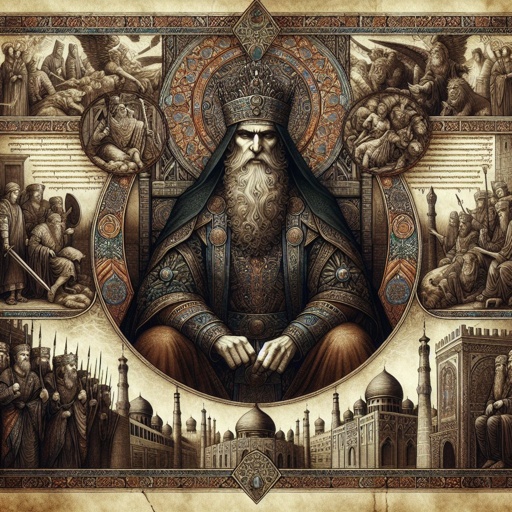
2 Kings 17:31 - "And the Avites made Nibhaz and Tartak, and the Sepharvites burnt their children in fire to Adrammelech and Anammelech, the gods of Sepharvaim." The image should not depict explicit or offensive content but be symbolic.

2 Chronicles 6:31 - "That they may fear thee, to walk in thy ways, so long as they live in the land which thou gavest unto our fathers."

2 Kings 10:31 - "But Jehu took no heed to walk in the law of the LORD God of Israel with all his heart: for he departed not from the sins of Jeroboam, which made Israel to sin."

2 Kings 3:6 - "¶ And king Jehoram went out of Samaria the same time, and numbered all Israel."

"¶ And for the entering of the oracle he made doors of olive tree: the lintel and side posts were a fifth part of the wall." - 1 Kings 6:31

2 Kings 23:31 - "¶ Jehoahaz was twenty and three years old when he began to reign; and he reigned three months in Jerusalem. And his mother's name was Hamutal, the daughter of Jeremiah of Libnah."

Proverbs 31:4 - "It is not for kings, O Lemuel, it is not for kings to drink wine; nor for princes strong drink:"

2 Kings 12:6 - "But it was so, that in the three and twentieth year of king Jehoash the priests had not repaired the breaches of the house."

2 Kings 6:4 - "So he went with them. And when they came to Jordan, they cut down wood."

2 Kings 6:6 - "And the man of God said, Where fell it? And he shewed him the place. And he cut down a stick, and cast it in thither; and the iron did swim."

2 Kings 22:6 - "Unto carpenters, and builders, and masons, and to buy timber and hewn stone to repair the house."

2 Kings 25:6 - "So they took the king, and brought him up to the king of Babylon to Riblah; and they gave judgment upon him."

2 Kings 24:6 - "So Jehoiakim slept with his fathers: and Jehoiachin his son reigned in his stead."

2 Kings 4:31 - "And Gehazi passed on before them, and laid the staff upon the face of the child; but there was neither voice, nor hearing. Wherefore he went again to meet him, and told him, saying, The child is not awaked."

1 Kings 15:31 - "¶ Now the rest of the acts of Nadab, and all that he did, are they not written in the book of the chronicles of the kings of Israel?"

1 Kings 11:30-31

1 Kings 11:30-31

1 Kings 11:30-31

2 Kings 6:7 - "Therefore said he, Take it up to thee. And he put out his hand, and took it."

2 Kings 7:6 - "For the Lord had made the host of the Syrians to hear a noise of chariots, and a noise of horses, even the noise of a great host: and they said one to another, Lo, the king of Israel hath hired against us the kings of the Hittites, and the kings of the Egyptians, to come upon us."