What does 2 Kings 5:7 mean?
"And it came to pass, when the king of Israel had read the letter, that he rent his clothes, and said, Am I God, to kill and to make alive, that this man doth send unto me to recover a man of his leprosy? wherefore consider, I pray you, and see how he seeketh a quarrel against me." - 2 Kings 5:7

The Bible verse 2 Kings 5:7 from the King James Version (KJV) reads, "And it came to pass, when the king of Israel had read the letter, that he rent his clothes, and said, Am I God, to kill and to make alive, that this man doth send unto me to recover a man of his leprosy? wherefore consider, I pray you, and see how he seeketh a quarrel against me."
This verse is part of the story of Naaman, a commander of the army of the king of Aram, who is afflicted with leprosy. Naaman's servant girl, who is an Israelite, tells him about the prophet Elisha, who can cure him of his leprosy. Naaman travels to see Elisha and is instructed to wash in the Jordan River seven times. At first, Naaman is hesitant, but he eventually follows Elisha's instructions and is healed of his leprosy.
In 2 Kings 5:7, we see the reaction of the king of Israel when he receives a letter from the king of Aram regarding Naaman's condition. The king of Israel is distressed and rent his clothes because he feels powerless and unable to cure Naaman's leprosy. He questions whether he has the power of life and death, and wonders why the king of Aram is seeking a quarrel against him.
One of the key themes in this verse is the limitations of human power and the sovereignty of God. The king of Israel's reaction reflects a common human struggle – the inability to control or influence certain circumstances. The king's rhetorical question, "Am I God, to kill and to make alive?" highlights his recognition that he is not equal to God and does not have the power to heal Naaman. This verse underscores the fact that our human abilities and resources are limited, and that ultimately, we are dependent on God for healing and salvation.
Another theme in this verse is the nature of conflict and diplomacy between nations. The king of Israel's immediate reaction to the letter from the king of Aram is one of suspicion and fear. He assumes that the king of Aram is seeking a quarrel against him, and his distress reveals the tension and mistrust between their two nations. This theme of international relations and the potential for conflict reflects the broader historical and political context in which this story takes place.
Furthermore, this verse also serves as a reminder of the importance of seeking wisdom and discernment in challenging situations. The king of Israel, in his distress, asks his advisors to "consider, I pray you, and see" how the king of Aram is seeking a quarrel against him. This demonstrates the king's willingness to seek counsel and carefully evaluate the situation before taking any action. As believers, we are encouraged to seek wisdom and discernment from God and from wise counselors when faced with difficult decisions and challenges.
Symbolically, the tearing of the king's clothes is significant in the Bible as a sign of distress, mourning, or repentance. It represents the king's deep emotional response to the situation, and his acknowledgment of his own limitations. It also serves as a visual reminder of the human condition – our vulnerability and our need for divine intervention.
In conclusion, 2 Kings 5:7 provides a powerful reminder of the limitations of human power, the sovereignty of God, the nature of international relations, and the importance of seeking wisdom and discernment in challenging situations. This verse serves as a reflection of the human condition and our constant need for God's guidance and intervention in our lives. It also invites us to consider our own responses to difficult circumstances, and to seek God's wisdom and counsel as we navigate the complexities of life.
Have questions about 2 Kings 5:7?
Dive deeper into this scripture with Bible Chat — an AI-powered tool for exploring God's Word through conversation. Ask questions, get context, and grow in your understanding of the Bible.
Get Our Apps


2 Kings 5:7 Artwork

2 Kings 5:7 - "And it came to pass, when the king of Israel had read the letter, that he rent his clothes, and said, Am I God, to kill and to make alive, that this man doth send unto me to recover a man of his leprosy? wherefore consider, I pray you, and see how he seeketh a quarrel against me."
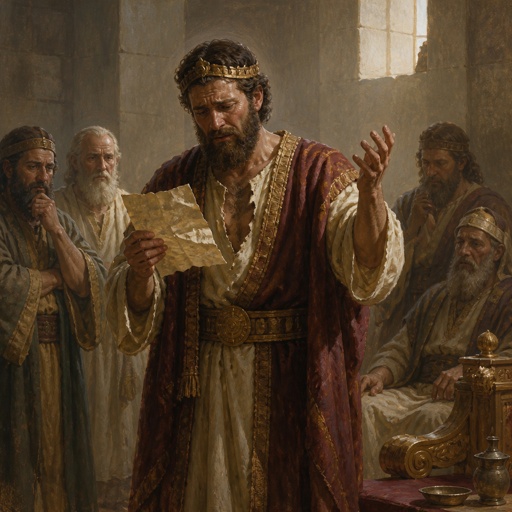
"And it came to pass, when the king of Israel had read the letter, that he rent his clothes, and said, Am I God, to kill and to make alive, that this man doth send unto me to recover a man of his leprosy? wherefore consider, I pray you, and see how he seeketh a quarrel against me." - 2 Kings 5:7

2 Kings 7:5 - "And they rose up in the twilight, to go unto the camp of the Syrians: and when they were come to the uttermost part of the camp of Syria, behold, there was no man there."

2 Kings 7:2

1 Kings 5:2 - "And Solomon sent to Hiram, saying,"

1 Kings 7:5 - "And all the doors and posts were square, with the windows: and light was against light in three ranks."

2 Kings 4:4-5

2 Kings 19:5 - "So the servants of king Hezekiah came to Isaiah."

2 Kings 24:5 - "¶ Now the rest of the acts of Jehoiakim, and all that he did, are they not written in the book of the chronicles of the kings of Judah?"

2 Kings 7:11 - "And he called the porters; and they told it to the king's house within."

2 Kings 7:7 - "Wherefore they arose and fled in the twilight, and left their tents, and their horses, and their asses, even the camp as it was, and fled for their life."

1 Kings 5:7 - "¶ And it came to pass, when Hiram heard the words of Solomon, that he rejoiced greatly, and said, Blessed be the LORD this day, which hath given unto David a wise son over this great people."

2 Kings 2:7 - "And fifty men of the sons of the prophets went, and stood to view afar off: and they two stood by Jordan."

2 Kings 5:19 - "And he said unto him, Go in peace. So he departed from him a little way."

2 Corinthians 5:7 - "(For we walk by faith, not by sight:)"

2 Kings 3:5 - "But it came to pass, when Ahab was dead, that the king of Moab rebelled against the king of Israel."

2 Kings 5:9 - "So Naaman came with his horses and with his chariot, and stood at the door of the house of Elisha."

2 Kings 21:5 - "And he built altars for all the host of heaven in the two courts of the house of the LORD."
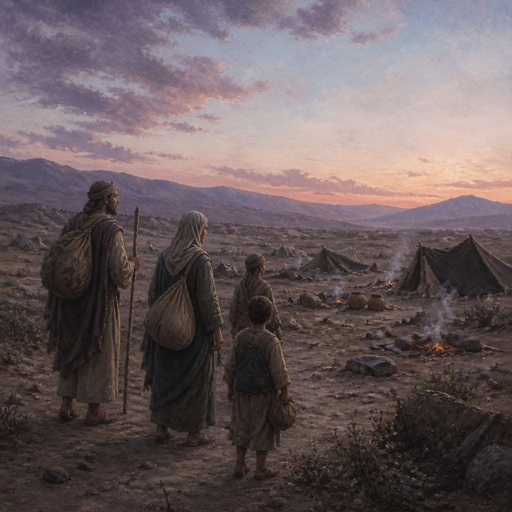
"And they rose up in the twilight, to go unto the camp of the Syrians: and when they were come to the uttermost part of the camp of Syria, behold, there was no man there." - 2 Kings 7:5

2 Kings 20:7 - "And Isaiah said, Take a lump of figs. And they took and laid it on the boil, and he recovered."

2 Kings 22:7 - "Howbeit there was no reckoning made with them of the money that was delivered into their hand, because they dealt faithfully."

2 Kings 18:5 - "He trusted in the LORD God of Israel; so that after him was none like him among all the kings of Judah, nor any that were before him."

2 Kings 17:5 - "¶ Then the king of Assyria came up throughout all the land, and went up to Samaria, and besieged it three years."

"And Solomon sent to Hiram, saying," - 1 Kings 5:2

2 Kings 7:14 - "They took therefore two chariot horses; and the king sent after the host of the Syrians, saying, Go and see."

2 Kings 5:4 - "And one went in, and told his lord, saying, Thus and thus said the maid that is of the land of Israel."

2 Kings 6:7 - "Therefore said he, Take it up to thee. And he put out his hand, and took it."

2 Kings 5:2 - "And the Syrians had gone out by companies, and had brought away captive out of the land of Israel a little maid; and she waited on Naaman's wife."

2 Kings 7:20 - "And so it fell out unto him: for the people trode upon him in the gate, and he died."

2 Kings 7:6 - "For the Lord had made the host of the Syrians to hear a noise of chariots, and a noise of horses, even the noise of a great host: and they said one to another, Lo, the king of Israel hath hired against us the kings of the Hittites, and the kings of the Egyptians, to come upon us."