What does 2 Kings 5:25 mean?
"But he went in, and stood before his master. And Elisha said unto him, Whence comest thou, Gehazi? And he said, Thy servant went no whither." - 2 Kings 5:25
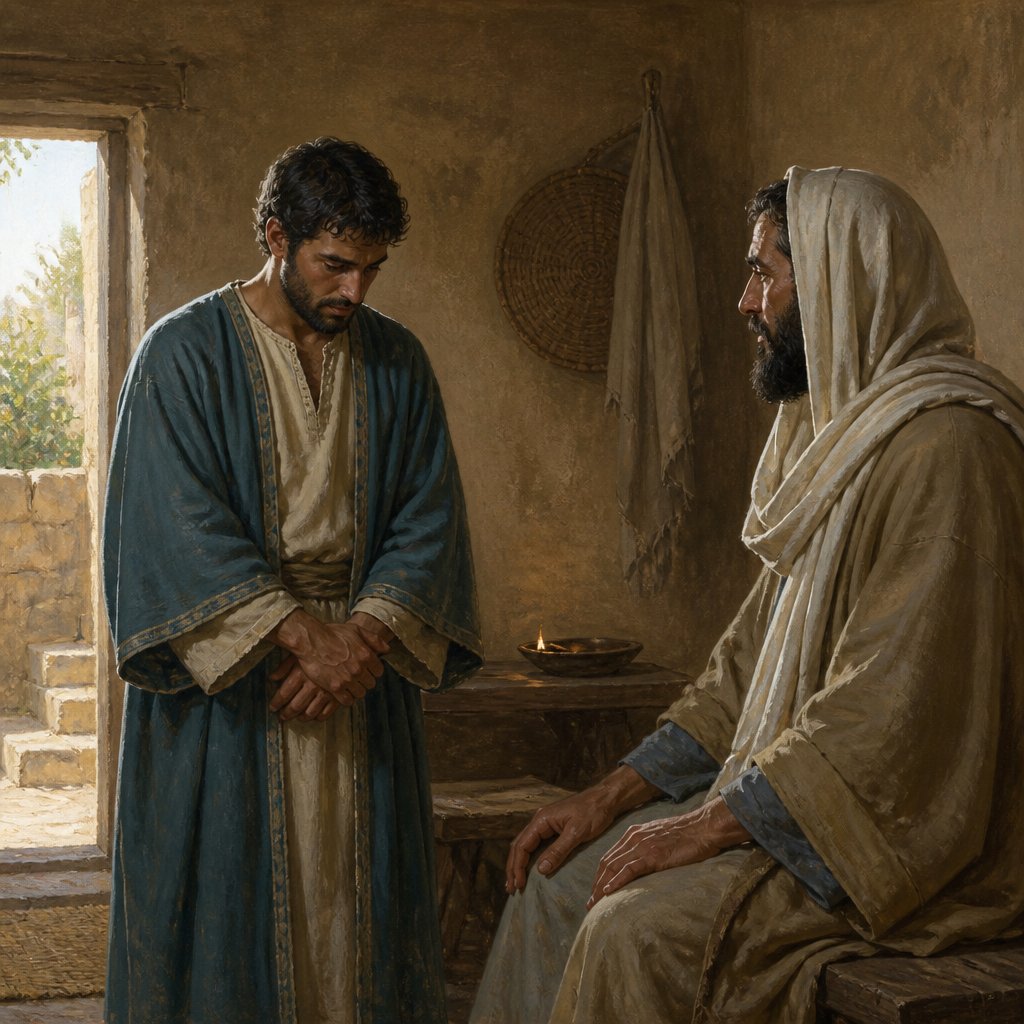
The Bible verse 2 Kings 5:25 from the King James Version (KJV) reads, "But he went in, and stood before his master. And Elisha said unto him, Whence comest thou, Gehazi? And he said, Thy servant went no whither."
This verse is part of the larger narrative found in 2 Kings 5, which tells the story of Naaman, a commander of the army of the king of Aram, who was afflicted with leprosy. In this story, Naaman is instructed by a young Israelite girl to seek healing from the prophet Elisha in Israel. Naaman's journey results in a miraculous healing, and he ultimately declares his faith in the God of Israel.
The verse 2 Kings 5:25 specifically focuses on the actions of Gehazi, who was Elisha's servant. In this verse, Gehazi is confronted by Elisha after he had secretly pursued Naaman and accepted gifts of silver and clothing from him. Gehazi attempts to deceive his master by claiming that he had not gone anywhere to obtain the gifts.
This story and verse offer several themes and lessons for readers. One theme is the destructive nature of greed and dishonesty. Gehazi's actions reveal a lack of integrity and trustworthiness, as he surreptitiously seeks to benefit from Naaman's gratitude and generosity. His deceptive behavior ultimately leads to severe consequences, as Elisha, being a prophet of God, is able to discern Gehazi's dishonesty and greed. This serves as a warning about the negative outcomes of succumbing to temptation and violating ethical principles.
Another theme in this verse and the story as a whole is the contrast between genuine faith and self-serving behavior. While Naaman's humble and obedient approach to seeking healing results in his miraculous restoration, Gehazi's actions demonstrate a lack of true faith and trust in God. Instead of relying on God's provision and power, Gehazi attempts to take matters into his own hands and pursue personal gain. This stands in stark contrast to the example set by Naaman, who ultimately recognizes and acknowledges the God of Israel as the one true God.
The context of 2 Kings 5:25 within the larger narrative also serves to highlight the significance of obedience and humility. Naaman's initial resistance to Elisha's instructions, as well as his hesitance to bathe in the Jordan River, reflect a lack of humility and willingness to submit to God's ways. However, as he heeds the counsel of his servants and follows Elisha's guidance, he experiences the full extent of God's grace and healing. In contrast, Gehazi's disobedience and deceitful actions lead to his punishment, as Elisha pronounces a curse of leprosy on him and his descendants.
Symbolically, Gehazi's behavior represents the temptation to pursue worldly gain and self-interest at the expense of obedience and faith in God. His actions serve as a cautionary example of the consequences of yielding to such temptations and abandoning the principles of integrity and humility. On the other hand, Naaman's journey and transformation serve as a powerful demonstration of the rewards of genuine faith, obedience, and humility.
In conclusion, 2 Kings 5:25 and the broader narrative of Naaman's healing in 2 Kings 5 offer valuable insights into the themes of obedience, honesty, faith, and humility. Through the contrasting examples of Gehazi and Naaman, readers are encouraged to consider the implications of their own choices and actions, and to prioritize a faith-centered and ethical approach to life. This verse serves as a timeless reminder of the importance of integrity, humility, and genuine faith in God's provision and guidance.
Have questions about 2 Kings 5:25?
Dive deeper into this scripture with Bible Chat — an AI-powered tool for exploring God's Word through conversation. Ask questions, get context, and grow in your understanding of the Bible.
Get Our Apps


2 Kings 5:25 Artwork

2 Kings 5:25 - "But he went in, and stood before his master. And Elisha said unto him, Whence comest thou, Gehazi? And he said, Thy servant went no whither."
"But he went in, and stood before his master. And Elisha said unto him, Whence comest thou, Gehazi? And he said, Thy servant went no whither." - 2 Kings 5:25

2 Kings 25:5 - "And the army of the Chaldees pursued after the king, and overtook him in the plains of Jericho: and all his army were scattered from him."

2 Kings 25:2 - "And the city was besieged unto the eleventh year of king Zedekiah."

2 Kings 21:25 - "Now the rest of the acts of Amon which he did, are they not written in the book of the chronicles of the kings of Judah?"

2 Kings 25:28 - "And he spake kindly to him, and set his throne above the throne of the kings that were with him in Babylon;"

2 Kings 2:25 - "And he went from thence to mount Carmel, and from thence he returned to Samaria."

2 Kings 25:12 - "But the captain of the guard left of the poor of the land to be vinedressers and husbandmen."

Proverbs 25:2 - "It is the glory of God to conceal a thing: but the honour of kings is to search out a matter."

2 Kings 25:20 - "And Nebuzar-adan captain of the guard took these, and brought them to the king of Babylon to Riblah:"

Jeremiah 25:25 - "And all the kings of Zimri, and all the kings of Elam, and all the kings of the Medes,"

"And the army of the Chaldees pursued after the king, and overtook him in the plains of Jericho: and all his army were scattered from him." - 2 Kings 25:5

"And the city was besieged unto the eleventh year of king Zedekiah." - 2 Kings 25:2

2 Kings 25:3 - "And on the ninth day of the fourth month the famine prevailed in the city, and there was no bread for the people of the land."

2 Kings 25:6 - "So they took the king, and brought him up to the king of Babylon to Riblah; and they gave judgment upon him."

2 Kings 25:14 - "And the pots, and the shovels, and the snuffers, and the spoons, and all the vessels of brass wherewith they ministered, took they away."

1 Kings 5:2 - "And Solomon sent to Hiram, saying,"

2 Kings 25:1 show King Nebuchadnezzar and the army and the Temple

2 Kings 25:1 show King Nebuchadnezzar in war zone

1 Kings 2:25 - "And king Solomon sent by the hand of Benaiah the son of Jehoiada; and he fell upon him that he died."

2 Kings 4:4-5

2 Kings 25:10 - "And all the army of the Chaldees, that were with the captain of the guard, brake down the walls of Jerusalem round about."

2 Kings 25:18 - "¶ And the captain of the guard took Seraiah the chief priest, and Zephaniah the second priest, and the three keepers of the door:"

2 Kings 19:5 - "So the servants of king Hezekiah came to Isaiah."

2 Kings 25:15 - "And the firepans, and the bowls, and such things as were of gold, in gold, and of silver, in silver, the captain of the guard took away."

2 Chronicles 25:26 - "Now the rest of the acts of Amaziah, first and last, behold, are they not written in the book of the kings of Judah and Israel?"

2 Kings 24:5 - "¶ Now the rest of the acts of Jehoiakim, and all that he did, are they not written in the book of the chronicles of the kings of Judah?"

Jehoiachin is released from Babylonian jail 2 kings 25: 27

2 Kings 8:25 - "¶ In the twelfth year of Joram the son of Ahab king of Israel did Ahaziah the son of Jehoram king of Judah begin to reign."

2 Kings 25:26 - "And all the people, both small and great, and the captains of the armies, arose, and came to Egypt: for they were afraid of the Chaldees."