What does 2 Kings 5:12 mean?
"Are not Abana and Pharpar, rivers of Damascus, better than all the waters of Israel? may I not wash in them, and be clean? So he turned and went away in a rage." - 2 Kings 5:12
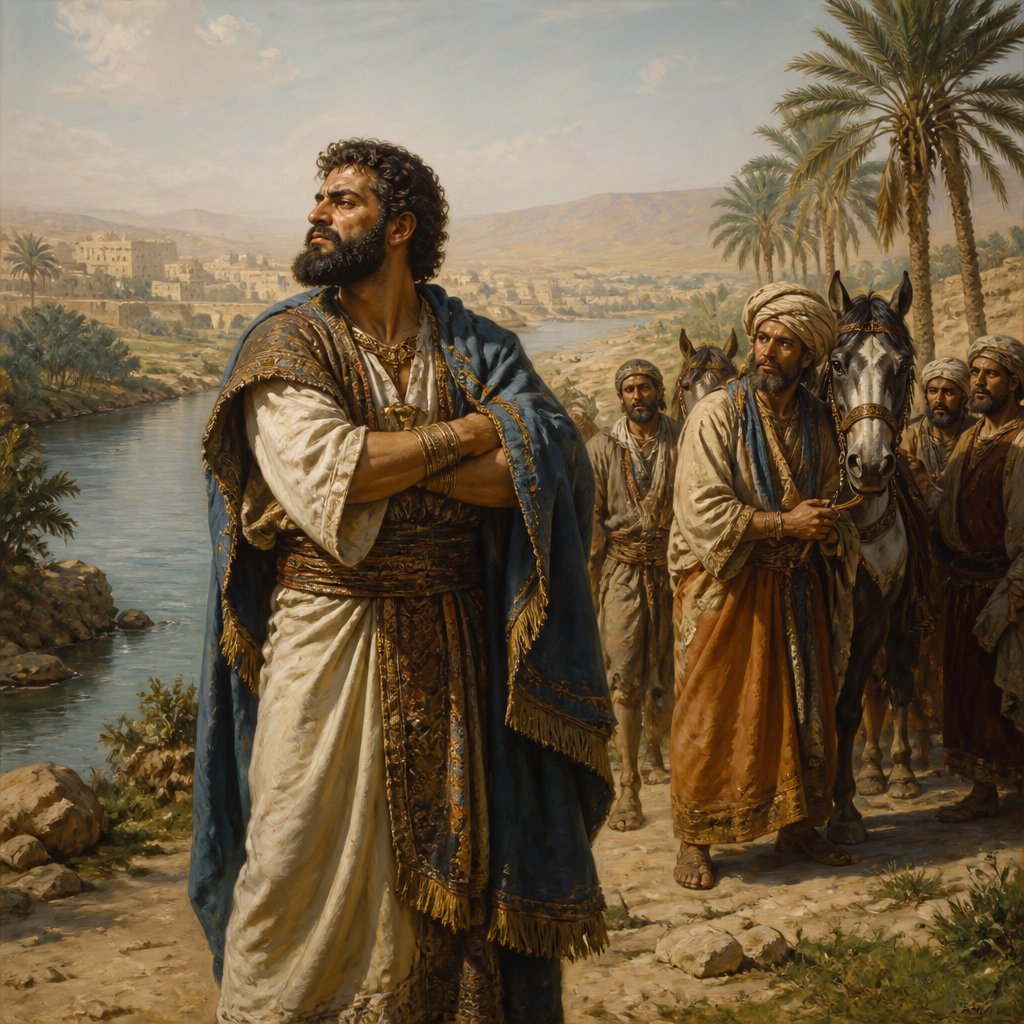
The Bible verse 2 Kings 5:12 in the King James Version (KJV) reads, "Are not Abana and Pharpar, rivers of Damascus, better than all the waters of Israel? may I not wash in them, and be clean? So he turned and went away in a rage."
This verse comes from the story of Naaman, a commander of the army of the king of Syria, who was a valiant man but had leprosy. He comes to Elisha, who is a prophet in Israel, seeking healing. Elisha tells him to go and wash in the Jordan river seven times, and he will be healed. Naaman initially refuses, questioning why he should wash in the Jordan river when there are better rivers in Damascus. It is in this context that he utters the words in 2 Kings 5:12, expressing his frustration and doubt.
The story of Naaman and the Jordan river carries important themes such as faith, humility, and the nature of God’s grace. It serves as a powerful reminder that God’s ways are often different from what we expect, and that true healing and restoration come from trusting and obeying Him. Naaman’s initial skepticism and pride are characteristic of human nature, but his eventual humility and obedience lead to his miraculous healing.
Naaman’s initial reaction to Elisha’s instructions reveals the pride and self-reliance that often stand in the way of receiving God’s blessings. Naaman is a powerful and respected man, and he expects a grand and dramatic gesture to bring about his healing. When Elisha instructs him to perform a simple act of faith – washing in the Jordan river – Naaman is offended and incredulous. In his mind, the rivers of Damascus, where he is from, are far superior to the Jordan river, so he questions Elisha’s command.
This reaction of Naaman reflects how we, as humans, often resist God’s plan because it does not align with our expectations or understanding. We tend to rely on our own wisdom or the ways of the world, rather than trusting in God’s wisdom and submitting to His will.
The Jordan river itself carries symbolic significance in the Bible. It is a prominent geographical feature in the land of Israel, and it is associated with God’s divine intervention and miraculous works. It was through the Jordan river that Joshua led the Israelites into the Promised Land, and it was also in the Jordan that Jesus was baptized by John the Baptist. In both instances, the Jordan river symbolizes a transition or transformation brought about by God.
In the case of Naaman, the act of washing in the Jordan river symbolizes his need for spiritual cleansing and restoration. The Jordan river becomes a metaphor for God’s redemptive power and the necessity of surrendering to His will. Through this act of faith, Naaman learns to humble himself and trust in God’s plan for his healing.
The story of Naaman and the Jordan river also conveys the truth that God’s grace is available to all who are willing to receive it. Regardless of our social status, accomplishments, or personal merits, we all stand in need of God’s grace and mercy. Naaman’s eventual obedience and humility lead to his healing, demonstrating that God’s grace is not earned but freely given to those who come to Him in faith.
In conclusion, 2 Kings 5:12 from the King James Version conveys a powerful message about the importance of faith, humility, and obedience in experiencing God’s transformative work. The story of Naaman and the Jordan river serves as a timeless reminder that God’s ways are higher than our ways, and His grace is available to all who are willing to trust in Him. It challenges us to examine our hearts and to approach God with humility and faith, knowing that He alone is the source of true healing and restoration.
Have questions about 2 Kings 5:12?
Dive deeper into this scripture with Bible Chat — an AI-powered tool for exploring God's Word through conversation. Ask questions, get context, and grow in your understanding of the Bible.
Get Our Apps


2 Kings 5:12 Artwork

2 Kings 5:12 - "Are not Abana and Pharpar, rivers of Damascus, better than all the waters of Israel? may I not wash in them, and be clean? So he turned and went away in a rage."
"Are not Abana and Pharpar, rivers of Damascus, better than all the waters of Israel? may I not wash in them, and be clean? So he turned and went away in a rage." - 2 Kings 5:12

2 Kings 12:5 - "Let the priests take it to them, every man of his acquaintance: and let them repair the breaches of the house, wheresoever any breach shall be found."

1 Kings 5:12 - "And the LORD gave Solomon wisdom, as he promised him: and there was peace between Hiram and Solomon; and they two made a league together."

2 Kings 12:19 - "¶ And the rest of the acts of Joash, and all that he did, are they not written in the book of the chronicles of the kings of Judah?"

1 Kings 5:2 - "And Solomon sent to Hiram, saying,"

2 Kings 4:4-5

2 Samuel 5:12

2 Kings 19:5 - "So the servants of king Hezekiah came to Isaiah."

1 Kings 12:5 - "And he said unto them, Depart yet for three days, then come again to me. And the people departed."

2 Kings 24:5 - "¶ Now the rest of the acts of Jehoiakim, and all that he did, are they not written in the book of the chronicles of the kings of Judah?"

2 Kings 12:14 - "But they gave that to the workmen, and repaired therewith the house of the LORD."

2 Kings 25:12 - "But the captain of the guard left of the poor of the land to be vinedressers and husbandmen."

2 Kings 12:16 - "The trespass money and sin money was not brought into the house of the LORD: it was the priests'."

2 Kings 12:12 - "And to masons, and hewers of stone, and to buy timber and hewed stone to repair the breaches of the house of the LORD, and for all that was laid out for the house to repair it."

2 Kings 5:19 - "And he said unto him, Go in peace. So he departed from him a little way."

2 Kings 12:2 - "And Jehoash did that which was right in the sight of the LORD all his days wherein Jehoiada the priest instructed him."

2 Kings 10:12 - "¶ And he arose and departed, and came to Samaria. And as he was at the shearing house in the way,"

2 Kings 13:12 - "And the rest of the acts of Joash, and all that he did, and his might wherewith he fought against Amaziah king of Judah, are they not written in the book of the chronicles of the kings of Israel?"

2 Kings 14:12 - "And Judah was put to the worse before Israel; and they fled every man to their tents."

2 Kings 12:6 - "But it was so, that in the three and twentieth year of king Jehoash the priests had not repaired the breaches of the house."

2 Kings 12:8 - "And the priests consented to receive no more money of the people, neither to repair the breaches of the house."

2 Kings 3:5 - "But it came to pass, when Ahab was dead, that the king of Moab rebelled against the king of Israel."

2 Kings 16:12 - "And when the king was come from Damascus, the king saw the altar: and the king approached to the altar, and offered thereon."

2 Kings 5:9 - "So Naaman came with his horses and with his chariot, and stood at the door of the house of Elisha."

2 Kings 21:5 - "And he built altars for all the host of heaven in the two courts of the house of the LORD."

1 Kings 2:12 - "¶ Then sat Solomon upon the throne of David his father; and his kingdom was established greatly."

2 Kings 12:15 - "Moreover they reckoned not with the men, into whose hand they delivered the money to be bestowed on workmen: for they dealt faithfully."

2 kings 2:12 in which elisha is kneeling down while receiving brown old cloak

2 Kings 18:5 - "He trusted in the LORD God of Israel; so that after him was none like him among all the kings of Judah, nor any that were before him."