What does 2 Kings 4:34 mean?
"And he went up, and lay upon the child, and put his mouth upon his mouth, and his eyes upon his eyes, and his hands upon his hands: and he stretched himself upon the child; and the flesh of the child waxed warm." - 2 Kings 4:34
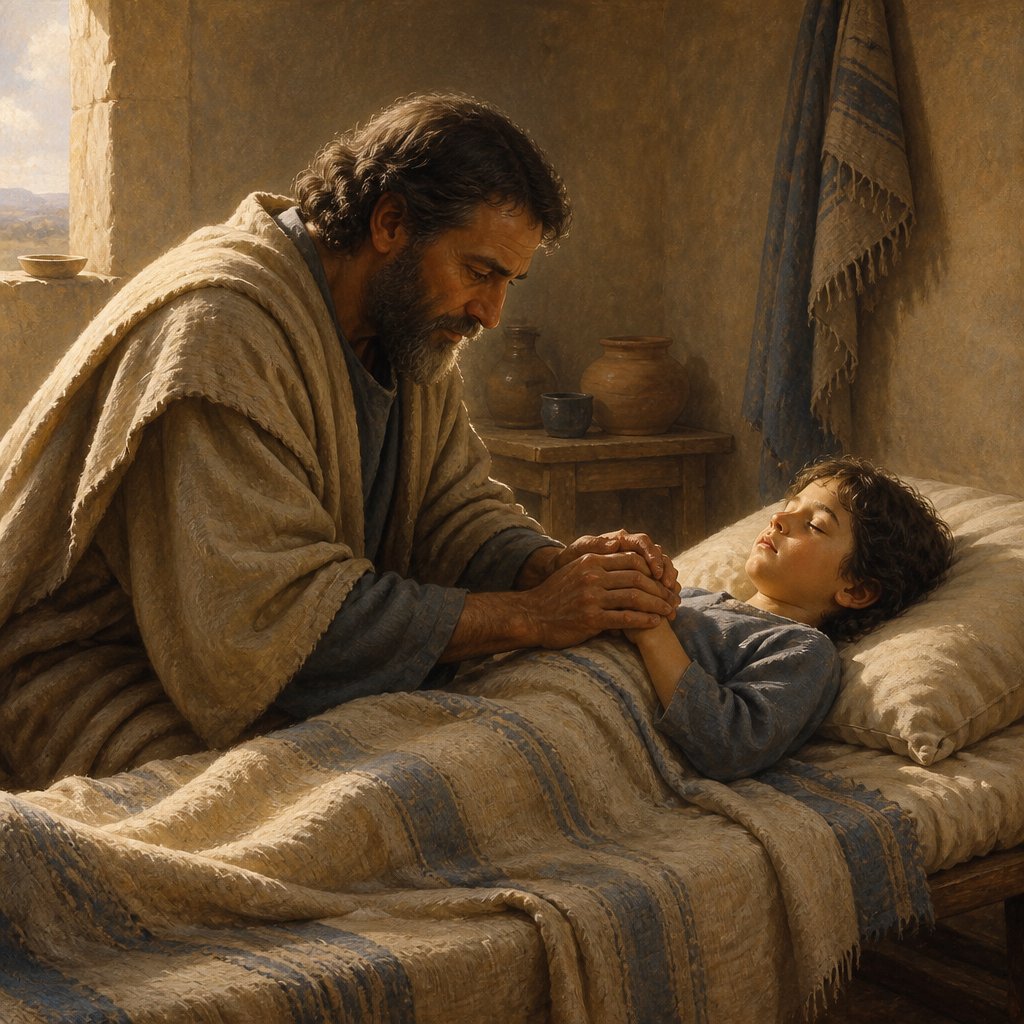
2 Kings 4:34- "And he went up, and lay upon the child, and put his mouth upon his mouth, and his eyes upon his eyes, and his hands upon his hands: and he stretched himself upon the child; and the flesh of the child waxed warm."
This verse is a part of the story of Elisha and the Shunammite woman found in 2 Kings 4:8-37. The Shunammite woman had shown kindness to Elisha by providing him with food and a place to stay when he passed through her town. In return for her hospitality, Elisha had prophesied that she would have a son, even though she and her husband were old. Years later, the child grew ill and died, and the Shunammite woman sought out Elisha for help.
In this verse, we see Elisha’s response to the child's death. Elisha performs an extraordinary act of healing by lying on the child, putting his mouth on the child's mouth, his eyes on the child's eyes, and his hands on the child's hands. This is a symbolic and intimate act of revival and a demonstration of divine intervention.
The themes in this verse are faith, compassion, and the power of God. The Shunammite woman showed great faith in seeking out Elisha for help when her son died. She believed that Elisha, as a man of God, could intercede with divine power to bring her son back to life. Elisha’s compassion for the woman and her son is evident in his willingness to go to great lengths to heal the child. His actions show that he was deeply moved by the woman's plight and was determined to bring about a miraculous healing.
The symbolism in this verse is significant. Elisha’s physical contact with the child symbolizes the transfer of life from the prophet to the child. By lying on the child and putting his mouth, eyes, and hands on the child, Elisha is acting as a conduit for God's life-giving power. This act demonstrates the power of divine intervention and the ability of God to bring the dead back to life. It also serves as a foreshadowing of the ultimate act of divine intervention through the resurrection of Jesus Christ.
The context of this verse is also worth noting. In the Old Testament, there are several accounts of miraculous healings and resurrections performed by the prophets. These acts serve to demonstrate God's power and to validate the authority of the prophets as messengers of God. In this particular story, the healing of the child serves to confirm Elisha's status as a true prophet of God and as a channel for divine intervention.
Overall, 2 Kings 4:34 is a powerful and moving account of faith, compassion, and the miraculous power of God. It serves as a reminder of the extraordinary ways in which God can work in the lives of His people and the willingness of His servants to act as instruments of His will. This verse is a testament to the enduring nature of God's love and His ability to bring about restoration and healing in the face of seemingly insurmountable challenges.
Have questions about 2 Kings 4:34?
Dive deeper into this scripture with Bible Chat — an AI-powered tool for exploring God's Word through conversation. Ask questions, get context, and grow in your understanding of the Bible.
Get Our Apps


2 Kings 4:34 Artwork

2 Kings 4:34 - "And he went up, and lay upon the child, and put his mouth upon his mouth, and his eyes upon his eyes, and his hands upon his hands: and he stretched himself upon the child; and the flesh of the child waxed warm."
"And he went up, and lay upon the child, and put his mouth upon his mouth, and his eyes upon his eyes, and his hands upon his hands: and he stretched himself upon the child; and the flesh of the child waxed warm." - 2 Kings 4:34

2 kings 9:34-36

1 Kings 4:34 - "And there came of all people to hear the wisdom of Solomon, from all kings of the earth, which had heard of his wisdom."

2 Kings 10:34 - "Now the rest of the acts of Jehu, and all that he did, and all his might, are they not written in the book of the chronicles of the kings of Israel?"

2 Kings 19:34 - "For I will defend this city, to save it, for mine own sake, and for my servant David's sake."

2 Kings 4:4-5

2 Chronicles 34:11 - "Even to the artificers and builders gave they it, to buy hewn stone, and timber for couplings, and to floor the houses which the kings of Judah had destroyed."

2 Kings 18:34 - "Where are the gods of Hamath, and of Arpad? where are the gods of Sepharvaim, Hena, and Ivah? have they delivered Samaria out of mine hand?"

2 Kings 15:34 - "And he did that which was right in the sight of the LORD: he did according to all that his father Uzziah had done."

2 Kings 9:34 - "And when he was come in, he did eat and drink, and said, Go, see now this cursed woman, and bury her: for she is a king's daughter."

2 Chronicles 20:34 - "Now the rest of the acts of Jehoshaphat, first and last, behold, they are written in the book of Jehu the son of Hanani, who is mentioned in the book of the kings of Israel."

"And there came of all people to hear the wisdom of Solomon, from all kings of the earth, which had heard of his wisdom." - 1 Kings 4:34

1 Kings 2:34 - "So Benaiah the son of Jehoiada went up, and fell upon him, and slew him: and he was buried in his own house in the wilderness."

2 Kings 23:34 - "And Pharaoh-nechoh made Eliakim the son of Josiah king in the room of Josiah his father, and turned his name to Jehoiakim, and took Jehoahaz away: and he came to Egypt, and died there."

2 Kings 10:4 - "But they were exceedingly afraid, and said, Behold, two kings stood not before him: how then shall we stand?"

"Now the rest of the acts of Jehu, and all that he did, and all his might, are they not written in the book of the chronicles of the kings of Israel?" - 2 Kings 10:34

Psalm 34:4

Psalm 34:4

Psalm 34:4

Psalm 34:4

Psalm 34:4

Psalm 34:4

Psalm 34:4

Psalm 34:4

Psalm 34:4

Psalm 34:4

Psalm 34:4

Psalm 34:4

Psalm 34:4