What does 2 Kings 25:6 mean?
"So they took the king, and brought him up to the king of Babylon to Riblah; and they gave judgment upon him." - 2 Kings 25:6

2 Kings 25:6 (KJV) reads: "So they took the king, and brought him up to the king of Babylon to Riblah; and they gave judgment upon him."
This verse is part of the larger narrative describing the fall of Jerusalem and the subsequent captivity of the people of Judah by the Babylonians. To understand the full meaning and significance of this verse, it is important to examine the context in which it is situated and the themes and symbolism that can be drawn from it.
The book of 2 Kings is a part of the historical books in the Old Testament, and it serves as a continuation of the narrative begun in 1 Kings. In 2 Kings, the focus is on the divided kingdoms of Israel and Judah, and the downfall of both of these kingdoms. The verse in question comes towards the end of the book, during the siege and destruction of Jerusalem by the Babylonians. The Babylonian king Nebuchadnezzar had previously taken the people of Judah into captivity, and here we see the final act of this tragic chapter in the history of Israel.
The specific event described in this verse is the fate of Zedekiah, the last king of Judah. After the fall of Jerusalem, Zedekiah attempted to escape but was captured by the Babylonian forces. The verse tells us that he was taken to the king of Babylon at Riblah, where he was brought to receive judgment. This judgment ultimately resulted in Zedekiah's sons being killed before his eyes, and then he himself was blinded and taken as a prisoner to Babylon.
At a surface level, this verse simply recounts a historical event. However, as with all biblical passages, there are deeper theological and spiritual implications to be found. One theme that emerges from this verse is the concept of divine judgment and the consequences of disobedience to God. Throughout the Old Testament, there is a consistent pattern of God's people being held accountable for their actions. In the case of Zedekiah, we see the inevitable outcome of his failure to heed the warnings of the prophets and to remain faithful to God. His capture and subsequent punishment serve as a stark reminder of the importance of obedience and the consequences of rebellion against God.
Another theme that can be drawn from this verse is the sovereignty of God. Despite the actions of human rulers and the unfolding of historical events, it is ultimately God who is in control. The capture and judgment of Zedekiah were not random occurrences, but rather part of God's plan to bring about justice and to fulfill His purposes. This theme of God's sovereignty is a recurring motif throughout the Bible, and it serves as a source of comfort and hope for believers, reminding them that God is always at work, even in the midst of difficult and tumultuous circumstances.
In terms of symbolism, the fall of Jerusalem and the captivity of the people of Judah can be seen as a foreshadowing of the spiritual exile that occurs when God's people turn away from Him. The city of Jerusalem, which had once been the center of worship and the dwelling place of God's presence, was now in ruins, and its inhabitants were scattered and in bondage. This serves as a powerful metaphor for the spiritual consequences of sin and rebellion, and it underscores the importance of remaining faithful to God and His covenant.
In conclusion, 2 Kings 25:6 provides a poignant and sobering account of the judgment that befell Zedekiah, the last king of Judah. This verse is situated within the larger narrative of the Babylonian conquest of Jerusalem, and it carries with it important themes of divine judgment, the sovereignty of God, and the spiritual implications of rebellion. It serves as a reminder of the consequences of disobedience and the importance of remaining faithful to God. Ultimately, this verse points us towards the need for redemption and restoration, as we see that even in the face of judgment and exile, God remains sovereign and is at work to bring about His purposes.
Have questions about 2 Kings 25:6?
Dive deeper into this scripture with Bible Chat — an AI-powered tool for exploring God's Word through conversation. Ask questions, get context, and grow in your understanding of the Bible.
Get Our Apps


2 Kings 25:6 Artwork

2 Kings 25:6 - "So they took the king, and brought him up to the king of Babylon to Riblah; and they gave judgment upon him."

"So they took the king, and brought him up to the king of Babylon to Riblah; and they gave judgment upon him." - 2 Kings 25:6

2 Kings 6:25 - "And there was a great famine in Samaria: and, behold, they besieged it, until an ass's head was sold for fourscore pieces of silver, and the fourth part of a cab of dove's dung for five pieces of silver."

2 Kings 25:2 - "And the city was besieged unto the eleventh year of king Zedekiah."

2 Kings 25:1 show King Nebuchadnezzar in war zone

1 Kings 6:25 - "And the other cherub was ten cubits: both the cherubims were of one measure and one size."

2 Kings 21:25 - "Now the rest of the acts of Amon which he did, are they not written in the book of the chronicles of the kings of Judah?"

2 Kings 25:28 - "And he spake kindly to him, and set his throne above the throne of the kings that were with him in Babylon;"

2 Kings 2:25 - "And he went from thence to mount Carmel, and from thence he returned to Samaria."

2 Kings 25:1 show King Nebuchadnezzar and the army and the Temple

2 Kings 25:12 - "But the captain of the guard left of the poor of the land to be vinedressers and husbandmen."

Proverbs 25:2 - "It is the glory of God to conceal a thing: but the honour of kings is to search out a matter."

2 Kings 25:20 - "And Nebuzar-adan captain of the guard took these, and brought them to the king of Babylon to Riblah:"

Jehoiachin is released from Babylonian jail 2 kings 25: 27
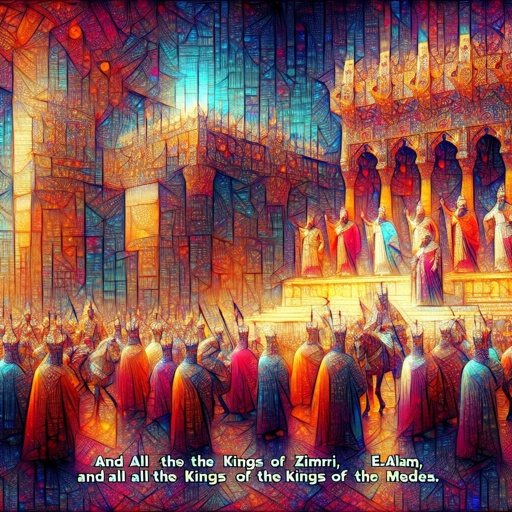
Jeremiah 25:25 - "And all the kings of Zimri, and all the kings of Elam, and all the kings of the Medes,"

2 kings 6:24

"And the city was besieged unto the eleventh year of king Zedekiah." - 2 Kings 25:2

2 Kings 25:3 - "And on the ninth day of the fourth month the famine prevailed in the city, and there was no bread for the people of the land."

2 Kings 25:14 - "And the pots, and the shovels, and the snuffers, and the spoons, and all the vessels of brass wherewith they ministered, took they away."

1 Kings 2:25 - "And king Solomon sent by the hand of Benaiah the son of Jehoiada; and he fell upon him that he died."
2 Kings 15:6 - "And the rest of the acts of Azariah, and all that he did, are they not written in the book of the chronicles of the kings of Judah?"

2 Kings 25:10 - "And all the army of the Chaldees, that were with the captain of the guard, brake down the walls of Jerusalem round about."

2 Kings 25:18 - "¶ And the captain of the guard took Seraiah the chief priest, and Zephaniah the second priest, and the three keepers of the door:"

2 Kings 25:15 - "And the firepans, and the bowls, and such things as were of gold, in gold, and of silver, in silver, the captain of the guard took away."

2 Chronicles 25:26 - "Now the rest of the acts of Amaziah, first and last, behold, are they not written in the book of the kings of Judah and Israel?"

2 Kings 8:25 - "¶ In the twelfth year of Joram the son of Ahab king of Israel did Ahaziah the son of Jehoram king of Judah begin to reign."

2 Kings 25:26 - "And all the people, both small and great, and the captains of the armies, arose, and came to Egypt: for they were afraid of the Chaldees."

2 Kings 25:30 - "And his allowance was a continual allowance given him of the king, a daily rate for every day, all the days of his life."

2 Kings 25:25 - "But it came to pass in the seventh month, that Ishmael the son of Nethaniah, the son of Elishama, of the seed royal, came, and ten men with him, and smote Gedaliah, that he died, and the Jews and the Chaldees that were with him at Mizpah."

2 Kings 25:21 - "And the king of Babylon smote them, and slew them at Riblah in the land of Hamath. So Judah was carried away out of their land."