What does 2 Kings 25:29 mean?
"And changed his prison garments: and he did eat bread continually before him all the days of his life." - 2 Kings 25:29

2 Kings 25:29 (KJV) - "And changed his prison garments: and he did eat bread continually before him all the days of his life."
2 Kings 25:29 is a verse from the Old Testament that describes the fate of Jehoiachin, the king of Judah. This verse is part of the closing chapter of 2 Kings, which recounts the fall of Jerusalem and the captivity of the Israelites by the Babylonians. The verse gives us insight into the life of King Jehoiachin after his release from prison, and it holds deep significance in terms of themes of judgement, restoration, and God's faithfulness.
To understand the full context of this verse, it is necessary to look at the events leading up to it. The book of 2 Kings recounts the decline of the kingdom of Judah, the destruction of Jerusalem, and the exile of its people. In 2 Kings 24, we learn that Jehoiachin, also known as Jeconiah, ascended to the throne of Judah at a young age and reigned for only three months before being captured and taken to Babylon by King Nebuchadnezzar.
In 2 Kings 25, the city of Jerusalem is besieged and ultimately destroyed by the Babylonians. The temple is desecrated, and the people of Judah are carried away into exile. Jehoiachin is imprisoned, along with many others, in Babylon. The verse in question describes a hopeful turn of events for Jehoiachin, as he is released from prison and given a place of honor by the new Babylonian king, Evil-merodach. This act of kindness is seen as a sign of God's favor and mercy towards Jehoiachin, despite his previous failings as a king.
The symbolism in this verse is multi-faceted. Firstly, the act of changing Jehoiachin's prison garments symbolizes a new beginning and a fresh start. It represents a turning point in his life, from being a prisoner to being granted favor and restoration. This act of changing garments is often associated with transformation and a change in status, and in this context, it signifies Jehoiachin's transition from captivity to freedom.
The idea of continuously eating bread before the king speaks to the sustained provision and favor that Jehoiachin received. In ancient times, to eat bread at the king's table was a symbol of honor and privilege, reserved for those in the king's favor. This gesture of continual provision is a powerful image of God's faithfulness and His ability to sustain His people, even in the midst of difficult circumstances.
Thematically, 2 Kings 25:29 speaks to the broader themes of judgement and restoration. The captivity of Jehoiachin and the fall of Jerusalem were the result of the people's disobedience and idolatry. However, even in the midst of judgement, we see God's mercy and grace at work. The release of Jehoiachin from prison and his subsequent honor in Babylon are testament to God's ability to bring about restoration and renewal, even after periods of hardship and suffering.
In a larger theological context, this verse points to the faithfulness of God in keeping His promises. Despite the dire circumstances that the people of Judah faced, the release of Jehoiachin can be seen as a glimmer of hope and a sign that God had not abandoned His people. Additionally, it foreshadows the eventual return of the Israelites to their land and the restoration of Jerusalem, as prophesied in the books of Jeremiah and Ezekiel.
In conclusion, 2 Kings 25:29 is a verse that carries deep symbolic and thematic significance within the broader narrative of the Old Testament. It speaks to the themes of judgement, restoration, and God's faithfulness, and it serves as a reminder of God's ability to bring about renewal and transformation in the midst of hardship. As believers, we can draw hope and encouragement from this verse, knowing that God is able to bring about positive change in our lives, even in the most challenging of circumstances.
Have questions about 2 Kings 25:29?
Dive deeper into this scripture with Bible Chat — an AI-powered tool for exploring God's Word through conversation. Ask questions, get context, and grow in your understanding of the Bible.
Get Our Apps


2 Kings 25:29 Artwork

2 Kings 25:29 - "And changed his prison garments: and he did eat bread continually before him all the days of his life."

"And changed his prison garments: and he did eat bread continually before him all the days of his life." - 2 Kings 25:29

2 KINGS 8:29

2 Kings 25:2 - "And the city was besieged unto the eleventh year of king Zedekiah."

2 Kings 14:29 - "And Jeroboam slept with his fathers, even with the kings of Israel; and Zachariah his son reigned in his stead."

2 Kings 25:1 show King Nebuchadnezzar in war zone

2 Kings 21:25 - "Now the rest of the acts of Amon which he did, are they not written in the book of the chronicles of the kings of Judah?"

2 Kings 25:28 - "And he spake kindly to him, and set his throne above the throne of the kings that were with him in Babylon;"

2 Kings 15:29 show the army and attack

2 Kings 2:25 - "And he went from thence to mount Carmel, and from thence he returned to Samaria."

2 Kings 25:1 show King Nebuchadnezzar and the army and the Temple

2 Kings 25:12 - "But the captain of the guard left of the poor of the land to be vinedressers and husbandmen."

2 Kings 9:29 - "And in the eleventh year of Joram the son of Ahab began Ahaziah to reign over Judah."

Proverbs 25:2 - "It is the glory of God to conceal a thing: but the honour of kings is to search out a matter."

2 Kings 25:20 - "And Nebuzar-adan captain of the guard took these, and brought them to the king of Babylon to Riblah:"

Jehoiachin is released from Babylonian jail 2 kings 25: 27
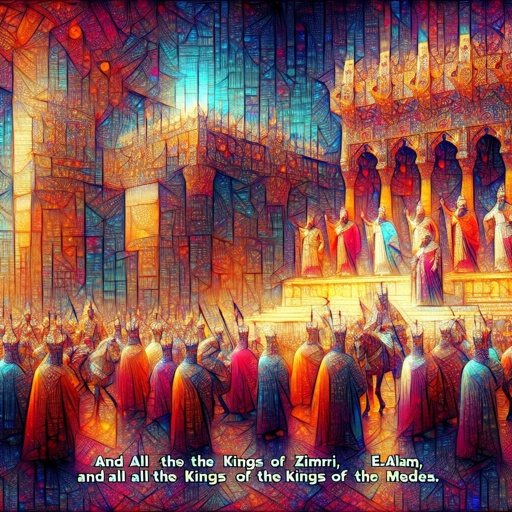
Jeremiah 25:25 - "And all the kings of Zimri, and all the kings of Elam, and all the kings of the Medes,"

"And the city was besieged unto the eleventh year of king Zedekiah." - 2 Kings 25:2

2 Kings 25:3 - "And on the ninth day of the fourth month the famine prevailed in the city, and there was no bread for the people of the land."

2 Kings 25:6 - "So they took the king, and brought him up to the king of Babylon to Riblah; and they gave judgment upon him."

2 Kings 18:29 - "Thus saith the king, Let not Hezekiah deceive you: for he shall not be able to deliver you out of his hand:"

2 Kings 25:14 - "And the pots, and the shovels, and the snuffers, and the spoons, and all the vessels of brass wherewith they ministered, took they away."

1 Kings 2:25 - "And king Solomon sent by the hand of Benaiah the son of Jehoiada; and he fell upon him that he died."

Proverb 29:25

Proverb 29:25

Proverb 29:25

2 Kings 25:10 - "And all the army of the Chaldees, that were with the captain of the guard, brake down the walls of Jerusalem round about."

2 Kings 25:18 - "¶ And the captain of the guard took Seraiah the chief priest, and Zephaniah the second priest, and the three keepers of the door:"

2 Chronicles 25:26 - "Now the rest of the acts of Amaziah, first and last, behold, are they not written in the book of the kings of Judah and Israel?"

2 Kings 25:15 - "And the firepans, and the bowls, and such things as were of gold, in gold, and of silver, in silver, the captain of the guard took away."