What does 2 Kings 25:28 mean?
"And he spake kindly to him, and set his throne above the throne of the kings that were with him in Babylon;" - 2 Kings 25:28

The verse 2 Kings 25:28 in the King James Version of the Bible reads:
"And he spake kindly to him, and set his throne above the throne of the kings that were with him in Babylon."
To fully understand the meaning and significance of this verse, it is important to provide the context in which it appears. This verse is part of the larger narrative of the Babylonian exile, which was a pivotal event in the history of Israel. The Babylonian exile began in 605 BC when Nebuchadnezzar, the king of Babylon, conquered Jerusalem and took many of its people into captivity. Among those taken captive was King Jehoiachin of Judah, who is referred to in this verse.
At the time of his exile, King Jehoiachin was just 18 years old, and he had only reigned for three months in Jerusalem before being taken away to Babylon. While in Babylon, Jehoiachin was kept under the watchful eye of the Babylonian rulers, and it seemed that his lineage and throne had come to an abrupt end. However, this verse reveals that in a surprising turn of events, Jehoiachin was shown kindness by the king of Babylon, Evil-merodach, who not only spoke kindly to him but also elevated him above the other captive kings by setting his throne above theirs.
The significance of this act of kindness and elevation is profound, especially when considering the broader themes of the Bible and the historical context in which it is situated. The Babylonian exile was a devastating time for the people of Israel, as they were forcibly removed from their homeland and taken captive in a foreign land. In the midst of this suffering and exile, the actions of Evil-merodach towards Jehoiachin serve as a reminder of the unexpected ways in which God's providence can work, even in the most dire of circumstances.
One possible interpretation of this verse is that it reflects God's faithfulness to his covenant with the people of Israel, even in their exile. Despite the hardships and trials they faced, God did not abandon them entirely. Instead, he orchestrated events such as the kindness shown to Jehoiachin to offer them a glimmer of hope and a reminder that he was still present and working in their midst.
Furthermore, this verse highlights the complex nature of power and authority. In the world of kingdoms and empires, where rulers vied for dominance and control, an act of kindness and elevation from one king to another was not merely a superficial gesture. It had significant political and symbolic implications. By elevating Jehoiachin above the other captive kings, Evil-merodach was making a statement about his own authority and the status of Judah in relation to Babylon.
From a thematic standpoint, this verse emphasizes the theme of redemption and restoration. Despite the despair of exile, God's promise of restoration and renewal for his people remained steadfast. The act of setting Jehoiachin's throne above the other kings can be seen as a foreshadowing of the eventual return of the exiles to their homeland and the reestablishment of the line of David. This act provides a glimmer of hope and anticipation for the future redemption of Israel.
In terms of symbolism, the elevation of Jehoiachin's throne can be seen as a symbol of God's sovereignty and his ability to lift up the lowly and downtrodden. It serves as a powerful reminder that God's ways are not the ways of the world, and that he can use even the most unexpected means to bring about his purposes. This act of kindness and elevation also serves as a symbol of the ultimate redemption and exaltation that God offers to his people, as seen in the person of Jesus Christ, who was a descendant of King David.
In conclusion, 2 Kings 25:28 is a verse that holds deep meaning within the broader narrative of the Babylonian exile. It serves as a reminder of God's faithfulness, his ability to work in unexpected ways, and his ultimate plan for redemption and restoration. This verse also offers a powerful reflection on the themes of power, authority, and the ways in which God's sovereignty surpasses human understanding. Through its historical and symbolic significance, this verse continues to speak to the hearts of believers, offering hope and encouragement in the midst of difficult circumstances.
Have questions about 2 Kings 25:28?
Dive deeper into this scripture with Bible Chat — an AI-powered tool for exploring God's Word through conversation. Ask questions, get context, and grow in your understanding of the Bible.
Get Our Apps


2 Kings 25:28 Artwork

2 Kings 25:28 - "And he spake kindly to him, and set his throne above the throne of the kings that were with him in Babylon;"

"And he spake kindly to him, and set his throne above the throne of the kings that were with him in Babylon;" - 2 Kings 25:28

2 Kings 25:2 - "And the city was besieged unto the eleventh year of king Zedekiah."

2 Kings 23:28 - "Now the rest of the acts of Josiah, and all that he did, are they not written in the book of the chronicles of the kings of Judah?"

2 Kings 25:1 show King Nebuchadnezzar in war zone

2 Chronicles 28:2 - "For he walked in the ways of the kings of Israel, and made also molten images for Baalim."

2 Chronicles 25:28 - "And they brought him upon horses, and buried him with his fathers in the city of Judah."

2 Kings 10:28 - "Thus Jehu destroyed Baal out of Israel."

2 Kings 21:25 - "Now the rest of the acts of Amon which he did, are they not written in the book of the chronicles of the kings of Judah?"

2 Kings 2:25 - "And he went from thence to mount Carmel, and from thence he returned to Samaria."

2 Chronicles 28:16 - "¶ At that time did king Ahaz send unto the kings of Assyria to help him."

2 Kings 25:1 show King Nebuchadnezzar and the army and the Temple

2 Kings 25:12 - "But the captain of the guard left of the poor of the land to be vinedressers and husbandmen."

Proverbs 25:2 - "It is the glory of God to conceal a thing: but the honour of kings is to search out a matter."

2 Kings 25:20 - "And Nebuzar-adan captain of the guard took these, and brought them to the king of Babylon to Riblah:"

Jehoiachin is released from Babylonian jail 2 kings 25: 27
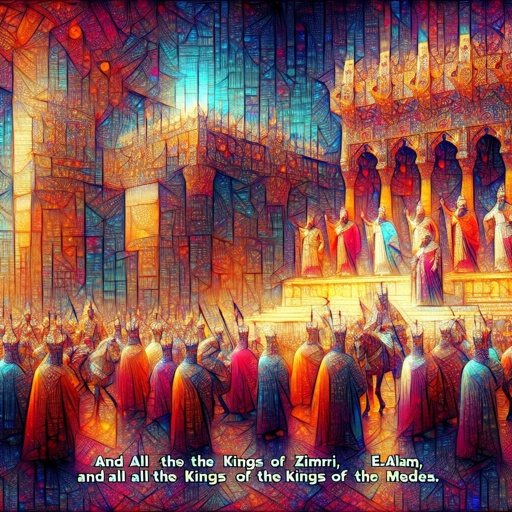
Jeremiah 25:25 - "And all the kings of Zimri, and all the kings of Elam, and all the kings of the Medes,"

"And the city was besieged unto the eleventh year of king Zedekiah." - 2 Kings 25:2

2 Kings 25:3 - "And on the ninth day of the fourth month the famine prevailed in the city, and there was no bread for the people of the land."

2 Kings 25:6 - "So they took the king, and brought him up to the king of Babylon to Riblah; and they gave judgment upon him."

2 Kings 25:14 - "And the pots, and the shovels, and the snuffers, and the spoons, and all the vessels of brass wherewith they ministered, took they away."

1 Kings 2:25 - "And king Solomon sent by the hand of Benaiah the son of Jehoiada; and he fell upon him that he died."

2 Kings 18:28 - "Then Rabshakeh stood and cried with a loud voice in the Jews' language, and spake, saying, Hear the word of the great king, the king of Assyria:"

2 Kings 25:10 - "And all the army of the Chaldees, that were with the captain of the guard, brake down the walls of Jerusalem round about."

2 Kings 25:18 - "¶ And the captain of the guard took Seraiah the chief priest, and Zephaniah the second priest, and the three keepers of the door:"

2 Kings 8:28 - "¶ And he went with Joram the son of Ahab to the war against Hazael king of Syria in Ramoth-gilead; and the Syrians wounded Joram."

2 Kings 25:15 - "And the firepans, and the bowls, and such things as were of gold, in gold, and of silver, in silver, the captain of the guard took away."

2 Chronicles 25:26 - "Now the rest of the acts of Amaziah, first and last, behold, are they not written in the book of the kings of Judah and Israel?"

2 Kings 8:25 - "¶ In the twelfth year of Joram the son of Ahab king of Israel did Ahaziah the son of Jehoram king of Judah begin to reign."

2 Kings 4:28 - "Then she said, Did I desire a son of my lord? did I not say, Do not deceive me?"