What does 2 Kings 25:25 mean?
"But it came to pass in the seventh month, that Ishmael the son of Nethaniah, the son of Elishama, of the seed royal, came, and ten men with him, and smote Gedaliah, that he died, and the Jews and the Chaldees that were with him at Mizpah." - 2 Kings 25:25

The verse 2 Kings 25:25 in the King James Version of the Bible reads: "But it came to pass in the seventh month, that Ishmael the son of Nethaniah, the son of Elishama, of the seed royal, came, and ten men with him, and smote Gedaliah, that he died, and the Jews and the Chaldees that were with him at Mizpah."
This verse comes at a pivotal moment in the history of Israel, as it describes the assassination of Gedaliah, the newly appointed governor of Judah. This event marks the final destruction of the kingdom of Judah and the end of the independent monarchy in Israel. The context of this verse is set amidst political turmoil, military conquest, and the exile of the Israelites to Babylon.
The verse begins with "But it came to pass in the seventh month," signifying a specific time period in the Jewish calendar. The seventh month is the month of Tishrei, which includes the High Holy Days of Rosh Hashanah and Yom Kippur. This timing holds symbolic significance, as it represents a period of repentance, judgment, and renewal in the Jewish faith.
The verse then introduces Ishmael, an individual with royal lineage, who plots and carries out the assassination of Gedaliah. This act of treachery and betrayal further plunges the nation of Judah into chaos and despair. The use of the term "seed royal" emphasizes the significance of Ishmael's lineage, and his actions serve as a direct challenge to the established authority and leadership in Judah.
The mention of "ten men with him" underscores the deliberate and calculated nature of the assassination, as Ishmael is not acting alone but with a group of co-conspirators. This demonstrates the depth of division and internal strife within the nation of Judah at this time.
The verse concludes with the tragic outcome of the assassination, as Gedaliah and those with him at Mizpah are killed. This event marks the collapse of any hope for stability and autonomy for the people of Judah, as they are once again thrown into disarray and uncertainty.
Symbolically, this verse can be viewed as a cautionary tale about the destructive consequences of internal division, betrayal, and the pursuit of power. It serves as a reminder of the consequences of political instability, and the devastating impact it can have on a nation and its people. The biblical narrative portrays the tragic outcome of human folly and the failure of leadership, underscoring the need for wisdom, integrity, and justice in governance.
The themes of justice, leadership, and the consequences of sin are prevalent throughout this verse. The assassination of Gedaliah serves as a stark reminder of the destructive power of human choices and the far-reaching impact of sin. The narrative also underscores the importance of righteous leadership and the devastating consequences of its absence.
In conclusion, 2 Kings 25:25 captures a pivotal moment in the history of Israel, marking the final collapse of the kingdom of Judah. The verse serves as a powerful commentary on the consequences of human folly, betrayal, and the absence of righteous leadership. It stands as a cautionary tale and a reminder of the enduring relevance of biblical narratives in addressing timeless themes of justice, leadership, and the consequences of sin.
Have questions about 2 Kings 25:25?
Dive deeper into this scripture with Bible Chat — an AI-powered tool for exploring God's Word through conversation. Ask questions, get context, and grow in your understanding of the Bible.
Get Our Apps


2 Kings 25:25 Artwork

2 Kings 25:25 - "But it came to pass in the seventh month, that Ishmael the son of Nethaniah, the son of Elishama, of the seed royal, came, and ten men with him, and smote Gedaliah, that he died, and the Jews and the Chaldees that were with him at Mizpah."

"But it came to pass in the seventh month, that Ishmael the son of Nethaniah, the son of Elishama, of the seed royal, came, and ten men with him, and smote Gedaliah, that he died, and the Jews and the Chaldees that were with him at Mizpah." - 2 Kings 25:25

2 Kings 25:2 - "And the city was besieged unto the eleventh year of king Zedekiah."
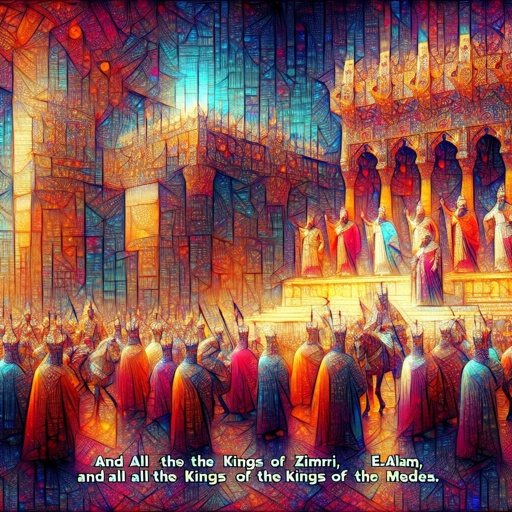
Jeremiah 25:25 - "And all the kings of Zimri, and all the kings of Elam, and all the kings of the Medes,"

2 Kings 25:12 - "But the captain of the guard left of the poor of the land to be vinedressers and husbandmen."

2 Kings 21:25 - "Now the rest of the acts of Amon which he did, are they not written in the book of the chronicles of the kings of Judah?"

Proverbs 25:2 - "It is the glory of God to conceal a thing: but the honour of kings is to search out a matter."

2 Kings 2:25 - "And he went from thence to mount Carmel, and from thence he returned to Samaria."

2 Kings 25:28 - "And he spake kindly to him, and set his throne above the throne of the kings that were with him in Babylon;"

2 Kings 25:20 - "And Nebuzar-adan captain of the guard took these, and brought them to the king of Babylon to Riblah:"

"And all the kings of Zimri, and all the kings of Elam, and all the kings of the Medes," - Jeremiah 25:25

2 Kings 25:3 - "And on the ninth day of the fourth month the famine prevailed in the city, and there was no bread for the people of the land."

2 Kings 25:14 - "And the pots, and the shovels, and the snuffers, and the spoons, and all the vessels of brass wherewith they ministered, took they away."

2 Kings 25:6 - "So they took the king, and brought him up to the king of Babylon to Riblah; and they gave judgment upon him."

2 Kings 25:1 show King Nebuchadnezzar and the army and the Temple

2 Kings 25:1 show King Nebuchadnezzar in war zone

1 Kings 2:25 - "And king Solomon sent by the hand of Benaiah the son of Jehoiada; and he fell upon him that he died."

2 Kings 25:10 - "And all the army of the Chaldees, that were with the captain of the guard, brake down the walls of Jerusalem round about."

2 Kings 25:18 - "¶ And the captain of the guard took Seraiah the chief priest, and Zephaniah the second priest, and the three keepers of the door:"

"And the city was besieged unto the eleventh year of king Zedekiah." - 2 Kings 25:2

2 Kings 25:15 - "And the firepans, and the bowls, and such things as were of gold, in gold, and of silver, in silver, the captain of the guard took away."

2 Chronicles 25:26 - "Now the rest of the acts of Amaziah, first and last, behold, are they not written in the book of the kings of Judah and Israel?"

Jehoiachin is released from Babylonian jail 2 kings 25: 27

2 Kings 25:26 - "And all the people, both small and great, and the captains of the armies, arose, and came to Egypt: for they were afraid of the Chaldees."

2 Kings 8:25 - "¶ In the twelfth year of Joram the son of Ahab king of Israel did Ahaziah the son of Jehoram king of Judah begin to reign."

2 Kings 25:30 - "And his allowance was a continual allowance given him of the king, a daily rate for every day, all the days of his life."

2 Kings 25:21 - "And the king of Babylon smote them, and slew them at Riblah in the land of Hamath. So Judah was carried away out of their land."

2 Kings 25:9 - "And he burnt the house of the LORD, and the king's house, and all the houses of Jerusalem, and every great man's house burnt he with fire."

2 Kings 25:5 - "And the army of the Chaldees pursued after the king, and overtook him in the plains of Jericho: and all his army were scattered from him."

2 Kings 25:29 - "And changed his prison garments: and he did eat bread continually before him all the days of his life."