What does 2 Kings 25:21 mean?
"And the king of Babylon smote them, and slew them at Riblah in the land of Hamath. So Judah was carried away out of their land." - 2 Kings 25:21

The Bible verse 2 Kings 25:21 in the King James Version reads: "And the king of Babylon smote them, and slew them at Riblah in the land of Hamath. So Judah was carried away out of their land." This verse is a part of the narrative that describes the fall of Jerusalem and the exile of the people of Judah under the reign of the Babylonian king, Nebuchadnezzar.
The context of this verse is important in understanding its significance. The Book of 2 Kings recounts the history of the kingdoms of Israel and Judah, with a focus on their kings and their relationship with God. In chapter 25, the focus is on the final days of the kingdom of Judah. The Babylonians, under the leadership of Nebuchadnezzar, besieged and eventually conquered Jerusalem, destroying the city and its temple. The people of Judah were then taken into captivity in Babylon.
The verse specifically mentions the king of Babylon smiting and slaying the people at Riblah in the land of Hamath. Riblah was a city in the region of Hamath, located in present-day Syria. It was a significant location in the ancient Near East, often serving as a military outpost and a place for the imposition of imperial authority. It was also the location where the Babylonian king held court and made important decisions, such as the sentencing of prisoners and the imposing of tribute on conquered nations.
The use of the word "smote" in the verse indicates a harsh and forceful action taken by the Babylonians against the people of Judah. This reflects the brutal and violent nature of the Babylonian conquest of Jerusalem and the suffering endured by the people.
The verse also describes the deportation of the people of Judah from their land. This event was a significant turning point in the history of Israel, as it marked the end of the kingdom of Judah as an independent political entity. The exile of the people of Judah had far-reaching consequences for their identity, their faith, and their relationship with God. It was a period of great trauma and upheaval, as the people were uprooted from their homeland and forced to live in a foreign land under foreign rule.
In terms of themes, this verse speaks to the themes of judgment, exile, and the consequences of disobedience. Throughout the history of Israel and Judah, the prophets had warned the people about the consequences of turning away from God and disobeying His commandments. The fall of Jerusalem and the exile of the people were seen as a fulfillment of these warnings. The verse serves as a reminder of the sobering reality of God's judgment and the consequences of human sin and rebellion.
There is also a theme of the sovereignty of God and the power of foreign empires. The Babylonian conquest of Jerusalem and the exile of the people were seen as the result of God's sovereign will and the use of foreign nations as instruments of His judgment. This theme raises questions about the ways in which God works in history and the relationship between divine sovereignty and human agency.
The verse also holds symbolic significance. It can be seen as a symbol of the brokenness and suffering caused by sin, as well as a symbol of the faithfulness and mercy of God. The exile of the people of Judah was a time of great suffering and despair, but it was also a time in which God remained present with His people, offering them hope and the promise of restoration.
In conclusion, 2 Kings 25:21 is a verse that captures a crucial moment in the history of Israel and Judah. It reflects the harsh reality of judgment and exile, as well as the enduring faithfulness of God. The verse serves as a reminder of the consequences of disobedience and the sobering reality of God's judgment. It also raises questions about the ways in which God works in history and the relationship between divine sovereignty and human agency. Overall, this verse has profound implications for understanding the historical, theological, and symbolic significance of the exile of the people of Judah.
Have questions about 2 Kings 25:21?
Dive deeper into this scripture with Bible Chat — an AI-powered tool for exploring God's Word through conversation. Ask questions, get context, and grow in your understanding of the Bible.
Get Our Apps


2 Kings 25:21 Artwork

2 Kings 25:21 - "And the king of Babylon smote them, and slew them at Riblah in the land of Hamath. So Judah was carried away out of their land."

"And the king of Babylon smote them, and slew them at Riblah in the land of Hamath. So Judah was carried away out of their land." - 2 Kings 25:21

2 Kings 21:25 - "Now the rest of the acts of Amon which he did, are they not written in the book of the chronicles of the kings of Judah?"

"Now the rest of the acts of Amon which he did, are they not written in the book of the chronicles of the kings of Judah?" - 2 Kings 21:25

2 Kings 2:21

2 Kings 25:2 - "And the city was besieged unto the eleventh year of king Zedekiah."

2 Kings 25:1 show King Nebuchadnezzar in war zone

2 Kings 25:28 - "And he spake kindly to him, and set his throne above the throne of the kings that were with him in Babylon;"

2 Kings 15:21 - "¶ And the rest of the acts of Menahem, and all that he did, are they not written in the book of the chronicles of the kings of Israel?"

2 Kings 2:25 - "And he went from thence to mount Carmel, and from thence he returned to Samaria."

1 Kings 21:25 - "¶ But there was none like unto Ahab, which did sell himself to work wickedness in the sight of the LORD, whom Jezebel his wife stirred up."

2 Kings 25:1 show King Nebuchadnezzar and the army and the Temple

2 Kings 25:12 - "But the captain of the guard left of the poor of the land to be vinedressers and husbandmen."

Proverbs 25:2 - "It is the glory of God to conceal a thing: but the honour of kings is to search out a matter."

2 Kings 25:20 - "And Nebuzar-adan captain of the guard took these, and brought them to the king of Babylon to Riblah:"

2 Kings 21:10 - "¶ And the LORD spake by his servants the prophets, saying,"

2 Kings 21:21 - "And he walked in all the way that his father walked in, and served the idols that his father served, and worshipped them:"

Jehoiachin is released from Babylonian jail 2 kings 25: 27
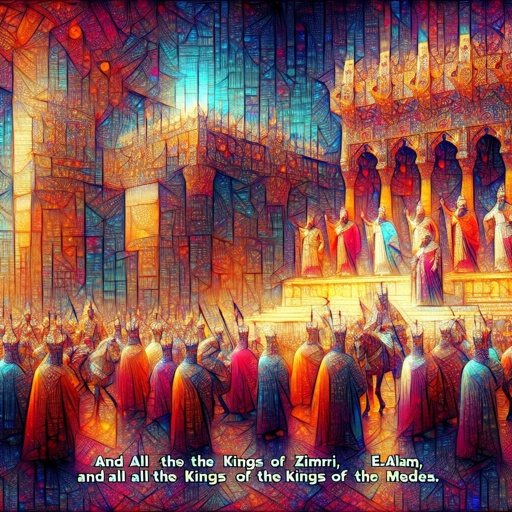
Jeremiah 25:25 - "And all the kings of Zimri, and all the kings of Elam, and all the kings of the Medes,"

"And the city was besieged unto the eleventh year of king Zedekiah." - 2 Kings 25:2

2 Kings 25:3 - "And on the ninth day of the fourth month the famine prevailed in the city, and there was no bread for the people of the land."

2 Kings 11:21 - "Seven years old was Jehoash when he began to reign."

2 Kings 21:17 - "¶ Now the rest of the acts of Manasseh, and all that he did, and his sin that he sinned, are they not written in the book of the chronicles of the kings of Judah?"

2 Kings 25:6 - "So they took the king, and brought him up to the king of Babylon to Riblah; and they gave judgment upon him."

2 Kings 21:23 - "¶ And the servants of Amon conspired against him, and slew the king in his own house."

2 Kings 25:14 - "And the pots, and the shovels, and the snuffers, and the spoons, and all the vessels of brass wherewith they ministered, took they away."

1 Kings 2:25 - "And king Solomon sent by the hand of Benaiah the son of Jehoiada; and he fell upon him that he died."

2 Kings 25:10 - "And all the army of the Chaldees, that were with the captain of the guard, brake down the walls of Jerusalem round about."

2 Kings 25:18 - "¶ And the captain of the guard took Seraiah the chief priest, and Zephaniah the second priest, and the three keepers of the door:"

2 Kings 25:15 - "And the firepans, and the bowls, and such things as were of gold, in gold, and of silver, in silver, the captain of the guard took away."