What does 2 Kings 25:20 mean?
"And Nebuzar-adan captain of the guard took these, and brought them to the king of Babylon to Riblah:" - 2 Kings 25:20

The Bible verse 2 Kings 25:20 in the King James Version (KJV) reads, "And Nebuzaradan captain of the guard took these, and brought them to the king of Babylon to Riblah: and the king of Babylon smote them, and slew them at Riblah in the land of Hamath. So Judah was carried away out of their land."
This verse comes from the book of 2 Kings, written by an unknown author and believed to have been composed during the Babylonian exile, which occurred around the 6th century BC. The book of 2 Kings documents the history of the kingdoms of Israel and Judah, focusing on their rulers and the prophets who served during their reigns. The verse in question takes place towards the end of the book, specifically in the context of the fall of Jerusalem and the destruction of the Temple by the Babylonians.
The verse depicts the aftermath of the Babylonian siege of Jerusalem, which culminated in the capture and exile of the people of Judah. Nebuzaradan, the captain of the guard, is responsible for overseeing this process and is depicted as taking the captives to King Nebuchadnezzar of Babylon in Riblah. There, the king executes the captives, further highlighting the severity of Judah's defeat and exile.
One of the main themes of this verse is the concept of divine judgment and the consequences of disobedience to God. Throughout the Old Testament, the Israelites are repeatedly warned by the prophets that their disobedience to God's commandments will result in exile and captivity. The events described in 2 Kings 25:20 serve as a fulfillment of these prophetic warnings, emphasizing the idea that God's judgment is just and inevitable.
Another important theme in this verse is the destruction and loss of homeland. The exile of the people of Judah from their land represents a profound and traumatic experience, as it involves not only physical displacement but also the loss of their cultural and religious identity. This theme resonates throughout the Hebrew Bible, as exile becomes a central motif in Jewish history and theology.
Furthermore, the verse symbolizes the fall of a once-great kingdom and the collapse of the Davidic monarchy. The capture and execution of the people of Judah at the hands of the Babylonians represent the ultimate defeat of the nation and the end of its sovereignty. This event has significant implications for the future of Israel and the fulfillment of biblical prophecies, particularly those pertaining to the restoration of the nation and the coming of the Messiah.
In a broader context, 2 Kings 25:20 serves as a powerful reminder of the consequences of sin and the importance of obedience to God's will. It also highlights the complex interplay between divine judgment and human agency, as the actions of the Israelites and their leaders ultimately lead to the downfall of their nation. This verse, therefore, offers a sobering and cautionary message about the destructive power of sin and the enduring relevance of God's moral law.
In conclusion, 2 Kings 25:20 is a pivotal verse in the historical narrative of the Old Testament, encapsulating the themes of divine judgment, exile, and the fall of a once-great nation. Its portrayal of the Babylonian conquest of Judah and the subsequent exile of its people serves as a poignant reflection on the consequences of disobedience and the enduring significance of God's covenant with His chosen people. As such, this verse continues to resonate with readers today, offering timeless lessons about the nature of God's justice and the enduring consequences of human actions.
Have questions about 2 Kings 25:20?
Dive deeper into this scripture with Bible Chat — an AI-powered tool for exploring God's Word through conversation. Ask questions, get context, and grow in your understanding of the Bible.
Get Our Apps


2 Kings 25:20 Artwork

2 Kings 25:20 - "And Nebuzar-adan captain of the guard took these, and brought them to the king of Babylon to Riblah:"

"And Nebuzar-adan captain of the guard took these, and brought them to the king of Babylon to Riblah:" - 2 Kings 25:20

Jeremiah 25:20 - "And all the mingled people, and all the kings of the land of Uz, and all the kings of the land of the Philistines, and Ashkelon, and Azzah, and Ekron, and the remnant of Ashdod,"

2 Kings 25:2 - "And the city was besieged unto the eleventh year of king Zedekiah."

2 Kings 25:1 show King Nebuchadnezzar in war zone

2 Samuel 20:25 - "And Sheva was scribe: and Zadok and Abiathar were the priests:"

2 Kings 21:25 - "Now the rest of the acts of Amon which he did, are they not written in the book of the chronicles of the kings of Judah?"

2 Kings 20:20 - "¶ And the rest of the acts of Hezekiah, and all his might, and how he made a pool, and a conduit, and brought water into the city, are they not written in the book of the chronicles of the kings of Judah?"

2 Kings 25:28 - "And he spake kindly to him, and set his throne above the throne of the kings that were with him in Babylon;"

2 Kings 2:25 - "And he went from thence to mount Carmel, and from thence he returned to Samaria."

2 Kings 25:1 show King Nebuchadnezzar and the army and the Temple

2 Kings 25:12 - "But the captain of the guard left of the poor of the land to be vinedressers and husbandmen."

2 Kings 20:2 - "Then he turned his face to the wall, and prayed unto the LORD, saying,"

Proverbs 25:2 - "It is the glory of God to conceal a thing: but the honour of kings is to search out a matter."

Jehoiachin is released from Babylonian jail 2 kings 25: 27
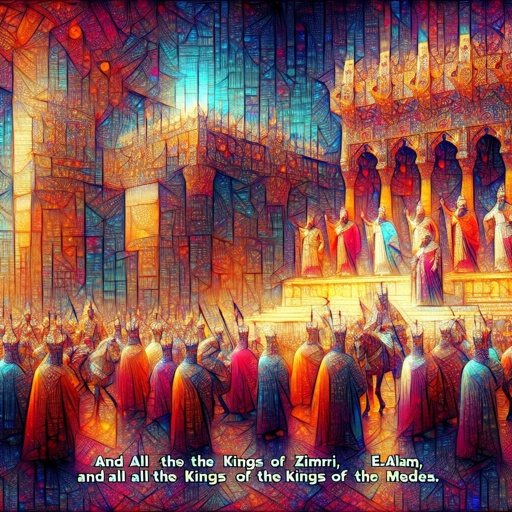
Jeremiah 25:25 - "And all the kings of Zimri, and all the kings of Elam, and all the kings of the Medes,"

2 Kings 2:20 - "And he said, Bring me a new cruse, and put salt therein. And they brought it to him."

"And the city was besieged unto the eleventh year of king Zedekiah." - 2 Kings 25:2

2 Kings 20:16 - "And Isaiah said unto Hezekiah, Hear the word of the LORD."

2 Kings 10:20 - "And Jehu said, Proclaim a solemn assembly for Baal. And they proclaimed it."

2 Kings 25:3 - "And on the ninth day of the fourth month the famine prevailed in the city, and there was no bread for the people of the land."

2 Kings 25:6 - "So they took the king, and brought him up to the king of Babylon to Riblah; and they gave judgment upon him."

2 Kings 25:14 - "And the pots, and the shovels, and the snuffers, and the spoons, and all the vessels of brass wherewith they ministered, took they away."

1 Kings 2:25 - "And king Solomon sent by the hand of Benaiah the son of Jehoiada; and he fell upon him that he died."

2 Kings 25:10 - "And all the army of the Chaldees, that were with the captain of the guard, brake down the walls of Jerusalem round about."

2 Kings 25:18 - "¶ And the captain of the guard took Seraiah the chief priest, and Zephaniah the second priest, and the three keepers of the door:"

"And all the mingled people, and all the kings of the land of Uz, and all the kings of the land of the Philistines, and Ashkelon, and Azzah, and Ekron, and the remnant of Ashdod," - Jeremiah 25:20

2 Kings 25:15 - "And the firepans, and the bowls, and such things as were of gold, in gold, and of silver, in silver, the captain of the guard took away."

2 Chronicles 25:26 - "Now the rest of the acts of Amaziah, first and last, behold, are they not written in the book of the kings of Judah and Israel?"

2 Kings 8:25 - "¶ In the twelfth year of Joram the son of Ahab king of Israel did Ahaziah the son of Jehoram king of Judah begin to reign."