What does 2 Kings 25:12 mean?
"But the captain of the guard left of the poor of the land to be vinedressers and husbandmen." - 2 Kings 25:12

The verse 2 Kings 25:12 from the King James Version Bible reads: "But the captain of the guard left of the poor of the land to be vinedressers and husbandmen." This verse comes from the account of the fall of Jerusalem and the exile of the Israelites by the Babylonians.
To fully understand the meaning and commentary of this verse, it is important to explore the historical and biblical context in which it is situated. 2 Kings 25 describes the destruction of Jerusalem and the exile of its inhabitants. In 605 BC, the Babylonian king Nebuchadnezzar besieged Jerusalem and took King Jehoiachin and the people of Judah into captivity. The city's walls were broken down, the temple was burned, and the wealth and most of the population were taken captive to Babylon. This event marked the end of the Kingdom of Judah and the beginning of the Babylonian exile.
In 2 Kings 25:12, the "captain of the guard" referenced is Nebuzaradan, the chief executioner and commander of Nebuchadnezzar's army. After the fall of Jerusalem, Nebuzaradan was responsible for overseeing the deportation of the Israelites and the destruction of the city. The verse mentions that Nebuzaradan left some of the poor of the land behind to work as vinedressers and husbandmen. This indicates that a portion of the population was permitted to remain in their homeland to tend to the agricultural land that had not been destroyed.
One of the key themes in this verse is the notion of divine judgment and the consequences of disobedience to God. The exile of the Israelites and the destruction of Jerusalem were seen as divine punishments for the sins of the people. Throughout the Old Testament, the Israelites were warned by the prophets about the consequences of turning away from God and breaking his commandments. The events described in 2 Kings 25 are a fulfillment of these warnings and a demonstration of God's faithfulness to uphold his covenant with his people, even in times of judgment.
The mention of leaving the poor of the land to work as vinedressers and husbandmen also carries symbolic significance. It reflects the stratification of society and the harsh realities of life under foreign domination. The poor were often left behind to carry on the menial tasks of agriculture and labor, while the elite and powerful were taken away into exile. This demonstrates the social and economic disruption caused by the Babylonian conquest and the impact it had on the lives of the people.
Furthermore, the verse can be seen as a reflection of God's mercy and provision even in the midst of judgment. Despite the devastation of Jerusalem and the exile of the Israelites, a remnant of the population was left behind to continue working the land. This can be interpreted as a sign of hope and the potential for restoration in the future. It also underscores the importance of faithfulness and perseverance in the face of adversity.
In conclusion, 2 Kings 25:12 provides a compelling portrayal of the judgment of God upon his disobedient people and the consequences of their actions. It also highlights the enduring themes of divine mercy, social inequality, and the resilience of the human spirit. This verse serves as a reminder of the complexities of human history and the enduring relevance of biblical narratives in understanding the human condition.
Have questions about 2 Kings 25:12?
Dive deeper into this scripture with Bible Chat — an AI-powered tool for exploring God's Word through conversation. Ask questions, get context, and grow in your understanding of the Bible.
Get Our Apps


2 Kings 25:12 Artwork

2 Kings 25:12 - "But the captain of the guard left of the poor of the land to be vinedressers and husbandmen."

"But the captain of the guard left of the poor of the land to be vinedressers and husbandmen." - 2 Kings 25:12

2 Kings 25:2 - "And the city was besieged unto the eleventh year of king Zedekiah."

2 Kings 25:1 show King Nebuchadnezzar in war zone

2 Kings 21:25 - "Now the rest of the acts of Amon which he did, are they not written in the book of the chronicles of the kings of Judah?"

1 Kings 12:25 - "¶ Then Jeroboam built Shechem in mount Ephraim, and dwelt therein; and went out from thence, and built Penuel."

2 Kings 25:28 - "And he spake kindly to him, and set his throne above the throne of the kings that were with him in Babylon;"

2 Kings 2:25 - "And he went from thence to mount Carmel, and from thence he returned to Samaria."

2 Kings 25:1 show King Nebuchadnezzar and the army and the Temple

Proverbs 25:2 - "It is the glory of God to conceal a thing: but the honour of kings is to search out a matter."

2 Kings 25:20 - "And Nebuzar-adan captain of the guard took these, and brought them to the king of Babylon to Riblah:"

Jehoiachin is released from Babylonian jail 2 kings 25: 27
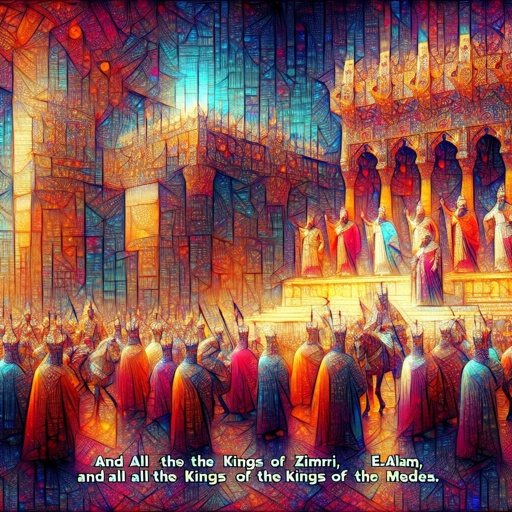
Jeremiah 25:25 - "And all the kings of Zimri, and all the kings of Elam, and all the kings of the Medes,"

2 Kings 12:19 - "¶ And the rest of the acts of Joash, and all that he did, are they not written in the book of the chronicles of the kings of Judah?"

"And the city was besieged unto the eleventh year of king Zedekiah." - 2 Kings 25:2

2 Kings 25:3 - "And on the ninth day of the fourth month the famine prevailed in the city, and there was no bread for the people of the land."

2 Kings 25:6 - "So they took the king, and brought him up to the king of Babylon to Riblah; and they gave judgment upon him."

2 Kings 25:14 - "And the pots, and the shovels, and the snuffers, and the spoons, and all the vessels of brass wherewith they ministered, took they away."

1 Kings 2:25 - "And king Solomon sent by the hand of Benaiah the son of Jehoiada; and he fell upon him that he died."

2 Kings 25:10 - "And all the army of the Chaldees, that were with the captain of the guard, brake down the walls of Jerusalem round about."

2 Kings 25:18 - "¶ And the captain of the guard took Seraiah the chief priest, and Zephaniah the second priest, and the three keepers of the door:"

2 Chronicles 25:26 - "Now the rest of the acts of Amaziah, first and last, behold, are they not written in the book of the kings of Judah and Israel?"

2 Kings 25:15 - "And the firepans, and the bowls, and such things as were of gold, in gold, and of silver, in silver, the captain of the guard took away."

2 Kings 12:14 - "But they gave that to the workmen, and repaired therewith the house of the LORD."

2 Kings 8:25 - "¶ In the twelfth year of Joram the son of Ahab king of Israel did Ahaziah the son of Jehoram king of Judah begin to reign."

2 Kings 25:26 - "And all the people, both small and great, and the captains of the armies, arose, and came to Egypt: for they were afraid of the Chaldees."

2 Kings 25:30 - "And his allowance was a continual allowance given him of the king, a daily rate for every day, all the days of his life."

2 Kings 25:25 - "But it came to pass in the seventh month, that Ishmael the son of Nethaniah, the son of Elishama, of the seed royal, came, and ten men with him, and smote Gedaliah, that he died, and the Jews and the Chaldees that were with him at Mizpah."

2 Kings 25:21 - "And the king of Babylon smote them, and slew them at Riblah in the land of Hamath. So Judah was carried away out of their land."

2 Samuel 12:25 - "And he sent by the hand of Nathan the prophet; and he called his name Jedidiah, because of the LORD."